
10 Writing prompts for year 3 students
Published on 10 min read


In this guide
In Year 3, students begin to write more to express themselves rather than just learning the mechanics of writing. Writing prompts are an excellent way to give students an entry point into creative expression.
Often writing can feel as if it is overwhelming to young writers, but prompts can alleviate that feeling.
The purposes of a writing prompt are to encourage the student’s interest in a topic and encourage them to write about it in a thoughtful and creative way.
Center for Excellence in Teaching and Learning, University of Connecticut
The wide range of topics included in this article allows for differentiation for student needs, as well as variety in writing genres.
Prompts can be used by students to demonstrate understanding of a specific genre of writing, such as narrative or informative. They can also be used as quick write prompts or journal topics.
As all teachers know, not every student in a classroom is on the same level. Students have differing needs and skills.
There are two ways to address the array of students in a classroom.
The first is through the prompts themselves. Scaffolding writing assignments for specific students is pivotal to their success. Prompts can be modified to accommodate student skill levels. Students who are gifted, for instance, will typically require more challenging writing prompts.
The second way comes when a teacher is evaluating, or grading, a writing assignment. At this time, the teacher can take into account each student and what is appropriate for them.
For example, a student that is at the beginning levels of English language development may need to write in the present tense because the ability to write in the past tense develops later.
Differentiation can take whatever form is best for student success.
1) Narrative writing prompts
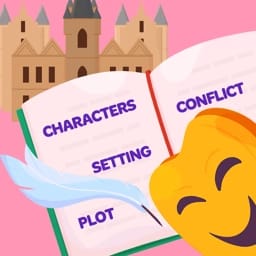
Narrative texts are a great place to start teaching the writing process. Telling a story is a way for students to build a personal connection to their writing.
Making a personal connection to text is an excellent way to “hook” students into writing. Stories help students build confidence in their writing abilities.
- Describe the most meaningful event in your life.
- Write a story about what you would do if you were the teacher for a day.
- Write about your favourite memory.
- Write about a moment when you were proud of yourself.
- Tell a story about a time when you were sad.
- Create a story about an echidna and a possum going on an adventure.
- Have you ever been hurt? Describe what happened.
Take a look at available videos and resources on ClickView’s Narrative Writing Topic

2) Opinion writing prompts
Primary school age students love to give their opinions!
Learning to construct reasonable arguments with evidence is a pivotal writing skill. Evidence to support opinions gives student writing authenticity.
Teach students to provide reasons for their opinions. Giving reasons for their opinions will be beneficial as student writing develops to higher levels and deeper subjects.
“Would you rather” questions and topics that are centered on familiar subjects provide a quick and easy way for students to give opinions and evidence.
Starting writing activities with students verbally sharing their opinions with each other can result in a richer writing experience. This will help students to formulate their ideas before they put pen to paper. This strategy also supports students who are learning English or who struggle with writing tasks.
- Which makes a better pet, cats or dogs?
- What is the best chocolate bar? What makes it the best?
- Would you rather visit the beach or the mountains?
- Would you rather be able to fly or be invisible?
- What is the best sport to play?
- What is the best sport to watch someone else play?
- Choose an animal, why is it the coolest animal?
- Would you rather have a longer winter break or longer summer break?
All students have attended school, therefore school related topics eliminate the concern of limited background knowledge.
These prompts provide an easy access point for students to give opinions with evidence that is familiar to them.
- We should/should not have to go to school on Mondays. Give reasons to support your opinion.
- Teachers should not give homework, explain your opinion.
- Summer holidays should be longer. Explain why or why not.
- Which is more important – maths or reading? Explain why.
- Should students have to wear uniforms in school? Why or why not?
- Should we have school all year round? Explain reasons why we should or shouldn’t.
Alternatively, use video prompts like Spot and Stripe to get students thinking, and discussing before they start writing.
3) Creative writing prompts
Topics for creative writing give students an outlet to express their individuality and imagination.
Creative writing prompts are great for journal entries and quick writes.
Maybe you need a quick activity to fill a few minutes before the next activity.
Maybe your students need something to help them refocus after a high energy activity.
Whatever the purpose, creative writing prompts provide a quick resource for fun.
- If you could create a new animal, what would it be?
- Write a journal entry as an explorer discovering a new world.
- If you were granted one wish, what would it be?
- Write a story about meeting a famous person.
- If you could build your dream house, what kind of rooms would be in it?
- What would you do if you were an adult for a day.
4) Fun writing prompts
These sort of writing prompts go hand-in-hand with creative writing prompts. They serve a similar purpose and provide the same creative outlet for student expression.
- If you had a superpower, what would it be? What would you do with your superpower?
- Which superhero would you like to meet?
- Describe your perfect day.
- Imagine being trapped in a store overnight, what would you do?
- Describe the perfect ice cream dessert.
- What is your dream job?

5) Finish the story writing prompts
Students often struggle with where to start when writing. While creativity may come easily for some, it does not for everyone.
Use these prompts as a starting place.
“Finish the story prompts” make excellent resources for journal entries.
- She walked into the room and everyone stopped talking and stared.
- The screen went blank and a message appeared…Do Not Trust Anyone.
- I was walking on the beach and tripped over something half buried in the sand.
- The astronaut stepped out of the ship and was surrounded by aliens.
- He looked down the long, dark hallway, took a deep breath, and began walking.
- The mashed potatoes flew across the school cafeteria and landed on my face.
- She walked through the hidden door and into the enchanted forest.
- He opened the journal and found a note from his grandmother.
6) Descriptive writing prompts
Sight, touch, smell, taste, and hearing are good catalysts for descriptive writing for young writers.
- You walk into an enchanted forest, describe what you see, hear, touch, and smell.
- Using all of your senses, describe your favourite food.
- Describe your favourite place.
- Describe what it is like on a really hot day.
- Describe what it is like on a really cold day.
- Your pet has gone missing. Create a missing pet poster describing your pet.
- What is something you would like to invent?
- Describe an important place in your city.
Descriptive writing can be aided with the use of pictures. Visuals allow all students to access the information regardless of experience.
Conducting a classroom discussion about the image before writing can increase the writing level of the students as well.
There are places, other than Google Images, that have photos and images of various people, places, and things to spark creativity.
- Nasa’s Astronomy Picture of the Day
- National Geographic – Best Photo of the Day
- The Guardian – Photos of the Day
*A note about images: It is up to the educator’s discretion when choosing appropriate images for students.
Prompts to accompany images:

- Describe the image: What does it sound like?; What does it feel like?; What does it smell like?; What does it taste like?
- How does the image make you feel?
- Tell a story about what is happening in the picture.
- Imagine you are in the picture, use all of your senses to describe what is happening.
- Where was this picture taken?
- What happened before this picture?
- What will happen next?
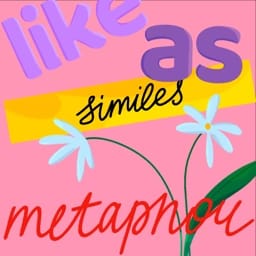
To extend an activity such as this, ask students to include figurative language devices such as simile and metaphors, alliteration, onomatopoeia and even personification.

I also recommend taking a look at the available videos and resources on ClickView’s Figurative Language Devices topic.
7) Informative writing prompts
One type of informative writing is the “how to”, or procedure. This writing allows students to be very descriptive and to demonstrate their knowledge of how to do a task.
Explaining how to do something has a two-fold benefit for students.
Firstly, they are able to gain confidence in writing because they are familiar with the topic.
Secondly, writers can practise the informative genre in a focussed way.
- Describe how to make your favourite sandwich. (Other appropriate food items can be substituted.)
- Choose a maths problem and explain how to solve it.
- Explain to a younger student how to play your favourite game.
- Describe how to make a cake.
- Explain three ways that someone can help the Earth.
- Compare and contrast summer and winter.
Another form informative writing takes is research.
In this type of writing, a student learns information about a topic and then shares that information in a formal writing assignment.
This provides an opportunity for students to learn about age appropriate research strategies.
- Write about an influential person. Include specific details about this person’s life.
- Research and write about a state (or country). Include important information such as language spoken, type of government, landmarks, and types of businesses.
- Write about an example of extreme weather – tornadoes, hurricanes, droughts, floods, etc.
- Choose a scientist or inventor. What did they do? Why is what they did helpful to us?
Informational writing videos & resources
Discover informational writing with videos and teaching resources for your students.

8) Emotive writing prompts
Young children often have big emotions. Expressing feelings and emotions in writing can be beneficial to students’ social-emotional learning and development.
SEL enhances young people’s coping skills, resiliency, and emotion identification, which can help reduce symptoms of depression and anxiety in the short term.
Collaborative for Academic, Social, and Emotional Learning (CASEL)
The emotional development of children is so important, especially in their formative years.
Giving students an outlet for expressing their happiness, anger, fear, and all other emotions is a gift teachers can give to their students.
- What makes you feel safe?
- What moment in your life is your happiest?
- What would you tell a friend who is feeling scared?
- Create a list of things that help you when you feel sad or overwhelmed.
- What makes a good friend?
- Describe what makes you unique?
- What do you like about yourself?
- How do you feel when faced with a challenge?
- Write about a mistake you have made. What did you learn from your mistake?
- What is something you accomplished today?
9) Thankful writing prompts
Expressing gratitude is part of the social emotional development of children.
- Why is it important to be thankful?
- What are you most thankful for?
- Is it always easy to be thankful? Why or why not?
- Think of a person who makes you feel loved and thankful? Why do they make you feel that way?
- Write a thank you letter to someone important in your life.
- What does gratitude mean to you?
World Kindness Day videos & resources
Celebrate World Kindness Day with videos and teaching resources for your students.

10) Holidays and celebrations writing prompts
Holiday prompts can be a contentious subject. Not all students celebrate all holidays. Knowing your students is the key to successfully writing about holiday celebrations.
The following prompts are useful for a wide range of students and holidays:
- Describe a holiday tradition or celebration in your family.
- If you could invent a holiday, what would it be?
- What is your favourite way to celebrate?
- Write about your favourite season and what activities you do during that time.
- What makes a great gift?
- My favourite holiday is … because …
Christmas
- Compare and contrast your Christmas traditions with another person’s.
- What is your favourite Christmas present that you have received?
- Write a letter to Santa.
- Write a letter to the Grinch.
- Write an adventure story told from the point of view of a reindeer.
- Write a Christmas poem.
- Tell a story about being a Christmas elf in Santa’s workshop.
Other holidays
- Write a Valentine’s Day poem.
- Describe the fireworks on New Year’s Eve (or another holiday you celebrate).
- My New Year’s resolution is…
- Who would you give something to and why?
- My favourite Halloween memory is …
- I want to be ___________ for Halloween because …
- Write about your day as the Easter bunny.
- Write a story about a magical Easter egg.
- Describe your dream birthday party.
References
- Developing Writing Prompts – Center for Excellence in Teaching and Learning – University of Connecticut
- Collaborative for Academic, Social, and Emotional Learning (CASEL)
Share to

Mattie Farrer
briefcase iconAVID Site Coordinator / Content Curator
Mattie Farrer has been an educator in various grade levels and capacities during her career. She has a passion for supporting English learners and their language development. She also loves helping teachers reach all students.
Other posts


Want more content like this?
Subscribe for blog updates, monthly video releases, trending topics, and exclusive content delivered straight to your inbox.