
Writing prompts for middle primary students to build strong writing habits
Published on 8 min read


In this guide
Why writing prompts are important for middle primary students

All middle primary teachers know what it’s like when their students are engaged and motivated to share their stories through writing. We long for a vibrant and buzzing writing classroom where our students are writing, reading, and using their voice to share their stories and create change.
The question is – how do we accomplish this?
Researchers have studied the idea of a ‘4th Grade Slump,’ or the time where literacy development declines in Year 4. This is due to a variety of reasons, but most importantly it is due to the switch between learning to read and reading to learn that occurs during the stages of reading development when most children are in Year 4.


We know that the texts students in 4th grade are encountering include more academic vocabulary, varying word choice, complex ideas, or inferred thematic elements. While students are reading these complex texts, it becomes harder for them to transfer these skills into their own writing. This is a major turning point in writing development and requires writers to think deeply and critically about the words they are putting on a page.
Developing writing skills with your Year 4 students will not only enhance their writing ability in English, but is a cross-curricular skill needed for future development as students develop – scientists, mathematicians, historians, and informed global citizens.

Becoming a writer also helps students process emotions, experiences, and their own identities. By building up their writers’ stamina, they will begin to see that their voice matters.
It is also imperative that we allow space for students to bring their whole selves to their writing. Invite students to use translanguaging and write using their native language or one that they feel fits the prompt and acknowledge students’ cultural identity and personal experiences in their writing.
Writing prompts can also support reluctant writers, multilingual learners, and other diverse learners in your classroom as well as those who might be caught in the 4th grade slump. Teachers can support their writing students by using detailed and culturally-responsive writing prompts that will further their learning.
Creative narrative writing prompts
Kids love stories and being storytellers! As Year 4 students strengthen their reading skills, they are simultaneously strengthening their writing skills.
To build on the natural creativity and curiosity of Year 4 students, teachers can engage students with narrative writing prompts that support the development of writing skills.
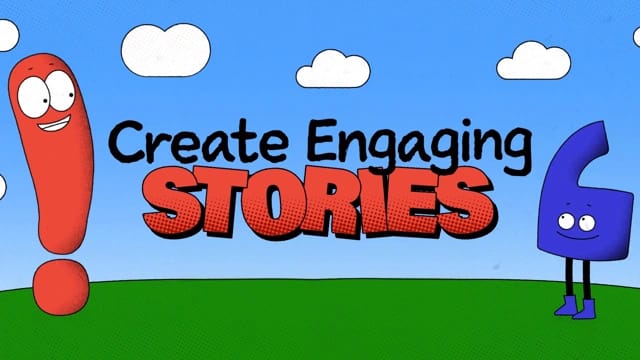
Watch Writing Narratives to introduce this unit or topic with your students and model the process.
A narrative story can have a variety of genres, but Year 4 students tend to love to write personal narratives about themselves or stories about their lives and the people and places that are familiar to them.
The best prompts, or invitations to storytelling, can come from mentor texts and authors.
Books and prompts
Consider using the following books and prompts to invite your Year 4 writers into creative narrative writing!
“The Proudest Blue.” Muhammad, 2019

Read this story with your students and prompt discussions and story-telling surrounding their families, identities, and strength.
Prompt your writers by asking:
- Has anyone ever made you feel different?
- Have you ever made someone else feel left out?
- Use this opportunity to extend students’ vocabulary!
“Nobody Hugs a Cactus.” Goodrich, 2019

In this story, students will learn that even the crankiest people need love.
Ask your writers:
- Have you ever shown love to someone in a time of need?
- How have people shown love to you when you were in a difficult mood?
- This is a great prompt for self care.


“Amah Faraway.” Greanias, 2022

Readers will learn about Kylie and her grandma who enjoy video calling each other from across the world. Despite this close relationship, when Kylie visits her grandmother in Taipei, she is shy and withdrawn because of the unfamiliar place.
Ask your students to write about:
- A family member who lives far away,
- Their experience going to an unfamiliar place, or
- Create their own imaginary place that they could dream of visiting!
“Saturday.” Mora, 2019

Read this story of a girl and her mum who spend their Saturdays following a routine. Every week is the same and they look forward to this time together, but this Saturday, everything goes wrong.
Have students write about a time where they had planned something but it went entirely wrong.
- How did they fix it?
- What real or imagined events or things can interrupt your normally scheduled day?
This is a great opportunity to discuss resilience.
Opinion and persuasive writing prompts
Opinion writing focuses on a writer’s own thoughts about a certain topic. The writer explains their reasoning for that opinion.
Persuasive writing is where the writer has the goal of convincing the reader that their opinion or claim is correct. Persuasive writing is usually filled with data, facts, and information to support a writer’s claim.
When introducing these types of writing with your year 4 students, consider discussing some age-appropriate debates such as:
- Should recess be longer?
- What is the best school lunch?
- Convince your principal to make the school day start later.
Help students recognise the features and attributes of opinion and persuasive writing. Students need to state their opinions clearly, provide a few supporting reasons, and use linking words while writing.
Mentor texts
Consider using the following mentor texts to prompt your Year 4 writers.
“We Rise, We Resist, We Raise Our Voices.” Hudson, 2019

- This book features a variety of storytelling. From art, to photographs, letters, and poetry, students can find an entry point into voicing their opinions.
- Consider asking students what they care about in their school, community, and the world. Prompt students to give facts, reasons, and thoughts to support their opinions.
“Pink is For Boys.” Pearlman, 2021

In this text, students will unpack their thoughts and opinions surrounding gender norms. This can be done through carefully researched and planned writing regarding gender norms and whether they exist or not.
- Should girls be allowed to play football?
- Can boys wear makeup or dresses?
- Can culture affect your gender?
- This could be a great time to explore acceptance of others.
“Change Sings.“ Gorman, 2021

Students will learn that by using their voice, they can make a difference. This book shares the message that anything is possible when you work together.
Consider asking students to persuade community members to add or change something about their community.
- What are they noticing about the community they live in?
- What do they want to change?
This could be kept as a short activity or expanded to actually involve the local community. Who knows – perhaps you have the next Greta Thunberg in your class!
Descriptive and explanatory writing prompts
Writing to explain or descriptively are powerful tools for Year 4 students. These writing forms then develop skills such as clarity and organisation.
When using descriptive words, students are able to slow down and really notice and observe the world around them. Consider teaching your students about sensory words and how those words can impact their writing.
Year 4 students are usually working on elaboration in their writing, moving beyond simple sentences to more complex ones with a variety of word choice. While descriptive writing, students can explore adjectives, similes, metaphors, and vivid imagery. Using explanatory writing gives students more structure and sequence in their writing.
Picture books
The following picture books will prompt your students to write and practice using these formats.
“Fry Bread: A Native American Family Story.” Maillard, 2019

- This book blends poetry and sensory details with a nonfictional explanation of the history of Fry Bread in the Native American culture.
- Consider asking your students to describe a food from their own culture using a variety of descriptive language. How can they combine the sensory details with the informational text as the author of this book does?
“Our Favorite Day of the Year.” Ali, 2020

- When this classroom is asked to describe their favourite day of the year, the students all choose different days!
- Your Year 4 writers can use this text to describe a special holiday or tradition in their family or culture.
- Ask them to use descriptors to explain how and why their family celebrates this day.
Fun journal and seasonal writing ideas to keep kids engaged
Sometimes students need writing to feel fun and engaging.
Quick journal prompts or seasonal writing activities don’t require a formal structure. As a teacher, you are looking to these strategies to practise writing stamina and elaboration.
Year 4 students are old enough to write independently but still enjoy small and quick motivational strategies in the classroom.
Changing seasons and holidays can provide fresh inspiration.
Journaling can help them express their feelings, notice patterns, and reflect on their overall growth during Year 4.
Students are more engaged when the writing and prompts reflect their lived experiences and families.
Open-ended prompts
Offer some open-ended prompts that give your students room to write on whatever topics they can think about:
- Describe a favourite family tradition or memory.
- What is something important you have learned from someone older than you?
- Write about a place that is special to your culture or family.
Reflective journal prompts
- What is something you are really proud of this year/week?
- What would you say to your future self? What do you hope for?
- When was the last time you felt brave enough to try something?
What happened?
How did you handle it?
- What is special about your name?
- How did you get your name?
Seasonal writing prompts
Autumn:
- Write a story about an animal going into hibernation.
- Tell a story from the perspective of a tree losing its leaves.
Winter:
- What would your world look like if you lived inside a snow globe?
- Write instructions for how to make hot chocolate
Spring:
- What plants would you grow in a magical garden?
- Things bloom in spring.
What part of you do you want to bloom this spring?
Summer:
- Where would you go on a dream holiday?
- Who would you take with you?
- What is your favurite summer memory?
It’s not always easy to get our Year 4 students interested and motivated to write. Even asking students to take out a pencil makes them groan! With these fun and engaging writing prompts for Year 4 students, writing teachers will be able to guide their writers to become engaged storytellers. All of your students have a story to share, and these prompts are a perfect way to help them begin.
Share to

Victoria Dotson
briefcase iconLiteracy Specialist
Victoria Dotson, an esteemed educator and professor in Chicago, Illinois, leverages her background as a Literacy Specialist to support multilingual learners and mentor preservice teachers. Victoria excels in developing literacy practices, promoting diverse literacy experiences in the classroom, and developing restorative curriculum.
Other posts



Want more content like this?
Subscribe for blog updates, monthly video releases, trending topics, and exclusive content delivered straight to your inbox.