
Valentine’s Day kindness activities to build social-emotional skills
Published on 9 min read


In this guide
Valentine’s Day in the classroom can be so much more than chocolate, cards, and flowers! It is the perfect opportunity for teachers to instil and foster kindness and social-emotional learning in their students. With some simple activities and discussions, teachers can foster a more positive and caring environment in the classroom.
Kindness is the foundation of an inclusive classroom environment. Teaching students to be more kind leads to a better sense of self, classroom community, and global community!
When students practise kindness in the classroom, they strengthen their ability to understand each other’s feelings, collaborate effectively, and manage and identify their own emotions.
A classroom culture founded in kindness reduces conflicts between students, boosts self-esteem, and enhances peer relationships between students.
Utilising Valentine’s Day as a theme to teach these skills can help foster empathy and care in your classroom.
- Develop empathy by considering how their actions may affect other people.
- Create an inclusive environment where everyone feels valued.
- Build stronger relationships through positive interactions with peers.
- Celebrate diversity and differences among students.
Strategies to encourage kindness in the classroom

Encouraging kindness in your classroom begins with intentionally bringing social-emotional learning to the forefront of every lesson. There are simple ways to incorporate kindness into your daily routine- not just on Valentine’s Day!
1) Model kindness
Demonstrating empathy for your students shows them how important it is to treat everyone with kindness. Show students how to be an active listener and how listening intentionally to others can show you care.
2) Create a kindness wall
Catch students being kind! Dedicate a bulletin board or shared space where students can share acts of kindness they have observed or experienced.
3) Book discussions
Reading books that highlight themes of kindness and empathy encourages students to show kindness to others. Discuss the characters’ actions and choices when they chose to be kind.
4) Acts of kindness
Recognise and celebrate students when they show kindness to others. Give students a few minutes every week to call out ways they have shown kindness to their classmates or ways their classmates have shown kindness to them.
You can even take this one step further by undertaking random acts of kindness yourself! You can leave small encouraging notes on student desks, send positive emails home to parents or simply speak kindly to your cohort focusing on the positive rather than the negative.
Valentine’s Day kindness activities
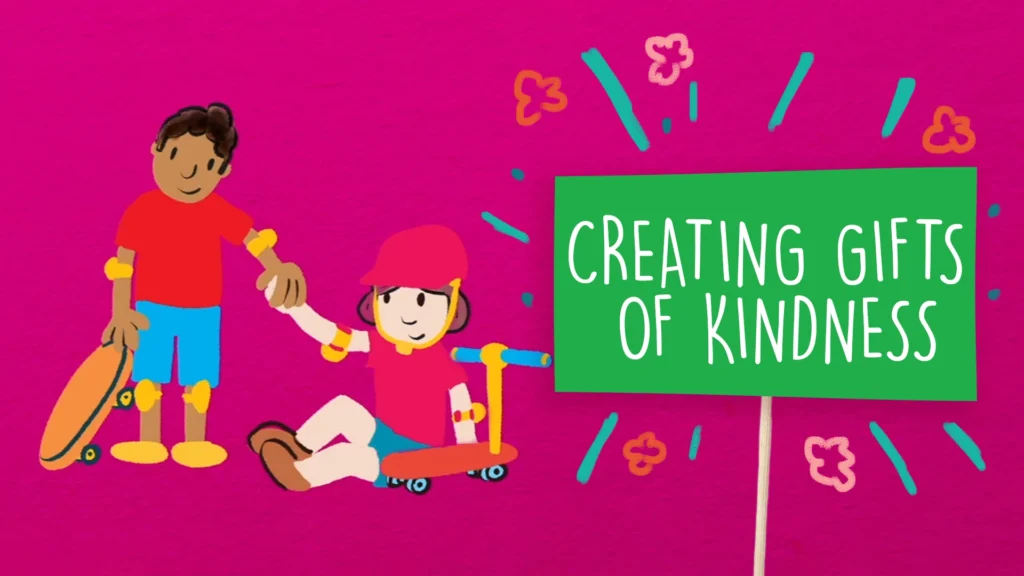
1) Valentine’s gifts of kindness
Students will need art supplies in order to complete the project successfully. Prepare paint brushes and paint, coloured pencils, textas, crayons, and coloured paper before beginning this activity with students.
- After sharing this video, students can consider how empathy and kindness helps us make caring decisions. Students will learn about responsibility and kindness by thinking about what they can do to help others.
- Discuss with students what they could do to help people in their neighborhood or family. Students can create a list of the kindness gifts they think about.
- Students will create kindness gifts.
These do not have to be craft items- get your students to think creatively; it could be homemade gift certificates that will offer an act of service to show kindness to someone.
Give students some examples such as helping with a pet, walking a neighbour’s dog, setting the table, or folding laundry. Students can write or create a picture.
- Students will then design and create wrapping paper they can use to package their kindness gifts.
- After students deliver their gifts of kindness, reflect on how others responded when receiving these gifts.
How did these gifts make someone’s day special?
2) Read aloud
Another great way to incorporate Valentine’s Day kindness activities in the classroom is through incredible children’s literature such as these:
- ‘Love Grows Everywhere’ by Barry Timms and Tisha Lee.
In this book, students learn that love can be grown anywhere. Students can connect the ideas of spreading kindness to growing plants. Discuss how students can grow kindness at school! - ‘This is NOT a Valentine’ by Carter Higgins.
In this text, students learn the value of friendship is more than just hearts and cards on Valentine’s Day. Have students create a letter of kindness to a friend or family member. - ‘In My Heart’ by Jo Witek.
This is the perfect Valentine’s Day read aloud that connects to social-emotional learning.
In this text, students learn about different emotions and how these emotions affect us. This is the perfect book to develop kindness and empathy around students experiencing different emotions. - ‘Willa & The Wind’
Watch Willa & The Wind and then discuss how Willa loved the wind so much. Willa wanted to fly like the leaves in the wind but realised she needed help.
Ask students how helping others is the same as treating people with kindness. Discuss how Willa felt after she was treated with kindness. - ‘Love You By Heart’ by Peter Reynolds.
Shares about love and kindness in poetry format.
Use this book to discuss the different types of love and kindness we receive in our lives. Ask students to reflect on how they can show love and kindness to others.

3) Kindness maths
- Create story problems centered around acts of kindness.
For example, ‘If Juan gave three Valentine’s cards to each of his six friends, how many cards did he give?’ - Pair students to solve the problems together.
- Discuss how students showed kindness and cooperation while working together to finish the Maths problems.
- Discuss how Maths can connect to real-life scenarios that spread kindness. (Such as, collecting cans for a food bank, donating money, etc.)
4) Kindness chain

- Build a visual representation of collective kindness.
- Each time a student performs or observes an act of kindness, they will write it on a paper strip.
- Connect the strips together to create a kindness chain.
- Display the chain in your classroom and watch the chain grow throughout the week.
Celebrate Valentine’s Day by starting this chain at the beginning of February and see how long it can get before the 14th!
5) Kindness scavenger hunt
- Encourage students to seek opportunities for kindness by creating a kindness checklist with age-appropriate tasks that they can complete.
- Students can complete kindness tasks on Valentine’s Day or on the days leading up to it
- Celebrate students’ efforts in completing the scavenger hunt and discuss which tasks were most meaningful.
Using visual aids and technology to enhance activities
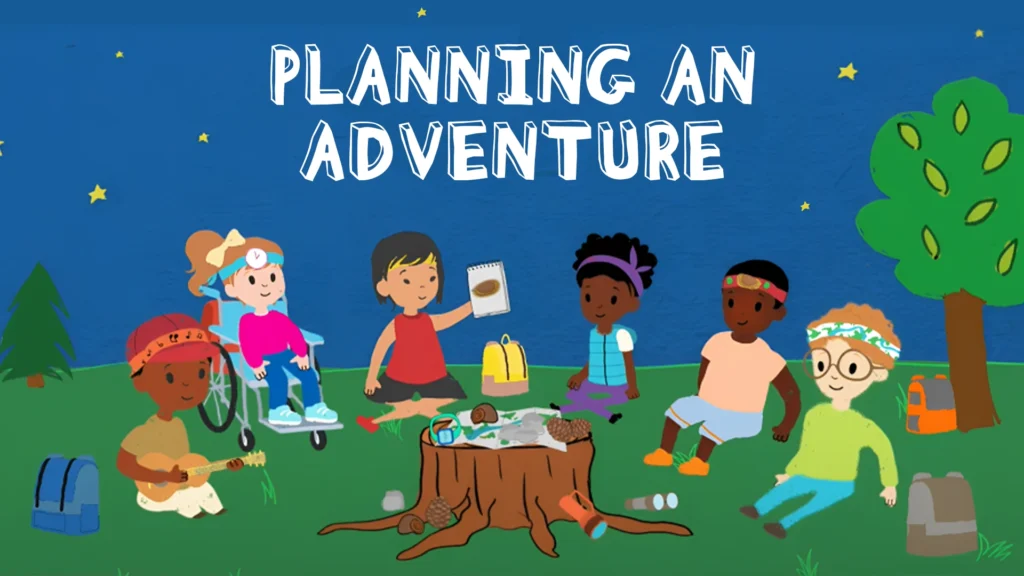
Kindness and Belonging
In this video, students learn about creating a project that centres around being kind to others and making them feel welcome.
- Students will plan an adventure with friends and think about how they would welcome a new member.
- Students will choose an important role for everyone in the group to lead part of a new adventure.
- Students will create and illustrate a headband that represents their role.
- Then, either ‘a new kid’ arrives, or this is planned for new students, and wants to join the adventure.
How will the students include this student and change their plans to help show this student kindness so they feel like they belong?
Love and Kindness at Christmas
In this video, students will listen to a young author, Molly-Rose, share a story about kindness at Christmas Time.
Ask students
- What parts of the story do they notice have to do with kindness and treating other people with kindness?
- Do they think there might be other ways in which kindness could have been shown?
- How do you think the characters in this video felt?
- Why do you think people are kinder during the holidays?
- Why do you think these attributes are important all year round?
You could also practise students’ listening skills by playing this podcast story and asking simple comprehension questions at the end.
Understanding and Caring
In this video, students will learn what empathy is and what it takes to be empathetic towards others.
Ask students how kindness and empathy work together to help us maintain stronger relationships?
Provide a number of relevant examples for students and ask them to discuss in small groups:
- The new kid is sitting by themselves at lunchtime on the bench. I remember feeling like that on my first day. But then my friend calls my name and I forget as I run over to them on the other side of the playground.
- Billy is picking on Imran again. I know the teachers said that we should come and find them if he’s being mean but what if Billy starts picking on me too?
- Sasha is the goody goody in class. Miss M always calls on her to do fun things like taking notes to the office and never keeps her in when the rest of the class is held back at lunchtime. I wish Miss M could see what she’s really like. When her back is turned Sasha sticks her tongue out at people, she ‘accidentally’ knocks books off desks and much much more. Miss M never believes us though when we tell her!
How would students realistically respond to someone like these people?
What Makes a Relationship Healthy?
This is the perfect Valentine’s Day kindness activity to learn about how to keep and maintain healthy relationships.
- Use this video to teach students what makes a good friend.
- Students will learn what respect looks like, sounds like, and feels like.
- Have them write or draw these attributes around a person and add their own vocabulary. You could also have them draw the opposite of these emotions and discuss how each would make them feel and affect their mood.
- The video also discusses why respect is important.
Caring About Others
This video invites students to think about how they might show empathy to their friends when they are experiencing negative emotions.
Showing empathy towards friends is a great way to treat others with kindness.
- What are some of the ways in which students can leave a mark of kindness on someone else’s day?
- After considering this have students
- Decorate a rock that can be added to their community garden with their thoughts.
- Write their thoughts on a strip of paper and turn this into a paper chain of kindness.
Students will also see a good example of what it means to be an active listener.
Evaluating the impact of kindness activities

Giving students time to reflect and evaluate the Valentine’s Day kindness activities they complete will ensure that the activities leave a lasting impression.
1) Reflection journal
- Have students write or use visuals to describe how the Valentine’s Day kindness activities made them feel.
- Ask them to write or draw about what they learned about kindness through the activities.
2) Discussions
- Facilitate conversations about how the Valentine’s Day kindness activities changed or impacted the classroom environment.
3) Observe
- Watch for changes or increase positive interactions between your students. Are they showing more empathy? Cooperation?
By incorporating these activities in the classroom, educators can create and grow a culture of kindness beyond Valentine’s Day. These lessons will assist students in developing empathy, building strong connections and relationships, and creating a more empathetic classroom community.
Share to

Victoria Dotson
briefcase iconLiteracy Specialist
Victoria Dotson, an esteemed educator and professor in Chicago, Illinois, leverages her background as a Literacy Specialist to support multilingual learners and mentor preservice teachers. Victoria excels in developing literacy practices, promoting diverse literacy experiences in the classroom, and developing restorative curriculum.
Other posts


Want more content like this?
Subscribe for blog updates, monthly video releases, trending topics, and exclusive content delivered straight to your inbox.