
6 Learning activities for kinesthetic learners
Published on 7 min read


In this guide
What are kinesthetic learners?
Kinesthetic learning requires the learner to manipulate or touch materials to learn. These are students who need manipulatives to learn. They are active and benefit from a hands-on approach.
Kinesthetic learning engages students in physical activity to enhance their learning. This physical activity can take many forms, but allows for movement and a more tactile approach.
Learners need the opportunity to make connections between their learning. Providing students with multiple exposures to content in different ways makes for a richer learning experience.
Kinesthetic activities are one of the ways that students can be given these multiple opportunities to learn. It allows them to make connections between content, their brains, and their bodies.
Kinesthetic activities are also frequently connected with other types of activities like auditory and visual learning. Again, this is a way for students to be provided with multiple ways to access content with multiple exposures to that content.
The following activities are examples of ways to incorporate kinesthetic learning into the classroom. Most of them are easily changed for any content area and suggestions for those changes have been provided.
1) Manipulatives
Often the idea of using manipulatives is associated with the maths classroom, however, they can be used in other content areas as well.
Content area examples:
Maths

Use base ten blocks to teach place value. Teachers can explain what each type of block represents. Students can use the base ten blocks to create numbers. They can use a columned chart to place the blocks and write their numbers using the correct place value.
Science
Teach the water cycle using blue construction paper, cotton balls, markers, tape, and a spray bottle. Students can create the different parts of the water cycle using these materials.
- Evaporation – Students spray a small amount of water onto the blue craft paper. Explain how heat energy can cause evaporation.
- Condensation – Spray the cotton balls until water droplets begin to form on them. Discuss with students how water vapour cools and condenses and forms clouds.
- Precipitation – Squeeze the wet cotton ball over a piece of blue craft paper. This demonstrates how rain/snow/sleet occurs.
- Collection – Tilt the paper to give an example of how runoff works.
Social studies
Instead of note cards – create timelines. Large timelines can be created on chart or butcher paper. Students can add events, pictures, important people, and other information instead of taking note cards. This timeline can be added to throughout the year, or changed according to the unit being taught. These events can be manipulated and information added as new learning occurs.
English
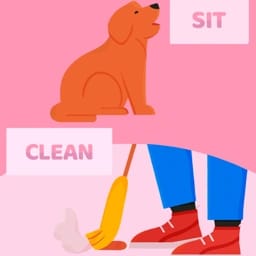
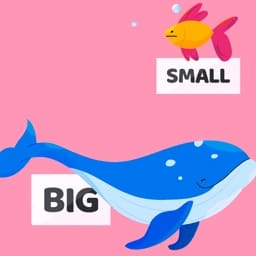
Teach parts of speech by giving students note cards and sentence strips. On the note cards include examples of nouns, verbs, prepositions, adjectives, etc. Students can use the note cards to construct sentences on their sentence strip or on a board/wall. Sentence parts can be manipulated and rearranged if students use something like double-sided tape to attach note cards. This activity can be changed according to what parts of speech or sentence parts are part of the lesson cycle.
2) Clothespeg punctuation
This activity is a great idea for a writing classroom or with any group of students that need help with punctuation. Students in my classes at primary, middle, and high school levels have enjoyed doing this activity. More examples of punctuation can be added as students learn them.
Materials:
- Sentence strips
- Clothespegs
- Permanent markers
Directions:
- Use the permanent markers to add punctuation (commas, full stops, apostrophes, exclamation points, question marks, etc) onto the clothespins. You can also print off multiple copies, cut out, and glue to the clothespins.
- On the sentence strips, write sentences without punctuation.
- The teacher can provide these sentences, or the students can create the sentences for each other. This depends on the developmental level of your students.
- Students use the clothespegs to correctly add punctuation to the sentences in the appropriate place. They should place the clothespegs on the corresponding edge of the sentence strip.
- For example, if the sentence requires a comma, the clothespin would be placed on the bottom in the correct part of the sentence. If the sentence requires quotation marks, the clothespegs would go on the top.
3) Role play
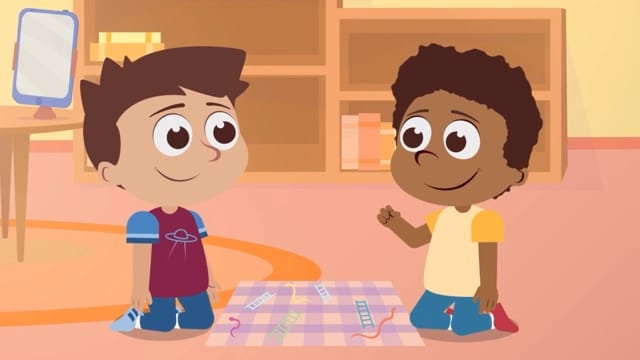
In another article, I gave several examples of role play activities for teaching social skills to students. Role playing can be used in multiple settings, however, to engage kinesthetic learners.
Role playing allows students to be up and moving, and also allows them to physically interact with other students and the subject matter.
Examples of role play activities:
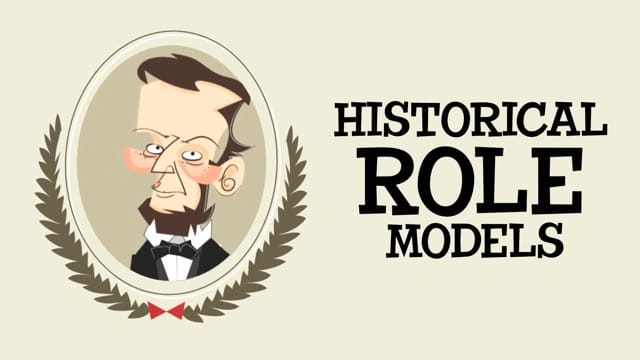
- Students act out a conversation between two historical figures in social studies.
- Secondary school students in a college preparation or communications course can role play interview skills.
- Primary students can role play verbs. Students act out a verb and other students identify the verb and create a sentence using the verb.
- Students can role play appropriate ways to handle conflict.
- In a science classroom, students can act out the different roles organisms play in an ecosystem.
- For students learning English as an additional language, they can role play different situations where they are applying the language they have learned. For example, asking for help or directions, buying something at the shops, or introducing themselves to new people.
4) Beach ball questions

I have used this activity in my English learner classroom, however, it could be modified to be used in other subject areas. The students like that they get to throw a ball around the room and it helps to keep them engaged because they have to be ready to participate.
Directions:
- Write questions that relate to the subject matter or lesson on the different sections of the beach ball.
- Students stand in a circle.
- The ball is tossed between students. As the students catch the ball they answer a question.
- There are several ways to determine what question the students answer:
- Each student must answer the question they touch with their left hand thumb.
- Assign groups of students a particular colour that coordinates with the colours on the beach ball.
- If students get the same question as others, they should expand on whatever has been said previously.

Examples of topics for questions:
- Parts of a story/text for English – main conflict, character analysis, or setting
- Historical events – significance, important people and places, important events, implications of the event
- Maths – solving various problems, give the steps for solving a problem, real world applications
- Science – steps in the water cycle, parts of a cell, ecosystems, steps in the scientific process
- Social skills – steps for solving conflict, interview questions, ways to deal with stress
- Art – different types of art, artists and their lives, analysis of a particular piece of art
5) Sculptures
Activities that can be used in multiple ways are one of my favourite resources as a teacher. This activity can be changed for any subject and the materials can also be changed to fit your needs.
Creating sculptures to represent vocabulary words or other concepts is a very tactile activity for students. It challenges students to think creatively and to also use their hands to create.
Materials:
- Playdough, clay, or air dry clay
- Vocabulary words
Directions:
- Give each student a piece of playdough. They need enough to be able to create a sculpture.
- Each student is given a vocabulary word.
- Students will use their playdough to create a sculpture that represents their vocabulary word.
Modifications:
- Give students aluminum foil to create their sculpture instead of playdough. Where I live there is a restaurant that wraps their burritos in aluminum foil. They challenge their patrons to create foil sculptures that are then displayed around the dining area. This same concept can be applied to the classroom.
- Students can create sculptures to represent more abstract concepts such as friendship, love, compassion, empathy, etc. This makes the activity more challenging and requires deeper thought processes.
6) Hula hoop diagram

Use hula hoops to allow students to manipulate information. This activity is another one that can be done with any content.
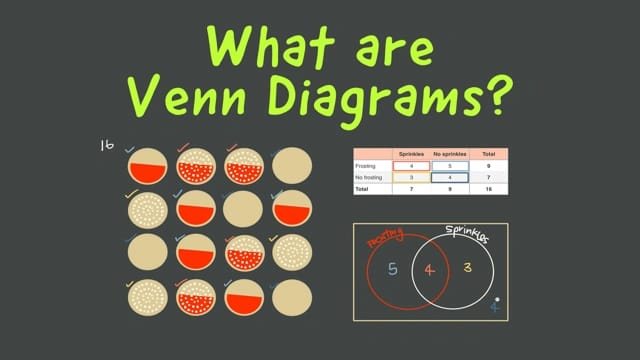
When doing this in my own classroom, students typically used the hula hoops to create a large Venn diagram. Other sorts of diagrams can also be used – or the hula hoops can simply be used for categorisation purposes.
Directions:
- Divide students into groups.
- Give each group two hula hoops.
- Give students note cards with vocabulary words, facts, questions and answers, etc.
- Examples: setting and plot, plant cells and animal cells, verbs and nouns, northern and southern colonies, function and not a function, types of triangles, etc.
- Students categorise the note cards and place them within their hula hoop diagram.
Modifications:
- Students can categorise the note cards and create their own category titles as a group.
- Give students the category titles and have them create note cards that coordinate with those categories.
Kinesthetic activities can be useful in the classroom by providing a way for students to engage with materials by using their whole body. They are manipulating materials and interacting in meaningful ways with the content.
References
- Clemons, S. (2004) “Developing On-Line Courses for Visual/Kinesthetic Learners: A Case Study”, International Journal of Instructional Technology and Distance Learning, 1(11), pp. 51-62. Available at https://acdowd-designs.com/sfsu_860_11/VAK_DE.pdf#page=55 (Accessed: 24 July 2024).
- Houghton University (2024) Kinesthetic Learning Styles. Available at https://www.houghton.edu/undergraduate/student-life/student-success/academic-support-and-accessibility/study-skills/general/kinesthetic-learning-style/ (Accessed: 24 July 2024).
Share to

Mattie Farrer
briefcase iconAVID Site Coordinator / Content Curator
Mattie Farrer has been an educator in various grade levels and capacities during her career. She has a passion for supporting English learners and their language development. She also loves helping teachers reach all students.
Other posts


Want more content like this?
Subscribe for blog updates, monthly video releases, trending topics, and exclusive content delivered straight to your inbox.