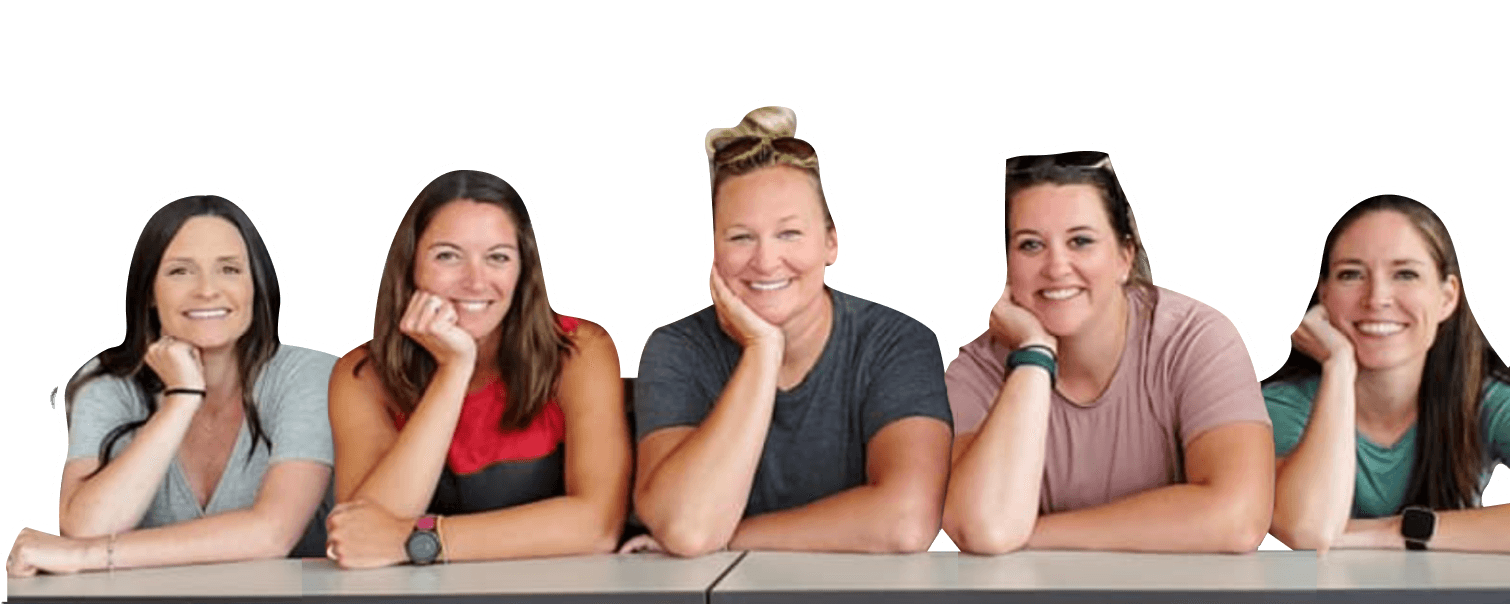
West De Pere Library Team
"A learning resource is meaningful for students if they connect to it. It ultimately has to be timely and something that matters to students."
West De Pere Library Team,
West De Pere School District
De Pere, WI
What has been one of your favorite or most engaging lessons you’ve run out of the library?
There was an activity called “AI or Not,” where students had to look at an image and decide whether or not it was AI. They were all engaged and really loved it! Turns out the kids are way better at this game than adults! I will definitely be doing that one again. At the high school level, we don’t have regularly scheduled library lessons, but I did an activity with freshmen called “Judge a Book by its Cover,” which I personally love because we get to do book talks on those. I also have a former college roommate who works in the book cover design industry and some of her books are on our shelves. It’s a full experience of discussing the books, sharing some of her covers, and also discussing career options like cover design and marketing. We absolutely judge books by their covers! They’re trying to sell us a book, so it makes sense. The students love it. In the 5th and 6th grade building we did a lunch event called “Book Bites” where they were able to bring their lunches to the library and the theme was books worthy of being on the big screen. We talked about books that aren’t currently made into movies, but should be, and we did author interview videos, ate popcorn, the students designed their own movie posters for those books they felt should be movies and it was really cute.
How are your libraries helping create stronger connections and impact across the school community?
With budget issues, librarians are getting cut everywhere. I’m really proud of our district and our board for supporting a librarian in every building. I think that’s becoming a rarity and that alone has allowed us to have a much better K-12 perspective. We get to come together every week and share our strengths and weaknesses, network with each other, and figure out how to solve problems. The cohesiveness of having us all together, with one person in each building, allows us to really make an impact for students and staff. Because we have this team, we’ve been able to do a lot of digital safety nights with families in the community to increase their awareness. Our team recognizes that a lot of schools use scare tactics and parents will often leave terrified, but they don’t know what to do about it. We had a three-part series. The first part included school resource officers and someone from the sexual assault center talking about dangers within the community. Then, our counseling team talked about why kids behave certain ways, the frontal lobe, and brain science behind behaviors. And it ended with our team who shared what we’re doing as a district to protect students and what can be done at home. So it was really an opportunity to inform and prepare, rather than scare and send them on their way. We’ve also done some other events around teenagers and technology addiction, as well as newer topics from the last five years such as school library book choice. We have worked to make sure our community is very familiar with our roles and responsibilities, and because of that they are very supportive. They know we are not making decisions lightheartedly, and that we’re trying to educate. We really appreciate the support in our community and how they advocate for the library system in general.
Related videos on ClickView
How are you helping students to think critically about resources?
Our team is under the curriculum director so we work side-by-side with teacher teams while they are working on curriculum. If we have coaches in our building, we’re also working with them. For example, if the literacy coaches are using a strategy with print books, we can coordinate what the digital strategy should be so that it mimics what the print book strategy is. I feel like our middle name is Collaborative. Whether we’re working with our teacher teams or our coaching teams, we’re coming back together to make sure everything is cohesive. We definitely try to have a cohesive K-12 online safety plan. We use Common Sense Media, and push into classrooms to do those digital safety lessons. We’re always following the research on brain science. For instance, if I’m starting AI introductions with 5th graders, and then communicating with a team member as they move to 7th and 8th grade, she can make sure she’s building upon what we’ve already done by sharing the resources and making sure students are hearing the same message.
Related videos on ClickView
In your experience as a team and as individuals, what makes a learning resource meaningful for your students?
A learning resource is meaningful for students if they connect to it. It ultimately has to be timely and something that matters to students. Their personal connection matters a lot. Whatever source you’re using, you have to find ways to connect with the kids. They’re the ones using it. If that resource doesn’t connect, then as a professional you have to build enough background knowledge so they care. A few years ago, we did community virtual reality tours for the students because we were finding that we would read about a fire station, but it was in New York City so they couldn’t relate. We went to our local fire station and took pictures and 360 videos, we interviewed everyone there, and really showed them our community workers and what our community places looked like. Sometimes it comes down to the team being creative and trying to think about how we can make connections that are not already there. ClickView Live is a great resource to help make field trips part of everyday life!
If you had five minutes at an administrator’s conference to explain the power of the library, what would you share?
The library and the media center are the hub and the heart of your district, and if our superintendent were with us, he would tell you the same thing. It’s where ideas happen, where readers are developed, and where they come for resources. We get to make connections with all the students and all the teachers. If I only had five minutes, I think I would rapid fire examples of why and how it’s the heart of the school and all the things we’ve done in our district to make it such a vital part of each building.

Lightning Questions
1. What book are you reading now?
I just finished reading The Correspondent by Virginia Evans and I absolutely loved it! I’m also reading The Downstairs Girl by Stacey Lee for our student book club choice. — Ashley Knapp
2. Who is the one person you follow on social media that you always learn something from or who makes you laugh?
Kara and Nate are a travel couple I follow. My daughters and I love following their adventures and learning about different places around the world. — Jennifer Gossen
3. Favorite tech tool right now?
NotebookLM. I love creating custom AI platforms so we can do a deep dive into our preferred data sets. — Jen Wathke
4. What is the best part of your role that others might not realize?
The best part is getting to work with students in the school and connecting with them in a different, unique way. Without the pressure of report cards or grades, we really get to connect over books, creativity, and their interests. I get to be a trusted, supportive adult in their school lives. — Jami Goodman
5. What is one piece of advice you’ve received that has been most beneficial to your career?
Don’t take your job home, unless it involves a book! — Nicole Verbeten