
11 Activities to build civics skills in your classroom
Published on 9 min read

In this guide
What is civics and why is it important in education?

Knowledge of civics is the knowledge required to successfully navigate and participate in government. A solid foundation in civics is a necessity for understanding Australian history, current events, and your rights and responsibilities as a citizen.
On a more local scale, citizenship education empowers students to engage with their community, identify social responsibility, and create positive change where possible.
Foundational civics skills all students should develop

Civics education is a complex suite of knowledge that requires some specific skills. In order to advance their civics education, students should be proficient in:
1) Critical thinking and analysis
These are crucial skills for understanding and exploring complex societal issues.
These skills imbue students with the ability to evaluate evidence, question claims, and examine multiple perspectives.
2) Communication skills
Talking politics is a delicate business.
Being able to share information calmly and succinctly, while also demonstrating active listening, is a skill more adults and politicians could stand to work on!
3) Collaboration
Creating positive change takes a village.
4) Media literacy
Identifying reliable sources and spotting fake news is unfortunately a new skill we’ve had to learn in the past decade or so.
Recognising purpose and bias in media is now a timeless and vital skill.

Engaging classroom activities to teach civic concepts
When I was in high school, I took an advanced History course instead of studying civics and citizenship. The result was me graduating with a wealth of knowledge about what happened in the past, and almost no knowledge about how to find out what’s happening now.



To spare your students the trouble of being responsible for their own government and citizenship education, here are some interactive civics activities that will help them build knowledge of civics or prepare for civics exams.
I’ve organised them by activities you can do solely in your classroom and activities that get your class out into the larger community.
1) Create a classroom constitution
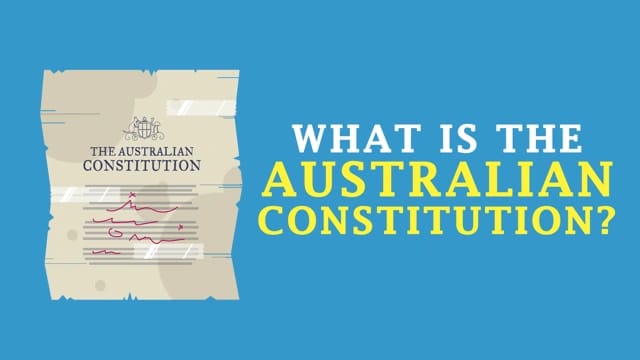
The Australian Constitution is the supreme law of the land. Developing a classroom constitution can serve the same purpose in your class.
Brainstorming, debating, and ultimately deciding upon a code of conduct will give your students a personal stake in how your classroom is run. It’s also a great way to replicate a participatory democracy while learning about the Constitution and its amendments.
- Begin by asking your students, individually or in small groups, to write down the 3 to 5 of most important rights and responsibilities they have as students in your classroom.
- Next, ask your students to share, recording their answers somewhere visible as you go.
- When they’re finished sharing, direct their attention towards the list they’ve created, and ask if there are any additions, edits, or subtractions. Encourage debate and civilised discussion.
- When it’s finalised, display their new constitution somewhere in the classroom. Leave it up throughout the year and refer to it whenever necessary.
2) Hold a mock election
This can coincide with the occurrence of a real political election, or be a work of pure fantasy.
- Present two or more candidates to run for an important role.
- Provide your students some basic details about each candidate’ platforms, strengths, and backgrounds.
- Allow your students to make an informed decision and vote on their candidate of choice. This can be done digitally or via an old-school ballot box for a more authentic voter experience.
- After the winner is selected, reflect as a class on who won and why.
Was anyone surprised? Disappointed? Angry?
- What could the victor do to win over those who voted against them?
3) Establish a student government
Student governments, sometimes called student councils, empower students to take an active role in the workings of their school.
Many schools have a student government consisting of a president, secretary, treasurer, and other general positions that mirror a larger government.
At a school level you’ll need to take the following steps to get the ball rolling:
- Gauge interest among the student population.
- Identify supportive staff (teachers, administrators) who might act as advocates or a faculty liaison, as well as an official advisor.
- Establish a Constitution (see #1) and a set of bylaws.
- Nominate and elect students for specific roles.
- Identify sources of funding, if possible.
- Hold regular meetings to identify and address important issues.
This is a large undertaking, so if doing it at the school level is too big of an ask, try starting with just your class or grade level.
4) Compile a list of community resources
This is a simple way for your students to become familiar with the resources available to them and to the larger community. Start with an internet search for your area’s municipal websites. Is there a town hall page, or digital newspaper available to peruse?
This information can be shared through
- The school newsletter,
- The school website,
- Morning notices and announcements and/or
- Communications home for parents.
The goal here is to identify, become familiar with – and hopefully make use of, some of the resources their areas offer such as libraries, parks, and other community services.
5) Contact change makers
Another simple way to get involved is to identify a local changemaker and how they can be contacted.
Start by identifying some issues in your area that could be addressed by the local government. These could be things like:
- Planting new trees.
- Starting a recycling or composting program.
- Cleaning up a specific area.
Once your students have an issue in mind, have them research who is in charge of that initiative and how they can get in touch. This is often a local or state politician or community board member.
Then have them draft their request. This will likely be a letter, email, or scripted phone conversation.
Once it’s edited and teacher-approved, go for it! Have them send the letter or make the call.
6) Study civics movements in history
Australian history has many powerful civil rights movements. Choose one or more to conduct an in-depth study of with your class.
Wherever possible, make relevant connections to today.
- How has this issue impacted the people in our lives? Our parents’ lives? Our grandparents’ lives?
- How would your life be different today if this movement never happened?
7) Research and present on a global issue
Sometimes the best way to learn about your community is to look towards other communities. Depending on the scope of your class curriculum, this can be a neighbouring town or one halfway across the globe.
Assign, or have your students choose, a community of people. They should research and do their best to answer the following questions:
- What are the racial, political, and fiscal demographics of this community?
- What are some of the most pressing issues in this community?
- How are decisions made by or for this community?
- Have there been any important civic movements in this community in the past? When and why?
Once their report is finished, have your students share out with the class via an oral presentation.
Activities in the community
8) Organise a community improvement project
One of the simplest ways to get your students involved in their community is to physically get out there!
Start by identifying a space within your school grounds or the school’s neighbourhood that could use some sprucing up. Contact any necessary parties and arrange a day for you and your students to make positive change.
Here are some suggestions to get you started:
- Plant a garden.
- Pick up trash in an area (park, along a road).
- Paint a mural.
- Host a food or clothing drive.
- Start a composting initiative.
There are endless ways to make a positive impact on your community, so feel free to source suggestions from your students too!
9) Organise a community voting drive
Here’s a perfect combination of community service and citizenship in action.
In states and territories where it is not mandatory, many people do not vote in local elections. Yet these are the elections that are the most likely to impact your immediate community!
Work with your students to raise awareness around the election, the candidates, and the issues at stake. This can take the form of a homework assignment of speaking with their family and guardians, or a larger community reach where you and your students disseminate information about the local election.
One actionable change to focus on is getting people to register to vote in the first place. Use organisations like the AEC to help set up a voter registration drive. If you are 16 or 17, you can enrol now so when you turn 18 you’ll be ready to vote. Did you know Australians can register to vote at age 16 or 17 so when they turn 18 they are ready to vote?
10) Organise a fundraiser
Another fantastic way to get your students rallying for change is to organise a fundraiser for something they feel strongly about.
Fundraisers might already be a feature of your school community, but even so, allowing your students to take agency to organsise and decide where the raised funds are directed is an excellent practice in leadership.
A go-to for many schools is a car wash or selling chocolates, but see what your students can come up with!
11) Volunteer
Volunteering in the community is a way of giving back, and a valuable lesson for your students on how free resources come to be.
As a class or as an individual assignment, have your students identify a local opportunity to volunteer and spend a day contributing.
Some fun ones for students are pet rescues and libraries.
Tips for integrating civics into everyday lessons
The simplest way to ensure your students’ ongoing engagement with civics is to build it into your classroom culture and daily lesson plans.
You can reinforce their newly acquired civics skills by:
- Voting as a class on things such as:
- Types of homework assignments given,
- How they can spend free time, and
- Rewards they might receive for good behaviour.
- Discussing school and community issues regularly as a class.
- Connecting current events to historical precedents or global equivalents.
- Utilising community resources through school excursions or guest speakers.
Civics skills are the building blocks that will help your students become informed and involved in the world around them. Whether at a school, community, or national level, the skills they’ll need to navigate the political landscape and function as an exemplary citizen can start right in the classroom.
Resources
- Anderson, L. W. (2023) “Civic education, citizenship, and democracy”, Education Policy Analysis Archives, 31. doi: 10.14507/epaa.31.7991.
- Charest, B. (2021). Teaching civic literacy in schools : reviving democracy and revitalizing communities. New York, N.Y.: Teachers College Press.
- Ehrenworth, M., Wolfe, P. and Todd, M. (2021). The civically engaged classroom: reading, writing, and speaking for change. Portsmouth, Nh: Heinemann.
- Halverson, L. R., Tucker, E. and Smith, G. H. (2024) ‘Teaching Civics: An Overview of Instructional Strategies Using Primary Sources, Role-Play and Simulations, and Academic Service Learning for Teaching Civic Knowledge, Skills, and Dispositions’, The Social Studies, pp. 1–21. doi: 10.1080/00377996.2024.2379908.
- Korbey, H. (2019). Building Better Citizens. Rowman & Littlefield Publishers.
- Shapiro, S. and Brown, C., 2018. The State of Civics Education. Center for American Progress. https://files.eric.ed.gov/fulltext/ED586237.pdf
Share to

Jessica Pastore
briefcase iconMuseum Educator
Jessica Pastore is a museum educator living and working in New York City. Her background is in social studies education and world history. She has taught in both classroom and gallery settings for the past ten years.
Other posts



Want more content like this?
Subscribe for blog updates, monthly video releases, trending topics, and exclusive content delivered straight to your inbox.