
Beginners guide to 12 classroom management theories
Published on 10 min read

In this guide
- 1) How can theories of classroom management help teachers?
- 2) Classroom management models and theories
- 1) Social learning theory
- 2) Assertive discipline
- 3) Discipline with dignity
- 4) Discipline through democratic teaching
- 5) Discipline through congruent communication
- 6) Noncoercive discipline
- 7) Positive classroom discipline
- 8) Win-win discipline
- 9) Improving discipline through classroom management
- 10) Discipline through raising responsibility
- 11) Discipline through influencing group behaviour
- 12) Discipline through shaping desired behaviour
- Resources:
The unfortunate reality of teaching is that you will always have students who misbehave.
The good news is that there are dozens of tried and true approaches to classroom management for you to try out.
1) How can theories of classroom management help teachers?
If you’re anything like me, when you began your teaching journey you were simultaneously excited to impart knowledge and terrified of how your students might receive it.
My semester student teaching was an anxiety-riddled few months spent navigating the best ways to address a variety of student needs and expressions. Eventually I figured out a few classroom management strategies that spoke to my personality and my group of students.
2) Classroom management models and theories
No two teachers or classrooms are the same. There are dozens of classroom management models and theories out there, so it stands to reason that one or more will work for you!
Keep in mind that you may need to shift your approach as your students, age group, and approach to teaching change.
1) Social learning theory
Definition: Teachers encourage appropriate behaviour and self-regulation by activating and modelling it in a social context, such as during directed instruction and group work. (Albert Bandura)
This theory suggests focusing on and awarding model behaviour in the classroom as opposed to bringing attention to less than desirable behaviour.
What does it look like?
Praising a student who is behaving appropriately rather than berating a student who is not. The idea is that the misbehaving student will self-correct their own behaviour.
How can I apply this in my classroom?
- Verbally call attention to a student or group who is exhibiting model behaviour
- Applaud or otherwise positively reinforce appropriate behaviour of students who previously struggled with it
- Reward the behaviour you want to see
What is the benefit for my students?
Students believe in their own ability to manage their behaviour and become self-regulators as appropriate behaviour is learned and imitated.
2) Assertive discipline
Definition: Teachers interact with students in a calm and meaningful way, focusing on positive behaviour while providing a climate where students’ needs are met. (Lee and Marlene Canter)
This theory suggests acting as a disciplinarian when necessary in order to address and correct inappropriate behaviour.
What does it look like?
Establishing a clear hierarchy of discipline and consistently modelling and expressing expectations. Consequences gain severity if poor behaviour is repeated.
How can I apply this in my classroom?
- Use a colour system to visibly track student’s behaviour
- Track offences on a clipboard or gradebook
- Use physical proximity, disapproving looks, and gentle callouts to redirect non disruptive behaviour
What is the benefit for my students?
Students acquire a sense of comfort and recognise the consequences of their actions.

3) Discipline with dignity
Definition: Students will have success in school if there are procedures in place that establish a sense of dignity and hope. (Curwin and Mendler)
This theory suggests that most students misbehave to prevent damage to their dignity. This can be corrected by establishing school as a safe, hopeful, and important place.
What does it look like?
Preventing escalation of unwanted behaviour by continuously enacting appropriate consequences, without embarrassing the student.
How can I apply this in my classroom?
- Be consistent in enforcing rules and their corresponding consequences
- Maintain the student’s dignity by keeping correspondence private and not embarrassing them
- Speak firmly, but without anger
What is the benefit for my students?
Students believe that school can be beneficial and that they can exert control over their own lives. They experience success in school and maintain their dignity and a sense of hope.
4) Discipline through democratic teaching
Definition: Students acquire self-discipline based on an understanding of social value. (Rudolf Dreikurs)
This theory suggests that misbehaviour in the classroom stems from a student’s feeling that they don’t belong.
What does it look like?
Establishing classroom rules and the consequences for violating them together with the students instead of imposing your own rules.
How can I apply this in my classroom?
- Use a democratic approach to decide how the class functions
- Decide on classroom rules as a unit and display them somewhere easy to see
- Emphasise social connection
What is the benefit for my students?
By addressing the underlying causes of misbehaviour, students will acquire self-discipline.

5) Discipline through congruent communication
Definition: The teacher establishes empathetic communication with students, where he reasons with them without criticising them. (Haim Ginott)
This theory suggests establishing empathetic communication within the classroom, and reasoning with students without criticising them.
What does it look like?
Addressing situations as they arise, without prior judgement or prejudice. Each student and situation is unique and should be approached as such.
How can I apply this in my classroom?
- Establish effective communication with your students
- Focus on the behaviour at hand, not on the student or past behaviour
- Create a risk-free environment, where students are comfortable voicing their thoughts
What is the benefit for my students?
Students are given a fresh start each day, and effective communication helps them take responsibility for their actions.
6) Noncoercive discipline
Definition: Motivated by a stimulating curriculum, students make responsible choices that lead to their personal success. (William Glasser)
This is at the heart of all good education, where the teacher asks students to think and engages them in encouraging dialogues, constantly checking for understanding and growth.
William Glasser, M.D. (1998). Choice Theory: A New Psychology of Personal Freedom.
This theory suggests that forcing students to behave a certain way is doomed to fail. The teacher is responsible for teaching and the students are responsible for behaving.
What does it look like?
Students make good choices because they are invested in their learning and excited to find out more. The classroom is a safe space for inquiry and exploration.
How can I apply this in my classroom?
- Implement an attractive curriculum with meaningful connections for the students
- Use a student-driven approach to lessons
- Leave space for discussion opportunities and exploration about topics that interest the students
What is the benefit for my students?
Students are able to make their own responsible choices that lead to personal success.

7) Positive classroom discipline
Definition: The teacher establishes clear classroom structures, uses effective body language, uses “Say, See, Do” teaching, uses incentive systems, and provides efficient help to students. (Fred Jones)
Say, See, Do teaching is a process used that helps combine all three learning modalities together to form one pattern.
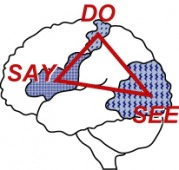
This theory suggests that the most effective teacher puts students to work from the beginning, rather than lecturing for a large portion of the class.
What does it look like?
The teacher says – or does – something, the students observe, and then they put this newly acquired information to work.
How can I apply this in my classroom?
- Arrange your classroom so that the physical distance between you and your students is minimised
- Establish an opening routine such as bell work, so students can self-direct upon entering
- Assign classroom chores to further involve your students in daily operations
What is the benefit for my students?
Students are alert and actively involved in their learning process, rather than being bored and disengaged.
8) Win-win discipline
Definition: A partnership where teachers and students work together and promote responsible behaviour in a positive learning environment. Opportunities for collaboration engage students and allow teachers to adjust interaction patterns as needed to support student success. (Spencer Kagan)
This theory suggests that an engaged student is not a disruptive student. Three conditions must be met for a successful classroom: an engaging and challenging curriculum, meaningful opportunities for collaboration, and a motivating and engaging teacher.
What does it look like?
Students, teachers, and parents all work together and are on the same side. Shared understandings about behaviour and solutions allow for a well-behaved group of students who are prepared to learn.
How can I apply this in my classroom?
- Implement interesting lesson plans with real connections to students’ interests
- Offer opportunities for collaborative learning
- Work with students to resolve negative behaviour and implement teachable moments
What is the benefit for my students?
Students are empowered to make responsible behaviour choices, get along with others, and learn life skills.
The 5 P’s of win-win discipline:
- Pillars (Philosophy)
- Procedures (Ounces of prevention)
- Positions (Places students are)
- Process (Strategies for the moment of disruption and follow-ups)
- Programs (Pounds of Prevention)
Source: Kagan Online
9) Improving discipline through classroom management
Definition: Instructional management directly affects student behaviour. If a teacher plans and paces lessons well and is always prepared with the materials, he or she will have success delivering instruction and maintaining smooth transitions. (Jacob Kounin)
This theory suggests that a well-prepared teacher makes for a positive classroom environment.
What does it look like?
Well-paced lessons and clear organisational systems in place for everything from where to submit homework to options for students who finish their work early. Clear expectations limit the opportunity for disruptive behaviours.
How can I apply this in my classroom?
- Create an organised classroom, with a place for everything
- Establish clear classroom procedures
- Plan and pace your lessons well
What is the benefit for my students?
Students recognise that they are part of a larger group, reflect on the productivity of their actions and behave accordingly, and never have to guess at your expectations.

10) Discipline through raising responsibility
Definition: Students benefit from adopting and using three principles in their daily lives: positivity, choice, and reflection. (Marvin Marshall)
Responsibility finds a way; irresponsibility finds an excuse.
Dr. Marvin Marshall (2017), Live Without Stress: How To Enjoy the Journey.
This theory suggests that as students show more personal responsibility, classroom behaviour as a whole improves.
What does it look like?
Using non-coercive tactics and character education to encourage responsible behaviour in the classroom.
How can I apply this in my classroom?
- Rely on internal motivation rather than external incentives (like candy or a movie day)
- Encourage your students to reflect on and self-evaluate their work and behaviour
- Hold regular classroom meetings where students can share their reflections
What is the benefit for my students?
Students accept personal responsibility for their behaviour, and adopt the three guiding principles in their daily lives.
11) Discipline through influencing group behaviour
Definition: Students behave differently in groups, and teachers can influence students to control classroom behaviour. (Fritz Redl and William Wattenberg)
This theory suggests that group behaviour influences individual behaviour, so classroom management must be achieved through managing the group as a whole.
What does it look like?
The teacher consistently demonstrates the relationship between behaviour and consequences, although punishment is a last resort.
How can I apply this in my classroom?
- Create opportunities for group work
- Offer chances for students to take on leadership roles
- Occasionally apply the pleasure-pain principle
What is the benefit for my students?
Students learn self-control and relate to the group.
12) Discipline through shaping desired behaviour
Definition: Immediate feedback and rewarding behaviour positively result in behaviour modification. (B. F. Skinner)
This theory suggests that positive reinforcement is more effective at changing behaviour than punishment.
What does it look like?
The teacher consistently gives immediate positive reinforcement when students demonstrate a desired behaviour.
How can I apply this in my classroom?
- Implement a positive reward system with desirable “prizes”, such as extra free time
- Discipline by removing a reward or privilege
- Give immediate feedback on behaviour
What is the benefit for my students?
Students continually exhibit good behaviour and feel proud of their accomplishments when receiving positive feedback.
Resources:
- Class Manager | ClickView
- Transformative Classroom Management Resources
- Choice Theory, Quality School and Classroom – Glasser Community
- Tools for Teaching by Fred Jones
- Kagan’s FREE Articles – Articles by Dr. Spencer Kagan – What is Win-Win Discipline?
- The Organized Teacher’s Guide to Classroom Management: Proven Ideas and Strategies to Expand Your Skills and Enhance Your Students’ Learning Experience by Steve Springer and Kimberly Persiani, 2011. Copyright © 2019 McGraw-Hill Education.
- Transformative Classroom Management: Positive Strategies to Engage All Students and Promote a Psychology of Success by John Shindler, 2009. Copyright © 2009 by John Wiley & Sons.
- Strategies for Successful Classroom Management: Helping Students Succeed Without Losing Your Dignity or Sanity by Brian D. Mendler, Richard L. Curwin, and Allen M. Mendler, 2008. Copyright © 2008 by The Teacher Learning Center, LLC.
- Transformative Classroom Management: Positive Strategies to Engage All Students and Promote a Psychology of Success by John Schindler, 2010. Copyright © 2010 by John Schindler.
Share to

Jessica Pastore
briefcase iconMuseum Educator
Jessica Pastore is a museum educator living and working in New York City. Her background is in social studies education and world history. She has taught in both classroom and gallery settings for the past ten years.
Other posts



Want more content like this?
Subscribe for blog updates, monthly video releases, trending topics, and exclusive content delivered straight to your inbox.