
8 Activities to help students make the most of school library time
Published on 11 min read


In this guide
When I was a young child, my very favorite day of the week was Sunday. On Sundays, my grandmother gathered my sister and me and visited our local library. My grandmother had but one rule: we could only check out as many books as we could carry back to the car in our little arms. Books stacked from fingertips to chin, my sister and I would balance our treasures and meander our way back to the car, anxious to return home and dive deep into exploring the new worlds that waited within the tantalizing covers of the books we borrowed from the library.
My love for the local library easily transferred to my love for the school library. While smaller and filled with fewer treasures than the library in the city, it was still a haven.
Today’s school libraries are often very different than the libraries of yesteryear. Even the name has transitioned from “library” to “media center” in many schools, especially in the United States. But the purpose and joy of discovery in these spaces still remain. Though no longer a quiet and dimly lit space filled with towering shelves of books, today’s libraries are still treasure troves but have expanded beyond magazines and books, these learning spaces now include the latest technology and have been transformed into vibrant, collaborative hubs brimming with creativity, exploration, and interactive learning. Librarians, now sometimes referred to as Media Center Specialists, play a pivotal role in shaping these dynamic learning spaces, creating inclusive environments where every student can thrive, collaborating and engaging with both students and other educators, these conductors of learning orchestrate intellectual curiosity and growth through the innovative activities they design.
As a fine arts educator, I often took my high school students to the media center to introduce them to an artist’s process of discovery, research, critical thinking, and finding inspiration in both familiar and unfamiliar resources available in this learning environment. For example, I collaborated with the ELA teacher and developed a list of literary works the students would be covering in their class and then invited my students to participate in a structured interdisciplinary project where students visited the media center to research and explore the literature covered in their ELA course and use parts of that narrative to inspire an original collage artwork. This not only deepened students’ understanding of the literature they were learning in ELA, but it also allowed them to connect to the learning content on a personal and meaningful level.
This article focuses on innovative ways to maximize time in the media center or library and tailors the activities to different grade levels from K-12. Each activity is designed with engagement and innovation at the forefront.
Activities for K-2nd grade
Young learners need activities that are specifically designed to keep their attention. Activities that can be broken into mini-lessons or chunked information that is organized in manageable segments are best. This means creating learning experiences that have specific small goals. Library activities should not only capture these students’ imaginations but should also encourage playful learning.
Edward Miller and Joan Almon (2009) researched the importance of play for students in kindergarten and assert:
Play is important to healthy brain development. It is through play that children at a very early age engage and interact in the world around them (p.19).
Edward Miller and Joan Almon
The library can be a great introduction to new worlds and experiences for these students. This age group is just beginning to develop their literacy skills and a sense of the world around them. This is the perfect stage in which an early love for reading can become deeply embedded. The suggestions below are perfect for achieving this.
1) Storybook scavenger hunt
- Scavenger hunts lend themselves to being broken down into chunked learning.
- As students progress throughout the hunt, they experience motivational rewards each time they find an item, encouraging them to focus and continue with the task.
- Additionally, scavenger hunts can improve retention by linking the activity to active physical engagement, discovery, problem-solving, and critical thinking.
- Teachers can relate the hunt to a book currently being read in the class, hiding related objects to the story throughout the media center. For example, if students are reading the story “Where the Wild Things Are,” cutouts of fun monsters can be hidden throughout the library for students to find using a list of clues. These clues can be tied to important information they need to review or learn about the story. It’s a fun way to encourage students to practice remembering the details of the story.

2) Safari in the library
- Students choose an animal to research.
- Teachers can guide this process by creating animal research templates to help them discover information about their chosen animal, such as where that animal lives in the world, listing five cool things they discovered about the animal, describing the animal’s physical features, what the animal eats, where or how it sleeps, what environment it lives in, or even drawing a picture or sketch of it.
- Using a graphic organizer for this activity is a great way to chunk information into manageable segments for younger students.
- Scaffolding research skills is key for this age group. “We need to start small when approaching research skills for kindergarten and first grade students” (Trapp, 2021).
Activities for 3rd-5th grade
These students are at an age where they can engage with more complex library activities. Children in this grade range are ready to enhance their analytic skills and further spark their imagination. These students are beginning to question the world around them and library activities should be designed to foster this curiosity and help them answer the “how” and “why”.
Here are some ideas for creatively engaging them in learning experiences that will further develop their love for discovery and build an even stronger foundation for future academic success.


This is similar to an activity I used to do with my high school students, where they chose an artist from the past to interview.
- In this activity, students work in pairs.
- One student role plays the author, and the other takes on the role of the interviewer as students simulate interviews of their favorite authors or from a list of authors provided by the teacher.
- The International Literacy Association supports roleplaying, stating, “Role-playing as authors allows students to deepen their understanding of writing and storytelling” (International Literacy Association, n.d.).
- Shifting from the past to the present, students can also engage with real authors who either come to the library in person or via virtual, to talk to the students.
- This visit could include a reading session from their book, a workshop to help students write their own stories, or a Q&A session where students conduct a live interview.

Activities for 6th-8th grade
Middle school students are ready to be challenged to use their analytical skills. This is a time of transition for students as they shift from elementary and move toward the goal of entering high school. These students have a greater capacity for analyzing concepts and engaging in more sophisticated learning tasks such as critical thinking and problem-solving. Library activities for these students should foster their growing independence.
5) Writer’s workshop
- Create a writer’s workshop for these students.
- Below are two resources to guide this process and while the first is primarily written for grades 3-5, it can very easily be adapted to meet the needs of an older group.
- This resource from Teach2write describes a workshop created specifically for 6-8th graders. “Writer’s Workshop is a structured yet creative process that both respects the individual voice and fosters a sense of community in the classroom. It is designed to provide students with the feedback and structure needed to develop their unique voices and sharpen their writing skills” (Teach2Write, 2020).
- For students who may need more guidance and who process information differently, Lindsay Flood’s approach utilizes graphic organizers to help chunk information in this writer’s workshop. Flood demonstrates the importance of feedback and personalized learning throughout this resource, stating, “Once your students have been taught how writer’s workshop works in the classroom, their writing will improve as you teach them what they need to know, model how an author is ‘born’ and praise the tiniest of successes in their writing endeavors” (2017).
Both of these resources provide a foundation for designing a workshop to help improve students’ writing as they shift from elementary to middle school.
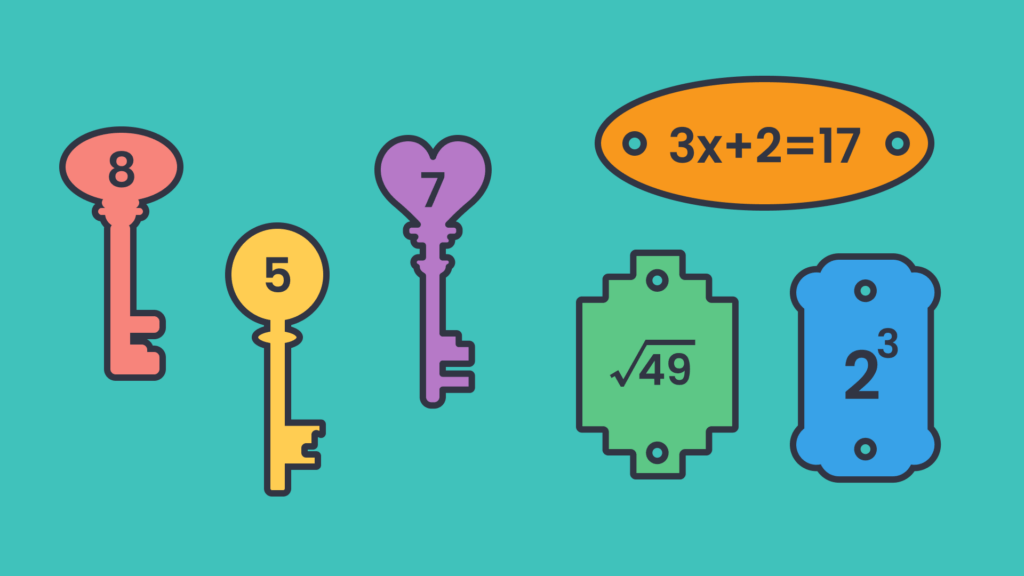
6) Escape room math
- A twist on the classic escape room experience, design a scenario that uses math concepts as clues to solve in order to use the library resource to “escape” the media center. For example, students may work in teams and be provided incorrect problem examples to correct, be given word problems to solve, or other mathematical tasks to perform (measuring height, utilizing degrees of angles, etc.) to solve the puzzle and find a clues that will ultimately lead to the escape route.
- Activities like these not only are fun and engaging, but they promote teamwork, critical thinking and problem-solving. As noted by the Association for Middle Level Education, “Activities that involve problem-solving can enhance cognitive skills” (AMLE, n.d.).
Activities for 9th-12th grade
Once students enter high school, the library can become an important part of their career and college choices; a resource for better understanding the complexities of adult life and future pursuits. These students need to be intellectually challenged through critical thinking, practicing advanced literacy skills, and conducting in-depth research through both projects and papers that require the students to utilize a breadth of skills through synthesizing disparate information into a cohesive learning experience. The library can cultivate this type of sophisticated skill set by providing a wide array of resources at these young adults’ fingertips.


7) From chapter to sculpture
When I was an Advanced Placement (AP) 3D art educator at a high school in the Suburbs of Atlanta, GA, I created this project to help my advanced art students embrace ideation, process, synthesis, and artist’s intent and voice into a unified creative visual for their AP course submission to the College Board portfolio review. This project melds art and literature together and teaches students to look outside the art classroom for source material and inspiration.
- Each student chose a chapter as inspiration from their favorite novel or storybook.
- The goal was to capture the essence of the chapter in a visual sculptural representation.
- Students were given choice and voice throughout the project and decided what sculptural medium would be best suited to meet the task requirements.
- We began with a brainstorming session, followed by one-on-one conferences where students received real-time feedback, guidance, and encouragement as they shared their initial ideas for the project.
- I guided each student and facilitated their choosing and discovering the major themes within their selected chapter.
- This deep dive provided the necessary scaffolding to help them not only discern the important literary aspects but also supported their thinking critically about how to create a visual embodiment of these chapter elements into a physical and sculptural form.
- To further their understanding, students created storyboards to visually outline their chosen chapter, distilling the ideas we had discussed into visual narratives.
The most challenging part for students was choosing just one panel from their storyboard as the springboard to inspire their sculptural works. This challenged students to think conceptually and translate narrative into visual. This meant that the students’ finished artworks were more than just sculptures; they were indeed profound and often provocative visual interpretations of literary works. This project demonstrated the advanced art students’ ability to both critically analyze and then reimagine the stories they had read and chosen as inspiration.
Completing this project gave my students a great sense of accomplishment and it also deepened their appreciation for interdisciplinary studies. Projects like these give students the opportunity to experience hands-on learning that demonstrates the powerful connection between the visual and narrative. Elliot Eisner, a prominent Arts Education scholar, argued that arts are essential for developing habits of mind, such as making sound judgments, strengthening interpretive skills, and developing persistence and resilience (Eisner, 2002).
8) Poetry slam: verses amongst the stacks!
Hosting a poetry slam event in the media center enlivens this learning space, encouraging high school students to create dynamic performances incorporating oration, creative writing, performance, and presentation skills.
- Students can begin by researching the art of the spoken word and find inspiration to craft their own performance pieces.
- Teachers can collaborate with the Librarian to develop workshops where students can practice skills such as rhythm and cadence, public speaking best practices, and the rhetorical elements of writing poetry.
- Such an event turns the library into a space of shared communal learning, where peer support blossoms as students and their audience connect with each and the diverse world of literary art.
- The American Poetry Foundation supports this notion, stating, “poetry slams can be powerful tools for self-expression and engagement” (American Poetry Foundation, n.d.).
Conclusion
Media centers and school libraries are learning hubs filled with innovative opportunities for engaging students in learning across all grade levels and subjects. Library activities tailored to meet the personal needs of students can make the visit to the Media Center not only fun but also a space where the foundations for strong academic skills and future lifelong learning are fostered. From engaging young students with scavenger hunts to teaching older students important research skills that will be needed moving forward, these library activities can enhance student learning across all grade levels.
References
- American Library Association. (2024). “What Do School Libraries Do?” Accessed June 20, 2024 https://www.ala.org/educationcareers/libcareers/type/school.
- American Poetry Foundation. (n.d.). “Poetry slam events.” Accessed June 20, 2024.
- Association for Middle Level Education (AMLE). (n.d.). “Problem-solving activities for middle school student.” Accessed June 27, 2024.
- Eisner, E. (2002). The Arts and the Creation of Mind. Yale University Press.
- International Literacy Association. (n.d.). “Role-playing in literacy education.” Accessed June 20, 2024.
- Miller, Edward, and Joan Almon. 2009. Crisis in the Kindergarten: Why Children Need to Play in School. College Park, MD: Alliance for Childhood. Accessed June 20, 2024. https://files.eric.ed.gov/fulltext/ED504839.pdf.
Share to

NaJuana Lee
briefcase iconSr Director of Learning and Development | Curriculum Design Expert
Dr. NaJuana P. Lee has a unique blend of expertise combining over 10 years of experience in both secondary and post-secondary education and 15+ years as a curriculum development expert. Her contributions have empowered teachers worldwide with culturally competent, innovative and engaging curriculum and teaching materials designed to facilitate all students succeeding.
Other posts



Want more content like this?
Subscribe for blog updates, monthly video releases, trending topics, and exclusive content delivered straight to your inbox.