
10 Activities to teach students about identity and values
Published on 10 min read

In this guide
Why identity and values matter in the classroom
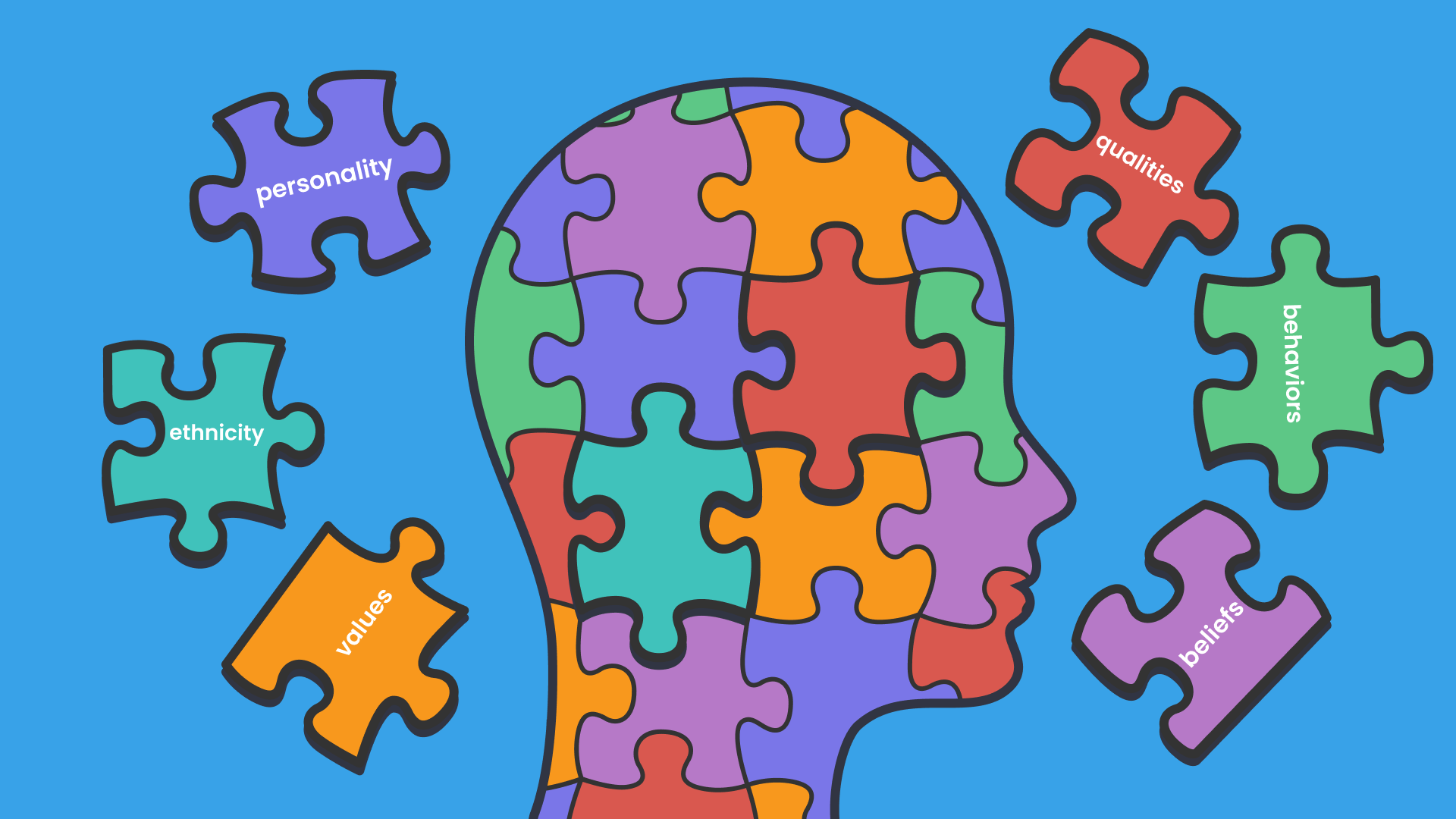
Identity and values sit at the heart of how students see themselves and how they relate to others. When young people understand what they stand for – honesty, empathy, respect, perseverance (I hope!) – they’re better equipped to navigate friendships, resolve conflict, and contribute positively to their communities.
Yet these concepts rarely get dedicated time in a packed school schedule. They tend to surface in passing during a read-aloud or a hallway conversation, then disappear. The good news? Teaching identity and values doesn’t require a separate curriculum block. With the right activities and a few well-chosen video resources, you can weave these lessons into the subjects you already teach.
So where do you start? The 10 activities below are designed for elementary and middle school classrooms and draw on ClickView’s Civic Values and Virtues and Identity and Community topic collections. Each one includes a short introduction explaining why it works, followed by practical steps you can adapt for your students.
Elementary activities (Grades K–5)
1) Build a class values charter
Starting the year – or a new unit – with a shared values charter gives students ownership over how the classroom feels and functions. It also introduces the idea that civic virtues like kindness, respect, and honesty aren’t abstract concepts; they’re agreements we make with each other every day.
- Watch the ClickView video on Civic Virtues as a class. Ask students to listen for the values mentioned and jot down the ones that feel most important to them.
- In small groups, have students narrow their lists down to the three to five values they think matter most for the classroom.
- Bring the class back together and compile a master list. Discuss overlaps, differences, and why certain values came up more than others.
- Write the final charter on poster paper and display it prominently. Revisit it regularly – especially when conflicts arise – and ask students whether the class is living up to the agreement.
This activity works well at the beginning of a semester, but it’s also worth revisiting mid-year. Have your students’ ideas about values changed? That’s a conversation worth having.
2) Courage story circles
Courage looks different for every student. For one child, it might be raising a hand in class for the first time. For another, it could be standing up for a friend at recess. This activity helps students explore what courage means in their own lives and recognize it in others.
- Begin by watching ClickView’s short video on Courage, which introduces the concept in an age-appropriate way.
- After the video, ask students to think of a time they did something brave – even something small.
- Sit in a circle and invite students to share their stories. Model active listening by thanking each speaker and pointing out what made their action courageous.
- Follow up with a written or drawn response: “What does courage look like to me?” Display the responses on a bulletin board titled “Our Courage Wall.”
3) Empathy mapping
Empathy is one of those values that’s easier to feel than to explain – especially for younger students. An empathy map gives them a concrete framework for stepping into someone else’s shoes, which is a skill that supports everything from conflict resolution to reading comprehension.
- Watch the ClickView video on Empathy as a class.
- Give each student a large sheet of paper divided into four quadrants labeled: “What they see,” “What they hear,” “What they think,” and “What they feel.”
- Present a scenario – a character from a book, a historical figure, or a fictional classmate dealing with a challenge – and ask students to fill in each quadrant from that person’s perspective.
- Discuss as a class: What surprised you? Was it hard to imagine someone else’s feelings? Why does empathy matter when we’re working alongside other people?
This pairs naturally with literacy lessons. Use it alongside a read-aloud, and you’ve covered both reading comprehension and social-emotional learning in one go.
4) Acts of service challenge
Young students often associate values with rules – things they shouldn’t do. This activity flips the script by focusing on what students can do for others. It draws on the concept of service and the idea that contributing to the common good is something everyone, no matter their age, is capable of.
- Introduce the concept of service by watching ClickView’s videos on Service and Common Good.
- Brainstorm a list of simple acts of service students could do during the school week: holding a door open, helping a classmate with a task, tidying a shared space, writing a kind note.
- Create a class “Acts of Service” tracker – a poster, jar, or digital tally – where students record each act they complete over the course of one or two weeks.
- At the end of the challenge, reflect together. What felt easy? What felt hard? Did anyone notice a difference in how the classroom or school community felt?
5) The integrity check-in
Honesty and integrity are values students hear about constantly, but rarely get to unpack in a meaningful way. What does it really mean to “do the right thing when no one is watching”? This activity gives students a structured space to wrestle with that question.
- Watch the ClickView videos on Honesty and Integrity.
- Present a series of age-appropriate “What would you do?” scenarios. For example: “You find a dollar on the floor and you know it fell out of your classmate’s pocket. No one saw it happen. What do you do?”
- Have students respond individually through writing or drawing, then discuss their answers in pairs or small groups.
- As a class, connect the scenarios back to the videos. What’s the difference between honesty and integrity? Why does it sometimes feel hard to act with integrity even when we know the right answer?
This is an activity worth repeating throughout the year. As students encounter new social situations, the scenarios you use can evolve with them.
Middle school activities (Grades 6–8)
6) Identity and values reflection journals
Middle school is the stage where students begin asking bigger questions about who they are and what they believe. A reflection journal gives them a private, low-pressure space to explore those questions. ClickView’s Identity and Values video provides an excellent launchpad for this ongoing activity.
- Begin by watching Identity and Values from the Miniclips: Wellbeing series. Pause at key moments and ask students what resonates.
- Provide each student with a dedicated journal (physical or digital). Each week, post a reflection prompt related to identity and values, such as:
- “What three values matter most to you right now? Have they changed since last year?”
- “Describe a person who has shaped who you are. What values did they teach you?”
- “When have your values been tested? What did you learn?”
- Journals are private. You don’t need to read them – the act of writing is the learning. If students are comfortable, invite voluntary sharing.
7) Cultural diversity showcase
Our identities are shaped by the cultures, families, and communities we grow up in. This activity invites students to explore and celebrate that diversity by researching their own cultural backgrounds – or a culture they’re curious about – and sharing what they learn. ClickView’s Cultural Diversity: Respecting Each Other’s Differences video sets the right tone for respectful, genuine exploration.
- Watch Cultural Diversity: Respecting Each Other’s Differences as a class. Discuss: What does “diversity” mean to us? Why does it matter?
- Follow up with shorter clips like Culture Combo and Appreciate Culture to broaden the conversation.
- Assign each student a “Cultural Identity Spotlight” project. They can research their own heritage, a family tradition, or a cultural group they want to learn more about.
- Host a showcase where students present their findings through posters, short presentations, or creative displays like food, music, or art.
What makes this activity powerful is that students get to see how many different backgrounds, experiences, and traditions exist within a single classroom.
8) Community contribution project
How do students learn that their actions matter beyond the school walls? They go out and do something about it. This activity builds on the idea that contributing to the community is both a responsibility and a way of expressing personal values.
- Start with ClickView’s Rights and Responsibilities video to establish that rights and responsibilities go hand in hand.
- Watch Local Politics: Making a Difference in Your Community to show students how real change happens at the local level.
- As a class, identify a need or issue in the school or local community – this might be litter in a park, lack of a community garden, or a need for donations at a local organization.
- Have students plan and carry out a project to address it. Break the work into roles: researchers, planners, communicators, and doers.
- After the project, debrief as a class: What values did you draw on during this project? How did it feel to contribute to something bigger than yourself?
9) Values through art and music
Art has always been a vehicle for expressing identity and challenging the status quo. This activity uses ClickView’s Art That Changed America series to show students how creative expression and community values are deeply connected – and to inspire them to create something of their own.
- Watch one or more of the following ClickView videos: Protest Music of Vietnam War, Graffiti, and Chicano Arts.
- Discuss: How did these artists use their work to express their values or identity? What message were they trying to share with their community?
- Challenge students to create their own piece of art – a poster, poem, song, digital design, or mural sketch – that represents a value they hold or a part of their identity they want others to understand.
- Display or perform the finished works in a class gallery or assembly. Encourage students to write a short artist’s statement explaining the meaning behind their piece.
This is a standout cross-curricular activity, connecting visual arts, history, and social studies through the lens of identity and values.
10) Global goals, local values
The United Nations Sustainable Development Goals (SDGs) provide a ready-made framework for connecting personal values to global challenges. This activity asks students to explore the SDGs and then identify how their own values align with efforts to create a fairer, more sustainable world.
- Watch one or two SDG videos from ClickView’s collection, such as Global Goal 01: No Poverty or Global Goal 10: Reduced Inequalities.
- Ask students: Which of these global goals connects most to your personal values? Why?
- In pairs or small groups, have students choose one SDG and research what’s being done about it locally, nationally, and internationally.
- Each group creates a short presentation that answers: “What does this goal mean, why does it matter to me, and what’s one thing our community could do about it?”
- To take it further, connect this activity to the community contribution project in Activity 8 – students can put their research into action.
Tips for weaving identity and values into everyday teaching
You don’t need a dedicated “values class” to make this work. Here are a few ways to keep identity and values front of mind throughout the school year:
- Use morning meetings or circle time. Start the day or week with a quick values check-in. Ask students to share one value they practiced recently or one they’re working on.
- Connect values to existing content. Whether you’re reading a novel, studying a historical event, or analyzing data, ask: What values are at play here? What would you have done differently?
- Celebrate cultural moments. Use community celebrations – from Cinco de Mayo to Juneteenth to International Women’s Day – as entry points for conversations about identity, heritage, and shared values.
- Model your own values. When you share what matters to you as a teacher and community member, students learn that values aren’t just a classroom exercise – they’re something you carry with you.
Teaching identity and values is an ongoing conversation, not a one-off lesson. The more you return to these themes – through discussion, reflection, and real-world action – the more deeply students will internalize them. The activities in this guide are a starting point. Your students will take it from there.
References
- Berkowitz, M. W. and Bier, M. C. (2005) ‘What Works in Character Education: A Research-Driven Guide for Educators’, Character Education Partnership. Available at: https://www.character.org
- CASEL (2024) ‘What Is the CASEL Framework?’, Collaborative for Academic, Social, and Emotional Learning. Available at: https://casel.org/fundamentals-of-sel/what-is-the-casel-framework/
- United Nations (2015) ‘The 17 Goals’, Department of Economic and Social Affairs: Sustainable Development. Available at: https://sdgs.un.org/goals
Share to

Rebecca Langham
briefcase iconCurriculum Specialist
Rebecca Langham is a Curriculum Specialist at ClickView, bringing more than 20 years’ education experience spanning roles such as secondary teacher, school leader, curriculum advisor and published writer.
Other posts



Want more content like this?
Subscribe for blog updates, monthly video releases, trending topics, and exclusive content delivered straight to your inbox.