
6 Food chain and food web activities for students
Published on 8 min read

In this guide
Why food chains and food webs matter in the classroom
Every living thing on Earth depends on other living things for energy. That simple idea sits at the heart of food chains and food webs.
When students understand how energy flows from producers to consumers to apex predators, they start to see the natural world as a connected system rather than a collection of separate organisms. That shift in thinking builds a foundation for deeper topics like biodiversity, conservation, and human impact on the environment.
So how do you take something as big as “every ecosystem on the planet” and make it accessible for a 3rd grader? With the right activities and resources, you’ll have students tracing energy pathways before the end of the week.
Understanding the basics: food chains and trophic levels
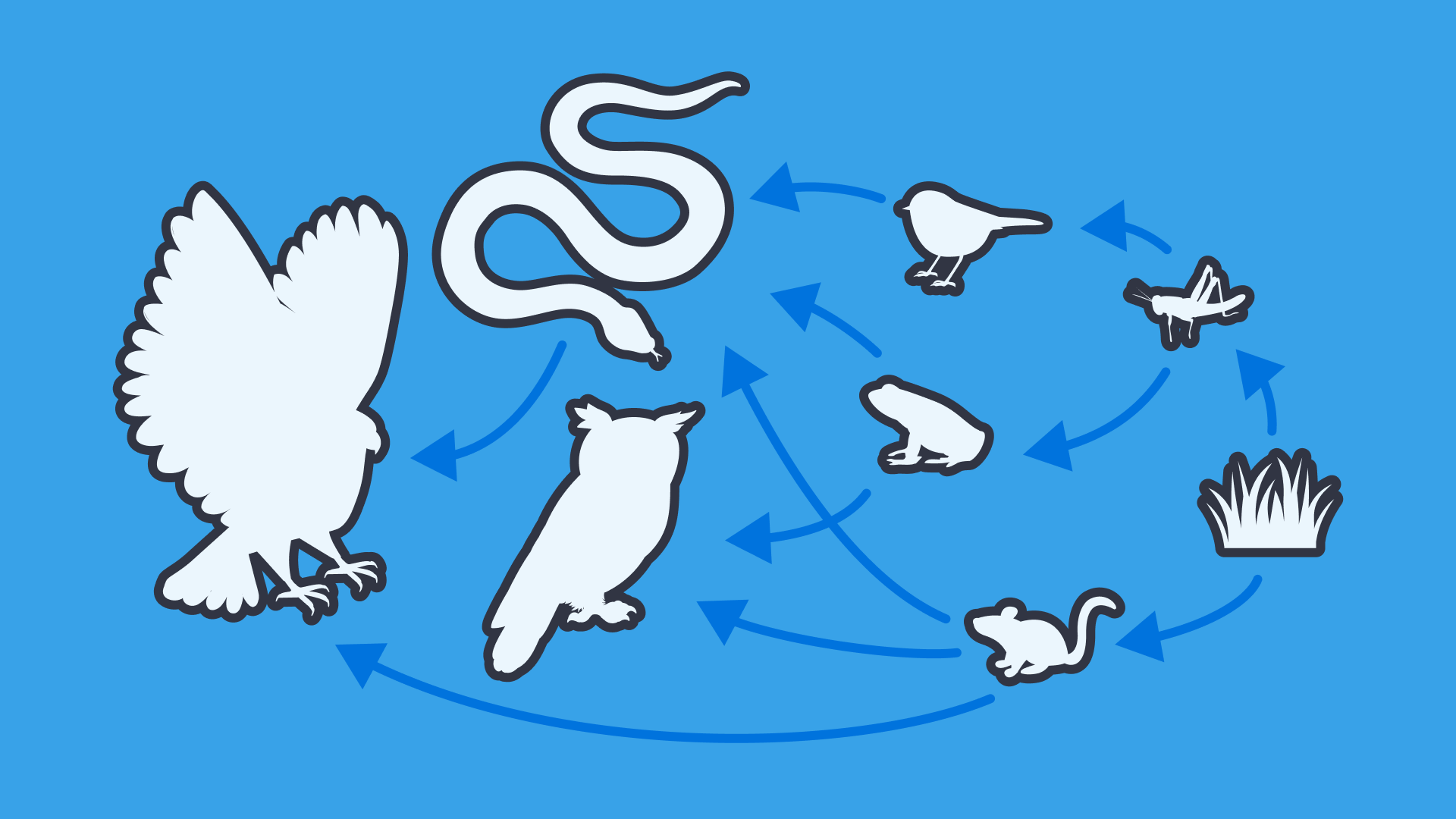
Before diving into activities, it helps to make sure your students have a solid grasp of the key vocabulary. A food chain is a model that shows how energy transfers from one living thing to another. A food web takes that further by showing all of the interconnected food chains within an ecosystem.
Each organism occupies a specific trophic level, or position, in the chain. Producers sit at the bottom. These are plants and other organisms that make their own food through photosynthesis. Primary consumers, mostly herbivores, eat the producers. Secondary and tertiary consumers, the omnivores and carnivores, follow. At the very top sit the apex predators: animals with no natural predators other than humans.
For a quick, engaging introduction to these concepts, the ClickView video What Is a Food Chain? breaks things down in just two minutes. You might also try Fabulous Food Chains, which follows the flow of energy through an ecosystem in a way that’s approachable for grades 3 through 5.
If your students need a closer look at the different categories of living things, Feed Me (How Living Things Get Energy) covers what makes something an omnivore, a carnivore, or an herbivore and explains how plants fit into the picture.
6 classroom activities for teaching food chains and food webs
1) Build a food chain from scratch
This is the foundational activity, and it works well as a starting point for any food chain unit. The goal is for students to physically sequence organisms by trophic level so they see how energy moves through a chain.
Start by watching Food Chains from the Real World Science series on ClickView. Then try these steps:
- Give students cards or sticky notes with the names and pictures of organisms from a specific habitat (for example, grass, grasshopper, frog, snake, hawk).
- Ask them to arrange the organisms in order from producer to top predator, drawing arrows to show the direction of energy flow.
- Once they’ve built a basic chain, challenge them by giving them a new organism and asking where it fits. What happens if you add a raccoon to a forest food chain?
- For younger students (grades 2 to 3), keep chains to three or four organisms. For older students (grades 4 to 5), increase the complexity by including decomposers.
You’ll also find the video Animal Diets and Food Chains helpful here. It covers how different diets determine where organisms sit in a food chain.
2) Compare food chains across habitats
Once students understand how a single food chain works, the next step is exploring how food chains differ depending on the habitat. This activity naturally brings in geography, climate, and adaptation.
Divide your class into groups and assign each group a different habitat: rainforest, desert, ocean, or arctic tundra. Have each group research the producers and consumers in their habitat, then build a food chain on poster paper. When all groups are finished, display the posters side by side and discuss as a class.
Here are some questions to guide the comparison:
- Which habitat has the longest food chain? Why do you think that is?
- Which habitat has the fewest organisms? What makes it harder for living things to survive there?
- What would happen to the food chain if the habitat’s climate changed?
To support this activity, ClickView offers habitat-specific videos your groups can watch during their research phase. For rainforest groups, try Tropical Rainforests or Explore the Rainforest. Desert groups will enjoy Amazing Ways to Live in the Desert and Amazing Desert Plants. For cold habitats, How Animals Have Adapted to Live in the Arctic Tundra is a solid choice. And for ocean groups, Plankton and The Food Chain shows how even the tiniest organisms play a critical role.
The video Home Sweet Habitat (Habitats and Food Webs) also works well as a whole-class introduction before groups break out.
3) Map a food web
This activity takes students from linear thinking (food chains) to systems thinking (food webs). It’s a great way to show that real ecosystems are far more complex than a single chain.
Begin with the ClickView video Food Webs to introduce the concept. Then:
- Give students a large sheet of paper and a list of 10 to 15 organisms from one ecosystem (for example, a pond ecosystem: algae, water lily, tadpole, dragonfly larva, small fish, heron, snapping turtle, frog, mosquito, raccoon).
- Ask them to write or draw each organism and then use arrows to connect every organism that eats or is eaten by another. Remind them that arrows point in the direction energy flows, from the organism being eaten to the organism doing the eating.
- When the web is complete, pose this question: what happens if one organism disappears? Have students use a marker to cross out one species and trace the ripple effects through the web.
This “remove a species” step is often where the biggest lightbulb moments happen. Students quickly realize that removing even a small organism affects the entire system. For middle school students, you could extend this into a more detailed discussion of biodiversity and keystone species.
4) Conduct a schoolyard biodiversity survey
Nothing beats getting outside. This activity connects food chain theory to the real organisms living right outside your classroom door.
Watch Biodiversity as a class first, then head out to the schoolyard with clipboards:
- Have students spend 15 to 20 minutes recording every living thing they observe: plants, insects, birds, fungi, and anything else.
- Back in the classroom, ask students to sort their findings by trophic level. Which organisms are producers? Which are primary consumers? Are there any secondary consumers?
- Challenge the class to build a food chain or food web using only the organisms they found.
- For a longer-term project, repeat this survey once a month over a semester. Track how biodiversity changes with the seasons and discuss why certain organisms appear or disappear.
This activity also lends itself to cross-curricular connections. Students practice observation and data recording (science), organize information into categories (math), and write up their findings (ELA). Have students consider what attracts certain birds to the schoolyard. What does their presence tell you about the local food chain?
5) Investigate threats to food chains
Food chains don’t exist in isolation, and they’re vulnerable to disruption. This activity helps students understand the real-world pressures ecosystems face and encourages problem-solving thinking.
Start by exploring the ClickView video Threats and Challenges, then have students investigate specific threats:
- Pollution: Watch Plastic Problem and How Big Is the Great Pacific Garbage Patch?. Ask students to research and explain how plastic entering the ocean disrupts marine food chains.
- Deforestation: Use What Is Deforestation? to explore what happens to food chains when habitats are destroyed.
- Invasive species: Invasive Species and Unwelcome Guests explains how organisms introduced into new environments disrupt native food chains.
- Extinction: Show Species Go Extinct and Humans Caused Extinction to discuss how losing a species affects the rest of the chain.
After researching, ask students to choose one threat and create a “before and after” diagram showing a food chain before the disruption and after. Then challenge them to propose a solution. Who knows, maybe the answer to some of these problems is sitting right in your classroom.
For a deeper dive, Human Impact on Ecosystems ties many of these threats together and includes interactive activities for students.
6) Build a mini-ecosystem
This is the culminating activity that brings everything together. Students create a small, self-contained ecosystem and observe food chain interactions firsthand.
Watch How Do Ecosystems Work? as a class, then get started:
- Have students work in small groups to design and/or create a terrarium or small aquarium. Include soil, plants, and small organisms such as insects or snails.
- Ask each group to predict which food chains they expect to observe within their mini-ecosystem. Have them sketch their predictions in a science journal.
- Over the following weeks, students observe and record what happens. Are organisms interacting the way they predicted? Has anything surprised them?
- At the end of the observation period, each group presents their findings to the class, comparing their predictions to what actually happened.
This activity works particularly well as an end-of-unit project because it requires students to apply everything they’ve learned about producers, consumers, energy flow, and ecosystem balance. It also builds patience and observation skills that carry across subjects.
Tips for ongoing integration
Teaching food chains doesn’t have to stop when the unit ends. Here are some ways to keep the concepts alive throughout the year:
- Connect food chain vocabulary to other science units. When you teach weather, ask how a drought would affect a local food web. When you cover plant life cycles, revisit the role of producers.
- Use current events as discussion starters. News stories about wildfires, oil spills, or endangered species tie directly back to food chain disruptions.
- Encourage students to notice food chains in everyday life. What did they eat for lunch today, and where did that food’s energy originally come from?
- Revisit the schoolyard biodiversity survey each season and compare results. Students love seeing how their data changes over time.
The ClickView Food Chains topic page and the broader Ecosystems collection are great starting points for finding additional video resources as your teaching evolves. You’ll also find related content in the Habitats and Earth Day topic pages.
Learning about food chains and food webs gives young people a clearer picture of how all living things are connected. When students understand that every organism plays a role in the flow of energy through an ecosystem, they’re better equipped to think critically about the natural world and the choices we make to protect it.
Sources
- National Research Council. (2012). A Framework for K-12 Science Education: Practices, Crosscutting Concepts, and Core Ideas. Washington, DC: The National Academies Press.
- Next Generation Science Standards. (2013). Ecosystems: Interactions, Energy, and Dynamics. Available at: https://www.nextgenscience.org/ (Accessed: 21 April 2026).
Share to

Rebecca Langham
briefcase iconCurriculum Specialist
Rebecca Langham is a Curriculum Specialist at ClickView, bringing more than 20 years’ education experience spanning roles such as secondary teacher, school leader, curriculum advisor and published writer.
Other posts


Want more content like this?
Subscribe for blog updates, monthly video releases, trending topics, and exclusive content delivered straight to your inbox.