
10 Electricity activities your students won’t forget
Published on 10 min read

In this guide
Why teach electricity with hands-on activities?
Electricity is one of those topics that touches every part of your students’ lives, from the moment they turn off an alarm clock in the morning to the last screen they look at before bed. And yet, because electricity may seem invisible, it’s one of the trickiest science concepts to make concrete in the classroom.
That’s where hands-on activities come in. When students build circuits, test conductors, or watch a balloon stick to the wall through static charge, the abstract becomes tangible. Research consistently shows that experiential learning in science leads to deeper understanding and stronger retention, especially for concepts students can’t directly observe.
Whether you’re teaching kindergartners what a battery does or guiding high schoolers through Ohm’s Law, the activities below pair practical, classroom-ready ideas with ClickView videos to help your students build a solid understanding of electricity at every grade level. Ready to spark some curiosity?
Elementary activities (grades K–5)
1) Electricity scavenger hunt
This is a perfect way to kick off an electricity unit with younger students. Before diving into how electricity works, get your class thinking about where it already shows up in their lives.
- Put students into small groups and give each group a clipboard.
- Send them on a hunt around the classroom, and then around the school, to find objects powered by electricity.
- Younger students can draw the objects they find; older students can write the names and sort them into categories (plugged in vs. battery-powered).
- Back in the classroom, pool your findings. How many items did the class find in total? Were there any surprises?
To set the stage before the hunt, watch All About Electricity as a quick introduction. Afterward, extend the activity by discussing responsible energy use with the UN Global Goal 12: Responsible Consumption and Production video and asking students to brainstorm ways they could reduce electricity consumption at home.
2) Build a simple circuit
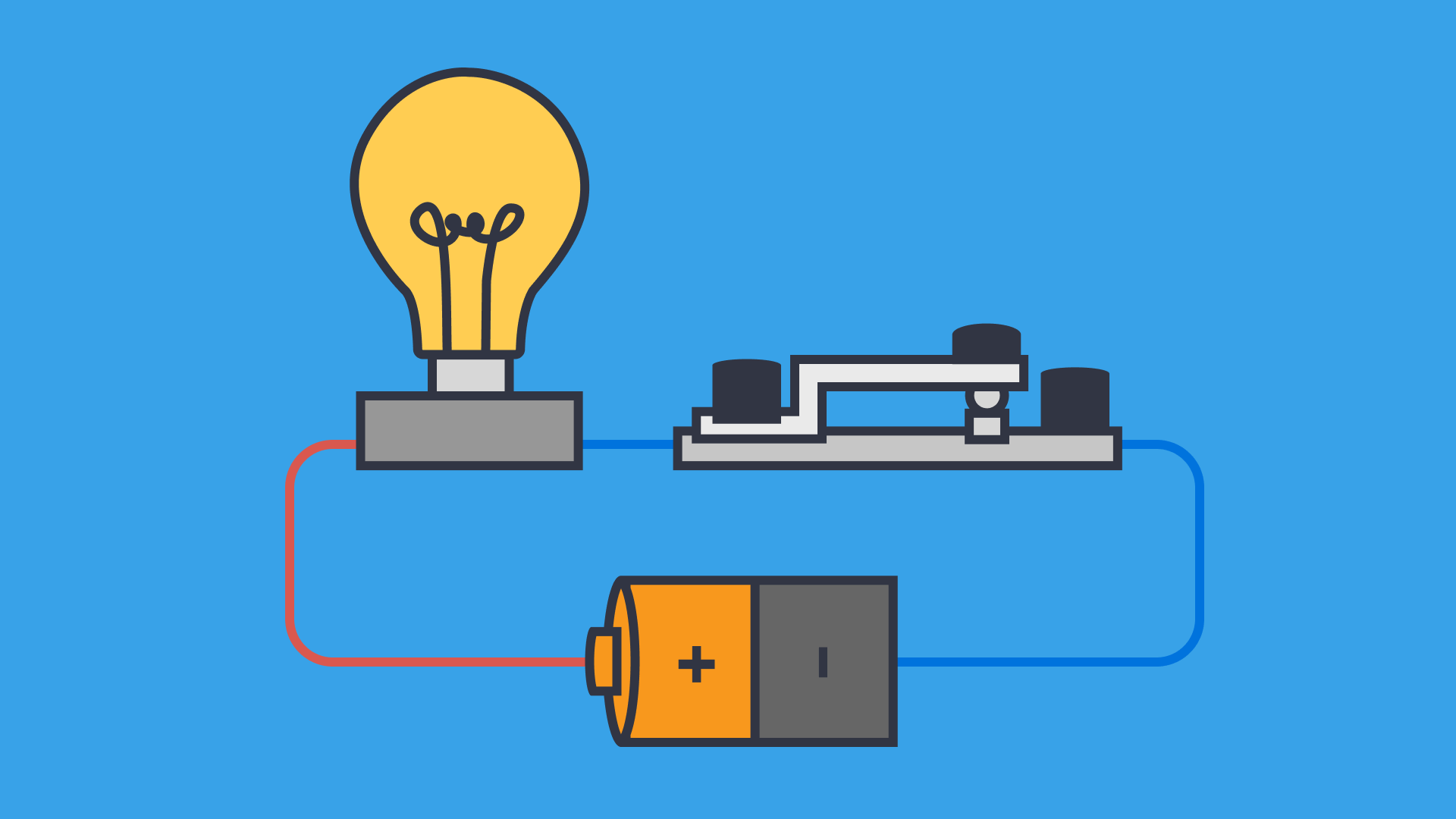
There’s something satisfying about watching a light bulb flicker on for the first time in a circuit you built yourself. This activity gives students that hands-on “aha” moment.
- Firstly, it is vital that proper safety precautions and supervision are provided throughout this activity.
- Provide each group with the required resources as shown in the following video.
- Before touching the equipment, have students watch Circuits and Switches so they understand the basic components.
- Give students time to explore independently. Let them experiment, troubleshoot, and collaborate before stepping in with guidance.
- Once groups have a working circuit, challenge them to add a second bulb or swap in a buzzer.
This activity naturally builds collaboration and problem-solving skills alongside the science content. For students who need extra support with the vocabulary, the short video Components of a Simple DC Circuit breaks down each part clearly. Also try showing How Can You Change a Circuit? to prompt students to think about what happens when you modify a circuit.
3) Static electricity station
What happens when you rub a balloon on your hair? Your students are about to find out, and the resulting giggles are half the fun.
- Begin by watching Static and Current Electricity together to introduce the concept. Pause partway through and ask: what do students already know about the difference between these two types?
- Give each student a balloon. Have them rub it on their hair or a wool sweater to build a negative charge, then hold it near their partner’s hair. First, ask them to predict what they think will happen.
- Extend the exploration by offering tissue paper, confetti, or hole-punch scraps. What else does the charged balloon attract?
- After experimenting, have students write a short report explaining what they discovered about static electricity and why it occurs.
This is a fantastic cross-curricular opportunity. You’re covering science concepts and writing skills in one lesson. For a deeper look at how static electricity appears in the natural world, 5th graders could watch the Polar Auroras video to see how electromagnetism creates the northern and southern lights.
4) Generate electricity from plants
Can a lemon power a light bulb? This activity blends science with a healthy dose of wonder, and it’s a great way to challenge students’ assumptions about where electricity comes from.
- Start by asking your class: do you think it’s possible to generate electricity from a plant? Have students discuss in pairs and share their predictions with the class.
- Watch Electricity from Plants together to see the experiment in action.
- If you have the materials, let students recreate the experiment in groups with the appropriate safety precautions and supervision in place.
- Ask each group to document their setup with a labeled diagram and a written explanation of how it works.
This activity connects well to broader conversations about renewable energy. Pair it with How is Electricity Generated? for an overview of different generation methods, or explore What Is Hydroelectricity? and A Brief History of Wind Power to compare plant-based power with other renewable sources.
Middle school activities (grades 6–8)
5) Renewable vs. non-renewable energy pros and cons
By middle school, students are ready to engage with the bigger questions around electricity: where does it come from, and what are the trade-offs? Identifying the pros and cons is a great way to develop critical thinking while reinforcing science content.
- Divide the class into teams. Assign each team a research focus: one about the pros and cons of renewable energy sources, the other about the pros and cons for non-renewable.
- Give teams research time to prepare their ideas as a visual and verbal presentation. Direct them to Renewables and Non-Renewables as starting points, plus the short explainer What Is Renewable and Non-Renewable Energy? for a quick refresher.
- Allow each team time to present their work and answer questions from the other.
For an extra layer, have students explore the question of battery storage and its limitations by watching Will Batteries Power the World? The Limits of Lithium Ion. This adds nuance to the renewable energy conversation and helps students understand that no energy solution is without challenges.
6) Conductivity testing lab
Which materials conduct electricity and which don’t? This lab lets students test everyday objects and discover the answer for themselves.
- Firstly, it is vital that proper safety precautions and supervision are provided throughout this activity.
- Set up stations around the classroom with a simple circuit that has a gap in it.
- Provide a collection of objects: a metal spoon, a rubber band, a paper clip, a wooden popsicle stick, aluminum foil, a glass marble, a coin, and a pencil.
- Students test each object by placing it across the gap to see if it completes the circuit and lights the bulb.
- Have students record their predictions before testing, then their actual results, in a simple data table.
Before starting, watch Conductors and Insulators as a class to introduce the vocabulary. For a more detailed look at how electric charge flows through different materials, Electrical Conduction Through Liquids and Electric Charge and Flow of Current are strong follow-ups. After the lab, ask students: were there any materials that surprised you? Why do you think metals tend to be good conductors?
7) Circuit diagrams challenge
Drawing circuit diagrams is a key skill in middle school science, and turning it into a collaborative challenge makes the practice feel less like a worksheet and more like a puzzle.
- Start by watching How Do You Draw Electrical Symbols and Diagrams? to review standard symbols.
- Have students work in pairs to create a booklet of circuits, some complete and some incomplete.
- Once the booklets are finished, pairs swap with another team. Each team must figure out which circuits in the other team’s booklet are complete and which are not.
- If you have physical circuit equipment available, challenge students to build the circuits from the booklet and test whether their predictions were correct.
To reinforce the concept, pair this activity with Components of an Electric Circuit and Series Circuit, which walk through how different circuit types function. Also show Electric Current and Electric Circuit to connect the diagram work back to how current actually flows.
High school activities (grades 9–12)
8) Ohm’s Law investigation
Ohm’s Law is one of those foundational concepts that students need to truly understand, not just memorize. A hands-on investigation makes the math meaningful.
- Firstly, it is vital that proper safety precautions and supervision are provided throughout this activity.
- Provide each group with a variable power supply, a resistor, an ammeter, and a voltmeter. If physical equipment isn’t available, use a simulation.
- Have students vary the voltage across the resistor and measure the resulting current, recording their data in a table.
- Students then graph voltage vs. current and calculate the resistance from the slope of their line.
- Ask each group to compare their calculated resistance with the labeled value of the resistor. How close were they?
Before the lab, watch Ohm’s Law as a class to establish the theoretical foundation. For students who need a deeper dive into how measuring instruments work, Ammeter, Voltmeter and Multimeter is a helpful companion video. After the investigation, connect the concept to real-world applications: why does resistance matter in the design of electrical systems?
9) Series vs. parallel circuits analysis
Understanding the difference between series and parallel circuits is essential for high school physics, and the best way to grasp it is to build both and compare them side by side.
- Firstly, it is vital that proper safety precautions and supervision are provided throughout this activity.
- Give each group the materials to build two circuits: one in series and one in parallel, each with two identical light bulbs.
- Have students observe and record what happens when they unscrew one bulb in each circuit. What’s different?
- Ask students to measure the voltage across each bulb and the current through each branch using a multimeter.
- Lead a class discussion: which type of circuit would you use to wire a house, and why?
The video Characteristics of Parallel and Series Circuits is an excellent resource to pair with this activity, offering clear explanations of how each circuit type behaves. Also assign Characteristics of a Series Circuit and Characteristics of a Parallel Circuit as pre-lab viewing so students come to the activity with a strong conceptual framework. For a broader look at circuit behavior, Circuit Analysis ties everything together.
10) Design a real-world circuit
This activity asks students to apply everything they’ve learned about electricity by designing a circuit for a real-world purpose. It’s a chance for creativity, problem-solving, and authentic engineering thinking.
- Present students with a design brief: design a circuit for a specific scenario (for example, a lighting system for a model room, an alarm system, or a simple motor-powered device).
- Students must sketch a labeled circuit diagram using correct symbols, select appropriate components, and explain their design choices in a short written proposal.
- If materials are available, have students build a working prototype safely and present it to the class.
- After presentations, hold a peer feedback session where classmates ask questions and suggest improvements.
To support the design process, Resistance helps students understand how to account for resistance in their designs, while DC Resistors and Batteries explains how batteries and resistors interact. For students interested in the bigger picture of how electricity gets from power stations to homes, Electricity Transmission and Distribution offers a fascinating look at the engineering behind the grid. You might also point students toward How Are Relays Used in Circuits? to explore more sophisticated circuit components.
Tips for ongoing electricity integration
Once you’ve worked through these activities, electricity doesn’t have to stay confined to a single unit. Here are a few ways to keep the topic alive throughout the year:
- Connect to current events. When news stories about renewable energy, power outages, or electric vehicles come up, use them as quick discussion starters. The Electricity: From Light Bulbs to E-transportation video is a great springboard for conversations about how electricity is shaping transportation.
- Revisit safety. Periodically remind students about electrical safety, especially before lab days. Staying Safe with Electricity is a short, clear refresher you can play at any time.
- Go cross-curricular. Pair electricity concepts with math (graphing data from circuit experiments), English language arts (writing up lab reports or persuasive essays about energy policy), or social studies (exploring how access to electricity varies around the world).
- Explore the ClickView electricity topics. The elementary, middle school, and high school topic pages are packed with additional videos, teaching resources, and discussion starters you can weave into lessons throughout the year.
Electricity is all around your students, but many of them lack understanding of how and why it works the way it does. These activities give them the chance to explore, experiment, and build that understanding from the ground up. Who knows? The engineer behind the next breakthrough in renewable energy might be sitting in your classroom right now.
Sources
- Freeman, S., Eddy, S. L., McDonough, M., Smith, M. K., Okoroafor, N., Jordt, H. and Wenderoth, M. P. (2014). ‘Active learning increases student performance in science, engineering, and mathematics’, Proceedings of the National Academy of Sciences, 111(23), pp. 8410–8415. Available at: https://www.pnas.org/doi/full/10.1073/pnas.1319030111
- Next Generation Science Standards (2013). Improving Science Education Through Three-Dimensional Learning. Available at: https://www.nextgenscience.org/
Share to

Kelsey Dalton
briefcase iconPlatform Curation Specialist
Kelsey is a qualified K–12 classroom teacher, with the majority of her experience at the secondary level. She is now a Curation Specialist at ClickView, supporting educators across Australia, New Zealand, the United States, and the United Kingdom to use video effortlessly for positive learning outcomes.
Other posts



Want more content like this?
Subscribe for blog updates, monthly video releases, trending topics, and exclusive content delivered straight to your inbox.