
10 Activities to teach students about continents and oceans
Published on 9 min read

In this guide
Why teaching continents and oceans matters
When children learn where continents and oceans sit on a map, they’re doing more than memorizing names. They’re building a foundation for understanding cultures, ecosystems, and global connections that stretch far beyond the classroom.
Yet for many students, geography stays flat. It lives on a worksheet, in a textbook, or on a poster stuck to the wall. The challenge for teachers is making it feel real. How do you take something as vast as a continent or as deep as an ocean and turn it into something a 3rd grader can translate into real world understanding?
The good news is that with the right activities and resources, continents and oceans become one of the most engaging topics you’ll teach all year. The activities below draw on video, hands-on projects, and collaborative learning to help your students explore the seven continents and five oceans in ways that stick. Whether you teach elementary or middle school, there’s something here for your classroom.
Hands-on map and globe activities
Getting students physically interacting with maps and globes is one of the fastest ways to build geographic confidence. These three activities move students beyond looking at a map and into actively working with one.
1) Continent jigsaw puzzle challenge
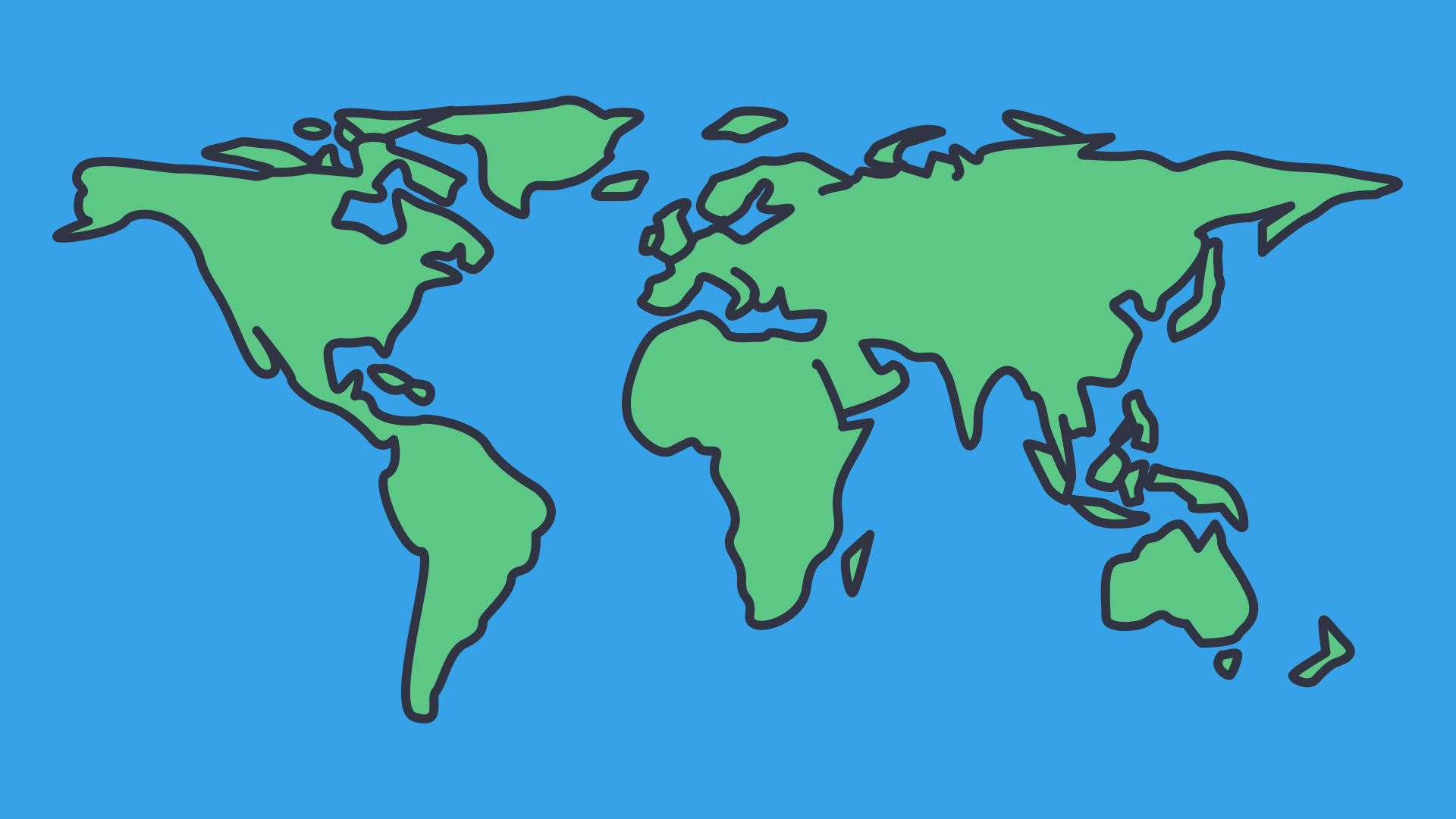
There’s something satisfying about snapping a puzzle together, and this activity channels that energy. Students work with cut-out continent shapes to assemble a complete world map, reinforcing the position and relative size of each land mass.
Before starting, watch the Continents and Oceans video from ClickView as a class to give students a visual overview.
- Provide each student or small group with cut-out pieces representing the seven continents.
- Challenge them to assemble a world map on a blank sheet or large poster board.
- Once assembled, have students label each continent and the surrounding oceans.
- For an added challenge, set a timer and see which group completes the puzzle first.
This works well for grades 2 through 5 and pairs naturally with a short follow-up discussion: which continent was easiest to place? Which was trickiest?
2) Memory map drawing
Can your students draw the world from memory? This activity reveals what they already know and highlights areas where their understanding needs strengthening.
- Ask students to draw a simple world map from memory, focusing on the rough position and relative size of the continents and oceans (not exact shapes).
- Once finished, have them label all seven continents and five oceans.
- Compare their memory maps against a real map or globe, and discuss what they got right and what surprised them.
- To extend the activity, students color-code different regions to show deserts, rainforests, and mountain ranges.
After the activity, use the Continents video from ClickView’s Essentials series to reinforce what students have learned and fill in any gaps.
3) Passport around the world
This activity turns your classroom into an international departure lounge. Students “travel” to different continents, learning about a country from each one and collecting passport stamps along the way.
- Give each student a paper passport (a simple folded booklet works great).
- Assign each student a continent, then have them research one country from that continent. Information to gather includes the country’s flag, capital city, a famous landmark, and one cultural tradition.
- Students move around the classroom, sharing what they’ve learned with classmates.
- As they learn about each other’s countries, they collect a passport stamp (a sticker or a small drawing) for that continent.
For research support, direct students to the ClickView Countries, Continents and States topic page, which includes videos on Countries of Asia, Countries of North America, and Geography of South America.
Creative exploration activities
These activities lean into creativity and give students a chance to connect with geography through music, research, and art.
4) Seven continents song and video exploration
Music is a powerful memory tool, especially for younger learners. ClickView’s library includes songs and animated videos that make the seven continents memorable and fun.
- Start with the Seven Continents Geography Song for grades K through 2. It’s short, catchy, and introduces all seven continents with visuals.
- For grades 1 through 5, follow up with the 7 Continents Song, which goes into more detail about each continent’s key features.
- After watching, ask students to draw or write about one thing they remember about each continent mentioned in the song.
- Challenge students to create their own short continent chant or rhyme in small groups.
For a deeper dive into how the continents came to be, share The Formation of Continents and Oceans, which explains how Earth’s land masses formed and shifted over time. This pairs well with a science cross-curricular connection.
5) Travel agent research project
Students love taking on a role, and this project turns them into travel agents tasked with “selling” a continent to their classmates. It’s a natural fit for building research, presentation, and persuasive communication skills.
- Assign each student (or pair) a continent to research.
- They play the role of a travel agent, preparing a pitch about what makes their continent worth visiting.
- Research areas include famous landmarks, traditional foods, unique wildlife, climate, and cultural traditions.
- Students present their findings to the class, and the class votes on which “destination” they’d most like to visit.
ClickView’s continent-specific videos work well as starting points for research. Try Asia, Europe, North America, South America and Africa, and Antarctica from the Miniclips: Continents of the World series.
6) Famous landmarks art project
Every continent has landmarks that capture the imagination. This activity blends geography with art and cultural understanding.
- Allow students to choose a famous landmark from any continent, such as the Great Wall of China, the Eiffel Tower, Machu Picchu, or the Great Barrier Reef.
- Students draw, paint, or build a model of their chosen landmark.
- Each student writes a short explanation of where their landmark is located (continent and country), why it’s significant, and one interesting fact about it.
- Display the finished projects on a classroom “world wall” grouped by continent.
For inspiration, use ClickView’s Let’s Go To series, which includes videos like Let’s Go to China, Let’s Go to Spain, Let’s Go to Egypt, and Let’s Go to Kenya. You might also share The 7 Continents: Identifying Characteristics, Fun Facts and More for a broader overview.
Discussion and game-based activities
Games and food bring an energy to the classroom that worksheets simply don’t. These two activities get students talking, thinking, and (in one case) tasting their way around the world.
7) “Where in the world?” guessing game
This fast-paced game tests geographic knowledge and builds critical thinking skills as students connect clues to locations on a map.
- Give students a clue about a place and challenge them to find it on a map or globe as quickly as possible. For example: “This country has kangaroos and the Great Barrier Reef” (Australia) or “This is the largest continent, home to the world’s highest peak” (Asia).
- Use riddles about country flags for variety: “This country’s flag has a yellow cross on a blue background” (Sweden).
- Once students are comfortable, have them create their own riddles to quiz each other.
- For a team-based version, divide the class into groups and keep score.
Pair this game with the Geography of Australia or Oceania videos to spark new clue ideas.
8) Food tasting from every continent
Few things bring a culture to life faster than food.
- Organize a food-tasting activity with snacks or dishes representing different continents. To keep it simple, think rice crackers (Asia), pita bread and hummus (Africa/Middle East), tortilla chips (North America), plantain chips (South America), cheese and crackers (Europe), and ANZAC cookies (Oceania).
- Discuss how food connects to culture and geography. Why do certain foods grow in certain places? How does climate shape what people eat?
- As a follow-up, have students create their own “continent menu” featuring one dish from each continent, with a short explanation of where the food comes from and why it’s important to that region.
This activity works across all grade levels and opens up rich cross-curricular conversations about agriculture, climate, and trade.
Oceans in focus
The seven continents get a lot of attention, but the five oceans deserve quality learning time. After all, oceans cover more than 70% of Earth’s surface. These two activities shift the focus to the water that surrounds and connects our land masses.
9) Five oceans deep dive
This activity builds foundational knowledge about the Pacific, Atlantic, Indian, Southern, and Arctic Oceans and works well for both elementary and middle school students.
- Begin by watching the Five Oceans of the World video as a class.
- After viewing, have students label the five oceans on a blank world map, then write one key fact about each ocean (for example, the Pacific is the largest and deepest, the Arctic is covered in sea ice for most of the year).
- For an extension, assign each small group an ocean to research in more depth. Groups present their findings, covering size, location, key marine life, and unique features.
- For middle school students, use the How Do Oceans Circulate? video from Crash Course Geography to explore ocean currents and their role in global climate. Follow up with a discussion: how do ocean currents affect the weather where you live?
You might also share the Our Oceans video from ClickView’s Sustainability series, which explores both the benefits oceans provide and the environmental challenges they face.
10) Ocean conservation discussion
This activity works especially well for upper elementary and middle school students and connects geography to environmental science and civic responsibility.
- Start with a class viewing of How Big Is the Ocean? to set the scale and spark curiosity.
- Introduce key issues facing the world’s oceans: overfishing, plastic pollution, coral reef decline, and rising ocean temperatures. The ClickView videos Warming Oceans and How the Oceans Respond to Global Warming provide short, accessible introductions to these topics.
- Divide students into small groups and assign each group one ocean-related issue. They research the problem, identify one action people can take to help, and present their findings to the class.
- For a creative extension, groups design a poster or short public service announcement promoting ocean conservation.
What better way to wrap up a geography unit than by connecting what students have learned to real-world action?
Tips for ongoing integration
Teaching continents and oceans doesn’t need to be a one-off unit. Here are a few ways to keep geographic thinking alive throughout the school year:
- Start a “continent of the month” routine. Each month, spotlight a different continent. Display a map, share a short ClickView video, and have students add one new fact to a class “world journal.”
- Connect current events to geography. When news stories reference places around the world, pause and locate them on the class map. This builds the habit of thinking geographically.
- Use compass directions daily. Reinforce directional vocabulary (north, south, east, west) during everyday classroom routines, like lining up or giving directions.
- Revisit the memory map. Have students redraw their memory maps at the end of a unit or semester. Comparing the “before” and “after” is a powerful way to show growth.
ClickView’s The Seven Continents topic page brings together videos, teaching resources, and activities in one place, making it easy to revisit throughout the year. For ocean-focused content, explore the Oceans topic page, which includes resources suited to middle and high school students.
Learning about continents and oceans gives students more than geographic knowledge. It gives them a sense of how vast, varied, and connected our world really is. With the right activities and a few well-chosen videos, you’ll help your students see the planet as something worth exploring, both in and beyond the classroom.
Sources
- National Geographic Society (2024). ‘Geographic Literacy’. Available at: https://education.nationalgeographic.org
- UNESCO (2024). ‘Education for Sustainable Development’. Available at: https://www.unesco.org/en/education-sustainable-development
Share to

Rebecca Langham
briefcase iconCurriculum Specialist
Rebecca Langham is a Curriculum Specialist at ClickView, bringing more than 20 years’ education experience spanning roles such as secondary teacher, school leader, curriculum advisor and published writer.
Other posts


Want more content like this?
Subscribe for blog updates, monthly video releases, trending topics, and exclusive content delivered straight to your inbox.