How to set up Okta SAML SSO with ClickView

Summary
- Sign in to the Okta Admin Console using your organization URL.
- Create a new application integration using SAML 2.0.
- Configure required SAML fields, including the Single Sign-On URL and Audience URI.
- Add attribute statements for user information and access identification.
- Assign groups to the ClickView application.
- Copy the Metadata URL and submit it using the onboarding form.
Okta SAML SSO integration overview
This article explains how to configure a SAML 2.0 application in Okta for use with ClickView and submit the required metadata so the SSO instance can be set up.
Configure a SAML 2.0 app in Okta
- Sign in to the Okta Admin Console using your admin account and your unique organization URL, typically formatted as:
- https://<subdomain>.okta.com
- Go to Applications and select Select Applications.

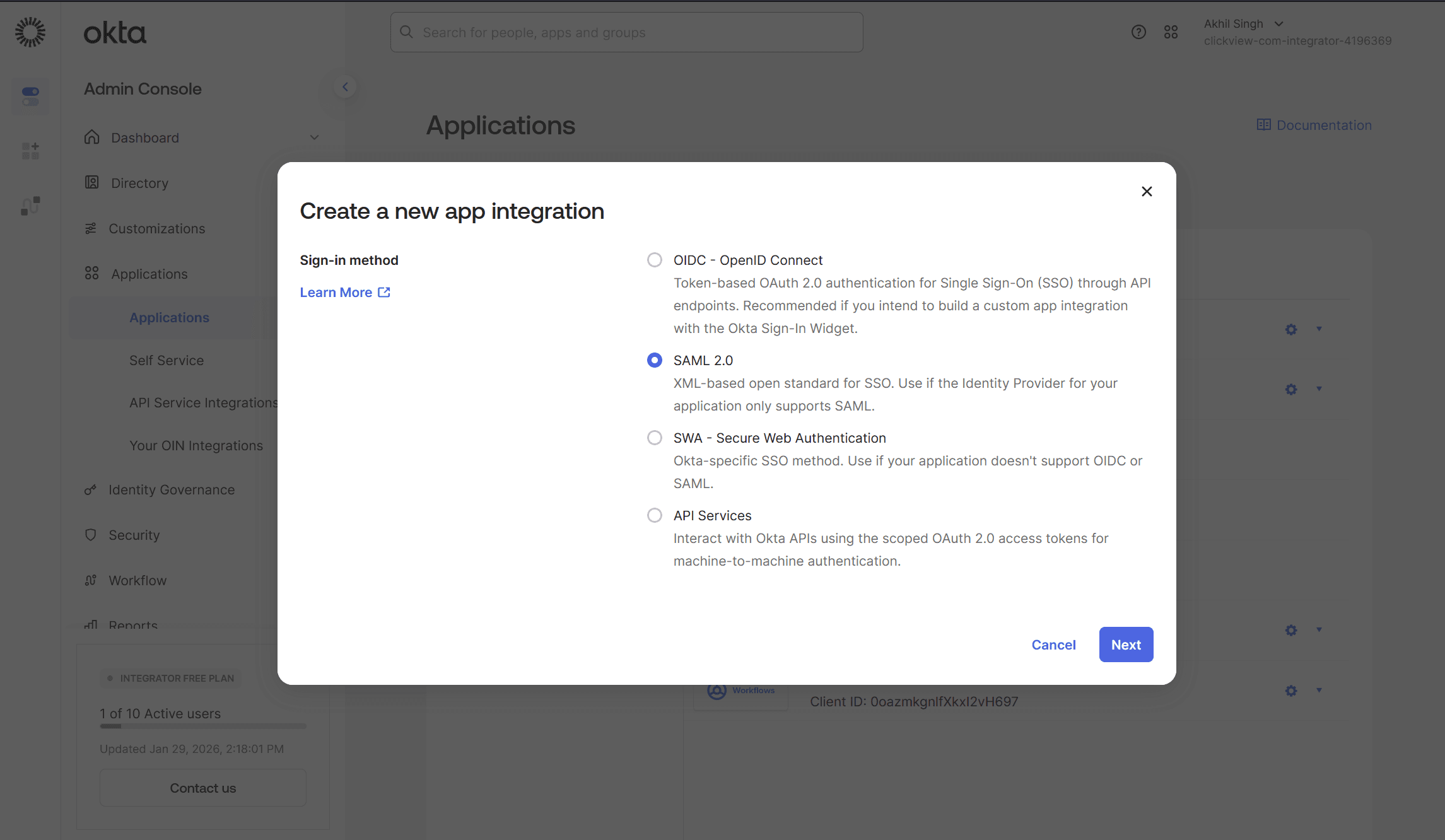
- Select Create App Integration, then set Applications Sign-in method to SAML 2.0. Click Next.
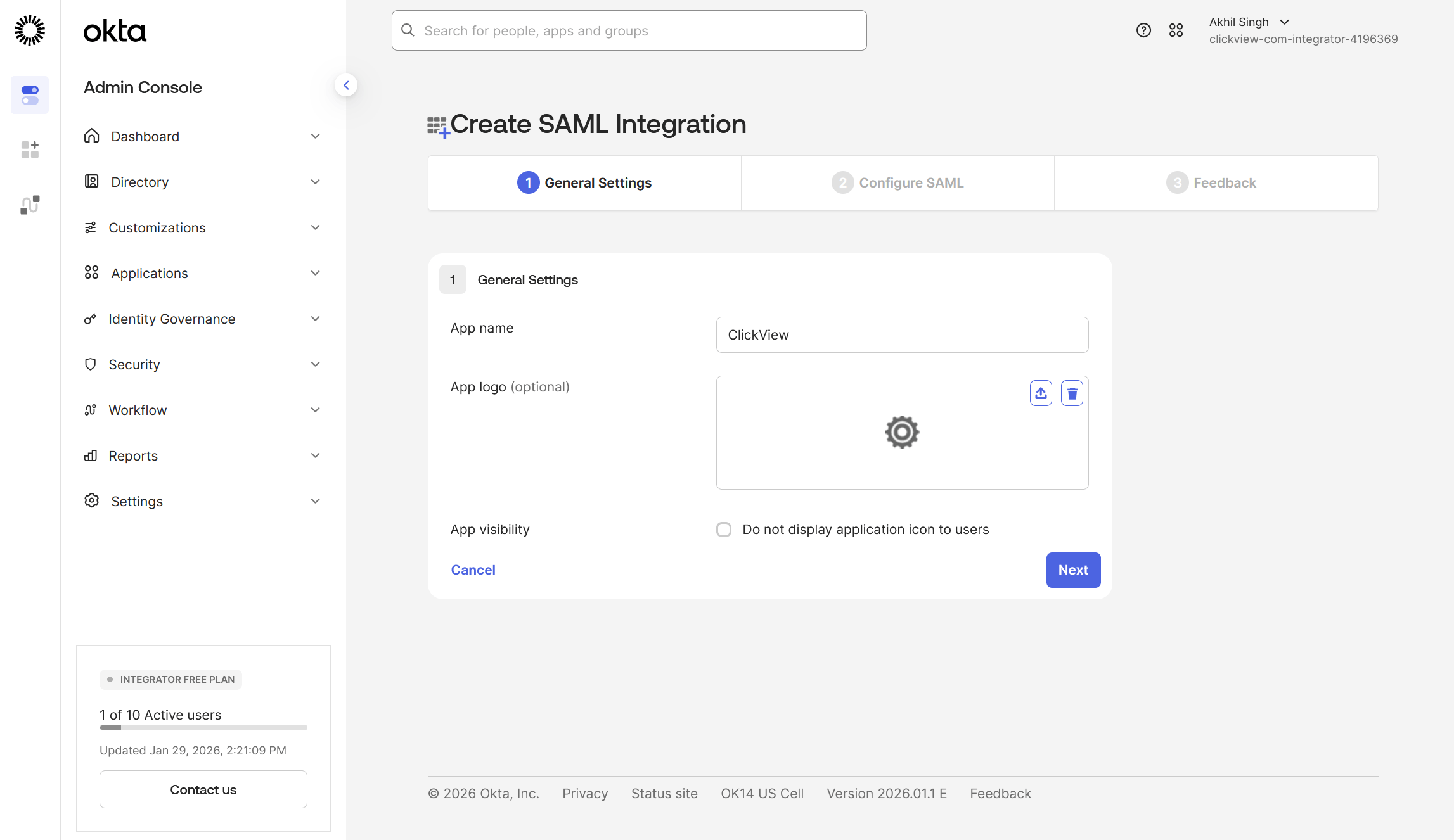
- When prompted, enter the App name as ClickView, then continue by clicking Next.

Configure SAML settings
- In the Configure SAML section, populate or select the following fields exactly as shown:
- Single Sign-On URL
https://saml-in5.clickview.com.au/Shibboleth.sso/SAML2/POST - Audience URI (SP Entity ID)
https://saml-in5.clickview.com.au/shibboleth - Name ID format
EmailAddress - Application username
Email
- Single Sign-On URL
- After completing these fields, continue using Next. The ClickView application will now appear in Applications. Return to Applications, then open ClickView.

Add attribute statements
- Open the Sign On sub-tab for the ClickView application.

- Scroll to the Attribute statements section and select Add expression.

- Add the following expressions:
- Name: firstName
- Expression: user.profile.firstName
- Name: lastName
- Expression: user.profile.lastName
- Name: mail
- Expression: user.profile.login

- Expression: user.profile.login
- Name: firstName
Additional user attributes
Two additional user attributes are required to complete the SSO configuration:
- Access level attribute
- This attribute is used to identify the user’s level of access within ClickView, such as a student grade level or staff role.

- This attribute is used to identify the user’s level of access within ClickView, such as a student grade level or staff role.
- School identification attribute
- This attribute is used to identify the user’s school or site within a district. The attributes used depend on the customer’s Active Directory or Okta configuration.

- This attribute is used to identify the user’s school or site within a district. The attributes used depend on the customer’s Active Directory or Okta configuration.
Note:
- The attributes used depend on the customer’s Active Directory or Okta configuration.
- There are no fixed attribute names required.
- Any existing attributes may be used, provided they accurately represent the user’s access level and school.
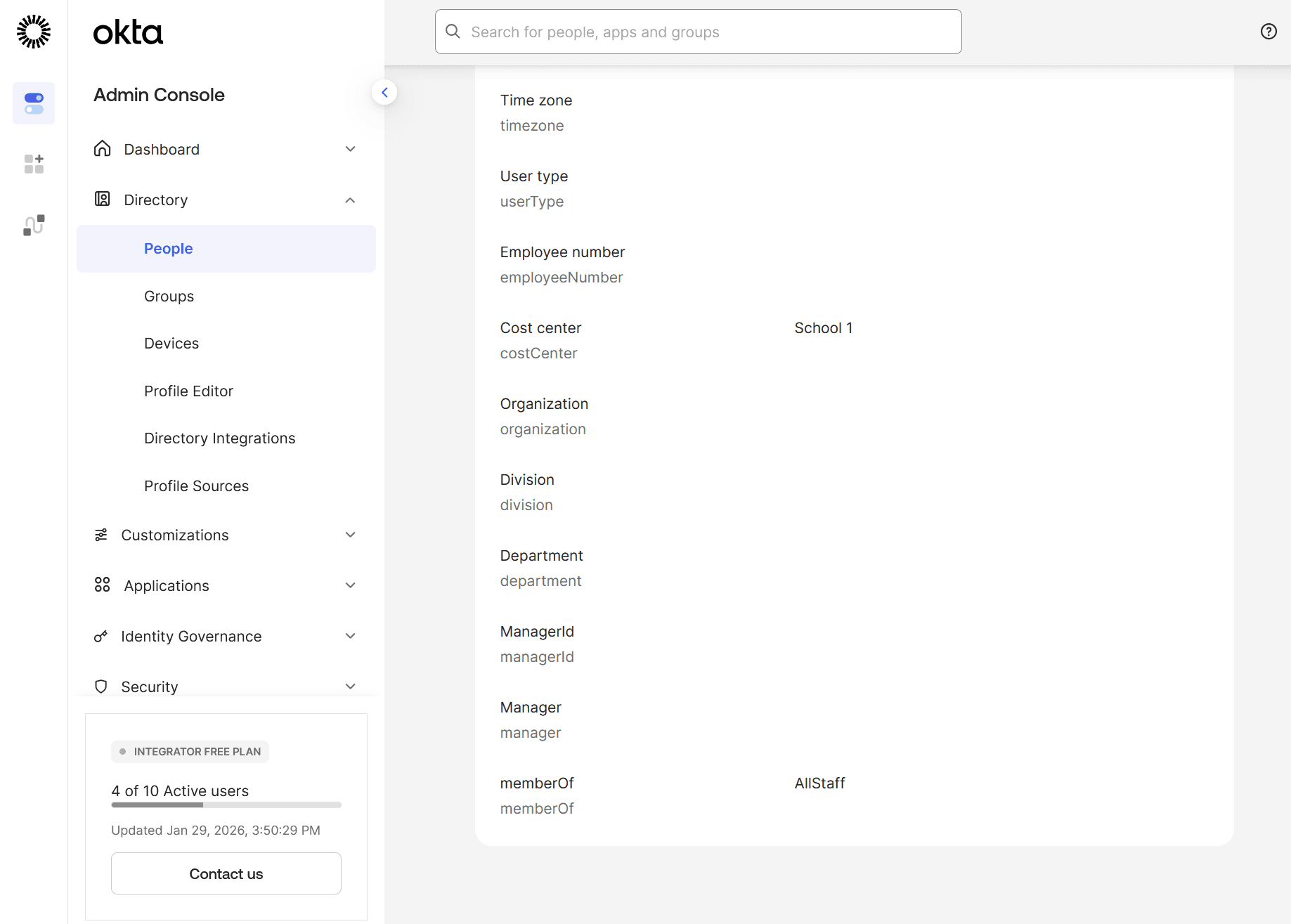
This is what a user’s profile and attribute values will look like:
Assign groups to the ClickView application
- Navigate to Applications, open ClickView, then go to Assignments and select Groups.

- Search for the groups you want to enable access to ClickView and assign them to the application.
- Navigate to Applications → ClickView → Sign On -> Metadata URL. Copy the Okta Metadata URL.
Submit SSO information
Once you have the Metadata URL, complete the onboarding form so the SSO instance can be set up.
Frequently asked questions
Get in touch
If you’re having trouble finding the right topics or videos, just reach out! Our team - 


 Andrew, Nisch, Janice, Pfreya, or any of us at ClickView - will be happy to help you get sorted.
Give feedback
Was this guide helpful?
Up Next
How to set up Google Workspace SSO for your School using the new SAML process
Summary How do I set up Google Workspace SAML SSO for ClickView at my school? To set up SAML SSO for ClickView, create a custom SAML app in your Google Workspace Admin console and send your SSO URL, Entity ID, and certificate to ClickView Support, who will reply with your school-specific ACS URL and Entity […]