
5 Elf on the Shelf classroom ideas for primary school teachers
Published on 8 min read


In this guide
Elf on the Shelf has been a Christmas tradition since 2005. For those who may not be familiar with this enduring phenomenon, here is a little bit of background.
The Elf on the Shelf website explains that Santa’s scout elves help him with his naughty and nice list. Families adopt a scout for the holiday season. Each night they go back to the North Pole to report to Santa and return to their adopted family by daylight where they hide in a new place waiting to be found.
Originally, Santa’s ‘Scout’ Elves were living with families, but over the years, their locations have evolved to being included in many classrooms during the holiday season.

Elf on the Shelf has lovers and detractors within the classroom. Ultimately, the goal is to find ways to use the Elf to promote kindness and a bit of focus before the holiday break.
Some teachers love them, others dread having to think of yet another way to use the classroom elf in a unique way.
There are many teacher resources available on the Elf on the Shelf website. To save you time, I’ve put on my Elf hat to come up with some unique ideas that you can feel comfortable with. These ideas provide fun and a little holiday magic as they continue to promote curriculum standards.
Getting started and an important reminder!
Getting started – Adopt (i.e. buy) your Elf
- First things first! The Elf arrives in a box with the book that started it all.
- Now, you must decide how your Elf will arrive in your classroom. One idea is to wrap your Elf in Christmas paper and have him or her delivered to your classroom from the North Pole. Keep your Elf in the school freezer overnight and arrange to have someone deliver them to your classroom.
- For your youngest students, unwrapping the box and reading the book, (or watching the movie) helps set the stage for the fun to come.
Reminder
- The #1 rule that must be followed in your classroom is that your Elf CANNOT be touched, or he or she will lose their magic! Of course, as the teacher, you will be moving your Elf at the end of each day, so they are ready and waiting for your students’ arrival each morning.
- If an overly curious child happens to pick up Elf, he or she may disappear for the day or even a day or two to feel better. A sprinkle of cinnamon is said to help your Elf get their magic back!

1) Magic Elf seeds
This activity encourages wonders and promotes social interaction and collaboration whilst learning about how seeds grow into plants.
This idea is most suitable for your youngest learners.
Supplies
- Cotton balls (i.e. the ‘snow’)
- Tiny colored Tic Tacs (i.e. the ‘seeds’)
- Plastic spoons for ‘shovels’
- Paper to place the ‘seeds’ and to act as soil
Steps
- Before class, hide the Elf in a classroom plant.
- Start the activity by reading the book The Tiny Seed by Eric Carle. This will get the students thinking about growing seeds. Alternatively, watch the video Growing a Seed.
- Now it’s time to create a candy cane garden! Start with presenting a cookie sheet filled with cotton balls. (This is the snow.)
- Distribute tiny seeds (coloured Tic Tacs) and shovels (i.e. plastic spoons) to the students.
- Ask each student to ‘plant’ a Tic Tac seed under the ‘snow’.
- Explain to the students that the Elf is the farmer who will watch and care for the seeds overnight and help them grow.
- On the day you wish the magic to happen, you will replace the ‘seeds’ with candy canes (or something similar), for the entire class before they arrive to class the next day. Your students will be excited to see that the magic Elf seeds have turned into candy!
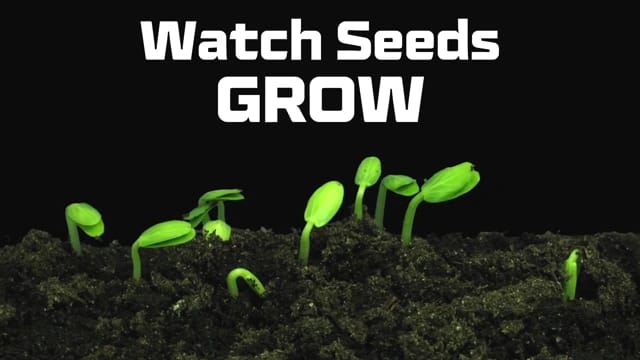
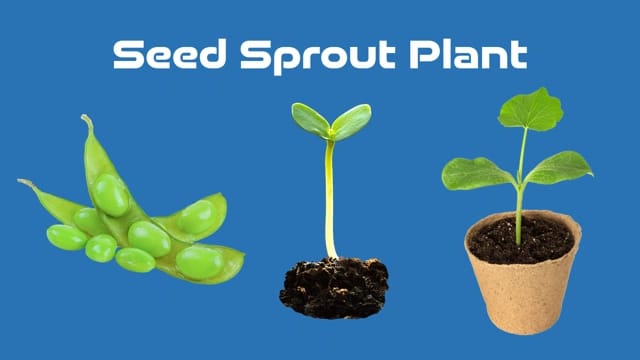
This activity is a great activity to launch further teaching activities around plants or a launchpad for associated experiments such as Seed, Sprout, Plant that explore how seeds grow into plants.
2) Elf’s arctic friends diorama
This activity can be used as a hook to a wider lesson on arctic animals, habitats, adaptations and ecosystems which aligns with both science and geography curriculums.
Supplies
- Cotton balls
- Blue craft paper
- Cardboard cutouts of arctic animals like polar bears, arctic foxes and seals
- Shoe boxes

Books and videos
- Polar Bear, Polar Bear, What Do You Hear? by Bill Martin Jr. and Eric Carle
- The Three Snow Bears by Jan Bret
- Over in the Arctic: Where the Cold Winds Blow by Marianne Berkes
- Series: Nature’s Microworlds: Svalbard

Steps
- Read one or all of the books, or show an episode from the series to the class over one or many days.
- Gather supplies and distribute them to the students.
- Show an example diorama to the students.
- Students use supplies and ideas from the chosen book or episode to create their diorama.
- Students present their dioramas to the class and describe what they created.
Take this activity further by exploring animal habitats and adaptations.

3) Elf’s writing workshop and literary journey
This activity is a great way to ignite your students’ imaginations and will help them develop their writing skills. Additionally, you can promote cultural awareness and comprehension skills, as well as critical thinking while including a Literacy and Geography focus.
Supplies
- Christmas stocking or something similar
- Christmas paper or notebooks
- Pencils or pens
- Written or picture writing prompts to be nestled in the Christmas stocking
Suggested books and videos
- Bear Stays Up for Christmas by Karma Wilson
- The Polar Express by Chris Van Allsburg
- Olive, the Other Reindeer by Vivian Walsh and J.otto Seibold
- The Snowy Day by Ezra Jack Keats.
- Dream Snow by Eric Carle
- Seven Spools of Thread: A Kwanzaa Story by Angela Shelf Medearis
- The Night of Las Posadas by Tomie dePaola
- Videos:
Writing steps
- As a writing workshop, for one week, the Elf leaves a writing prompt on the board that relates to a holiday adventure or hides prompts inside of a stocking for a student to write each day. Students are given 15 minutes or more to write their responses. I suggest starting the class with this activity. To wrap up the week, students share their favourite prompt.
- Prompt ideas:
- “If I were an Elf for a day”
- “Baking with Mrs. Claus”
- “The almost true story of Rudolf”
- “Why Santa has many names”
- “Would it be good if it was Christmas every day?”
- “Our family’s holiday traditions”
You can find other ideas on the ClickView Christmas topic.

4) Elf’s Maths workshop
This activity helps reinforce math skills, collaboration and critical thinking.
Supplies
- Paper, pencils or markers
- Worksheets with math problems related to the holiday
- Counters or beans
Video
Steps
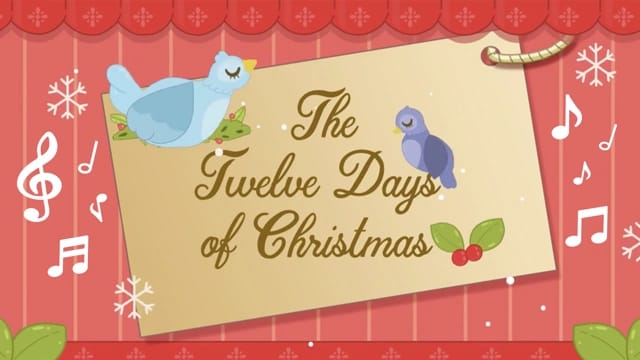
- Start the activity by watching (and singing) the 12 Days of Christmas with the students. Here you can create some easy word problems to have them solve individually or in pairs using objects described in the song. Find a few examples below to get you started.
- If I have two turtle doves and they make friends with nine ladies dancing, how many turtle doves and ladies are now friends? Answer 11.
- On the 12th day of Christmas, you receive twelve drummers drumming. If three drummers take a break, how many drummers are still drumming? Answer 9.
- On the fourth day of Christmas you receive four calling birds. If each bird sings two songs, and you have already listened to 3 songs, how many songs do you hear in total? Answer 11 songs.
- On Christmas-coloured index cards, write 1 math problem for each of the 12 days of Christmas and hide them throughout the classroom
- Divide students into teams of two or three.
- Next students will search for the math problems related to holiday themes that have been placed around the room.
- Students will work collaboratively to find each of the 12-word problems, solve them, and share their responses in small groups.
- If you want to make this into a game, the team that finds and answers all twelve questions correctly gets a prize like a candy cane.
- Finish the activity by asking students to create their own holiday-themed Maths problems for their peers to solve.

5) Elf’s Science experiment
This activity develops scientific enquiry, observation skills and an understanding of the weather.
Supplies
- Borax or sugar
- Pipe cleaners
- Journals for observations
- Goggles if needed
- Paper
- Scissors
Book or video
- Snowflake Bentley by Jacqueline Briggs Martin.
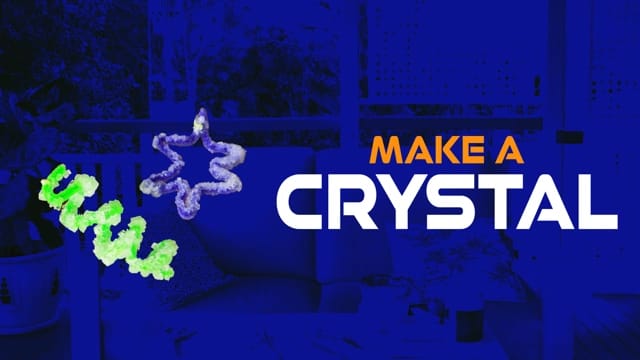
- Video: Crystal Creation (This video explains the activity outlined below).
Steps
- Example of snowflake
- Cut pipe cleaners into three equal sections. Twist the sections together at their centres to form a six-sided snowflake shape.
- Tie a string to the end of one of the snowflake arms.
- Fill a wide-mouth jar with boiling water. To ensure the safety of students, be the one to pour the boiling water and instruct students to not touch the water or the glass jar. For younger students, you can have them wear gloves to protect their hands.
- Add borax one tablespoon at a time to the boiling water, stirring to dissolve after each addition.
- Hang the snowflake from the top of the jar.
- Keep the jar in an undisturbed location overnight.
- The next day, check back for snowflake crystal formation.
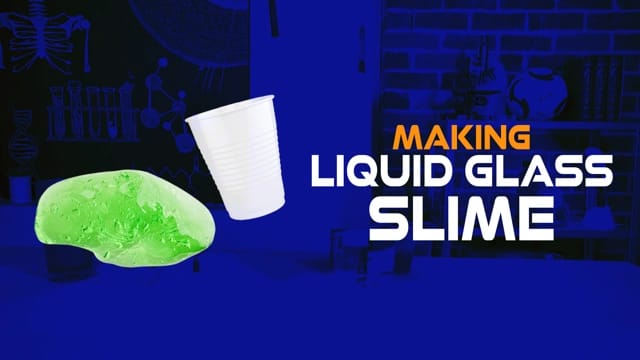
Other holiday-themed science experiments include the creation of slime. Check out the videos here and learn how to make liquid glass slime and how to test and measure slime properties.

Now you’re ready for some Christmas fun!
There are many ways to incorporate Elf into your holiday classroom activities. Hopefully, the activities I’ve highlighted above will whet your imagination as to the many ways you can add a bit of fun and whimsy to your holiday projects while keeping an eye on curriculum standards. You can adapt your Elf for your students and their cultures to make sure your activities are inclusive.
Whatever you do, take photos, have fun, and share your Elfcapades!
References
- Dias, K. (2022, January 4). Our Elf on the Shelf is Non-Binary – Thoughts And Ideas – Medium. Medium. https://medium.com/indian-thoughts/our-elf-on-the-shelf-is-non-binary-b63256cfa4ac
- Boland, S. (2022, October 27). How to catch Elf on the shelf moving & 5 ideas to bring him to life | Life Lapse: Stop Motion App. Life Lapse Stop Motion Video App. https://stopmotionapp.com/blog/elf-on-the-shelf-moving-5-ways-to-make-elf-alive
Share to

Annette Geiger
briefcase iconLanguage Coach / Content Creator
Annette has been teaching English as a Second Language since 2005. She has also created course content for educational publishers around the world. Today, she tutors primary age school children as well as language and soft skills for adult learners.
Other posts


Want more content like this?
Subscribe for blog updates, monthly video releases, trending topics, and exclusive content delivered straight to your inbox.