
6 Maths intervention strategies to support students
Published on 7 min read

In this guide
What is maths intervention?

Maths intervention is designed to identify and support students who may be struggling in maths. Early intervention is prioritised, and assessors usually examine Reception to Year 1 students. However, maths screening and intervention is relatively new, and often poorly prioritised in policy, schools, and public perception.
Unlike literacy interventions, maths interventions weren’t widespread until the 1990s. Early reading intervention is deeply prioritised in primary schools, but there’s still a shortage of similar support for maths despite the fact that maths skills are also a predictor of later academic success.
Maths intervention, or the lack thereof, hits close to home for me. Like many others, I never received maths intervention even though I needed it, and math anxiety damaged my perception and relationship with maths for most of my life. I didn’t begin to repair this until I was well into my higher education, and, ever since, I’ve been passionate about why students struggle in maths and how this perception can be altered.
1) Schemas

Word problems are a common target for maths intervention. They can be especially intimidating to students because they require literacy parsing skills and a good grasp of mathematical concepts. If a student struggles in English or speaks English as a second language, word problems can become an even more nightmare-inducing dilemma.
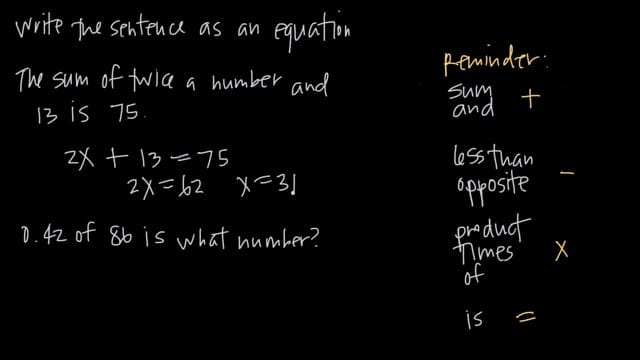
Schema-based maths is adaptable and evidence-based. Graphic organisers and drawing schemas can be helpful for visual learners, or schemas can be broken down from word problems by creating an equation, as shown in this video and in this example below:
Word Problem
A zookeeper has 80 fish she wants to distribute evenly to 8 polar bears. How many fish will each polar bear get?
Schema
Total ÷ Groups = Number per group.
Schemas are tools that students can take with them well beyond maths intervention, and they can be reused and referred to for other word problems.
2) Bridging student interests
Something totally unprecedented happened to me in college: I studied maths on my own, liked it, and it became the backbone of my undergraduate thesis.
The maths in question was game theory, a mathematical model of strategic interaction utilised in social sciences. Game theory changed my relationship with mathematics forever by bridging the gap between the subject I was most comfortable with and the subject I hated the most.
Intervention is especially challenging with students like me who’d freely admit they “hate maths”. It’s hard to address or even identify what a student is struggling with if there’s no baseline of interest. Students who “hate” maths often just fear maths, especially if their primary experience with it is negative. Maths anxiety can make students give up on the subject entirely as early as Year 1.
So, if your student hates maths …what do they love? Ask them about their interests and hobbies. Ask if they have a favourite subject, and if so, why they enjoy it. Not only can this relax students and get them in a mindset which may be more conducive to learning, but it can introduce them to new ideas or topics within their interests.


Try creating a survey for students that allows them to share their feelings about maths and/or their favourite interests and subjects unrelated to maths. Finding a mathematical connection that bridges a student’s interest may not be easy, but it can alter their perception of maths forever. Mathematics plays a vital role in sports, fashion, art, music, and countless other fields. By presenting content in an individual or subject-based manner may just change student’s perception of maths forever.
Another option, or addition, is providing a collection of maths videos or simulations. Have students browse through our collection until they find something that interests them.
3) The attack strategy
The Attack Strategy is a tool students can use in multiple schemas and ability levels, and its success in improving word problem performance is well-supported by research. There are several kinds of Attack Strategies that break down word problems into a simple series of steps, such as this pair of strategies:
Phase 1
This strategy is a great place to start in maths intervention because it targets the first step of word problem-solving.
- Read the word problem,
- Underline the question,
- Identify the problem type.
This strategy can prevent students from focusing only on the keywords of a word problem instead of identifying an operation.
Phase 2
This strategy breaks down the second phase of world problem-solving to identify the missing quantity.
- Establish problem type,
- Organise information in a conceptual model diagram,
- Use the diagram to create a maths equation,
- Solve for the unknown quantity.
Other attack strategies
The great thing about the Attack Strategy is that if a student struggles with one, there are plenty of others to try instead. Many strategies utilise acronyms and other mnemonic devices, which can be especially helpful for students with learning disabilities.
4) Copy-Cover-Compare
Copy-Cover-Compare, or CCC, is an evidence-based procedure that can help students with fact retrieval. It can improve maths accuracy in general and special education, and you can easily adapt it to suit students’ needs and abilities. The following example uses maths facts, but this procedure can be used to develop fluency with symbols or other problem areas.
You need to:
- Prepare a worksheet with 8-10 maths facts/models on one side of the paper,
- List answers on the other side of the paper,
- Give students time to study the facts,
- Fold over the paper to hide the answers.
Students need to:
- Fill in the answers from memory,
- Compare your answers to the original answers,
- If one of your answers is incorrect, study the original sheet again and repeat the procedure,
- Continue until all of your answers are correct.
You can alter this example by covering the fact/model instead of the answer and proceeding the same away, or it can be done without a worksheet by asking students to answer orally (this can speed up the activity as well, or is great as a revision at the start or end of a lesson to solidify understanding and technique).
5) Metacognitive maths

Metacognitive thinking helps students solve and deepen mathematical understanding. It’s one of my favourite forms of maths intervention because it can address maths anxiety and creates a healthier foundation for mathematical thinking.
Developing mathematical thinking has many benefits beyond understanding mathematical concepts. It addresses students’ mindsets about the maths subject itself. You can introduce metacognitive thinking by asking students simple questions about their experiences with maths in school and at home, but it’s especially effective for students struggling with maths in real-time.
Introduce a new maths concept to your student. After the concept is explained, ask students to step back and reflect on what they’re feeling. What are they thinking as they learn about this concept? Are they afraid or anxious? Are they thinking thoughts such as, “I’ll never be able to understand this anyway”?
In the moment, help students identify what they’re feeling and thinking, and then break down ways to combat this line of thought. Taking a break and exploring other mathematical concepts are great tools, but perhaps the most important and overlooked tool is simply asking for help.
6) Maths resources for every part of the lesson
- Start the lesson with a fun tone and warm up their brains ready for the lesson ahead by using my 9 Fun maths warm ups for students of different ages.
- Explore 9 Maths activities for primary school students to extend students who have finished whilst you’re still explaining to lower ability students or as a whole class round-robin style lesson.
- Make math relevant and link to the real world through Clickview’s Maths in Real Life topics. Re-engage the disengaged and contextualise these lifelong skills.
Maths is often a subject that students see as boring or too hard. Let’s change this fixed mindset to one of growth; making it fun and engaging.
References
- Boaler, J., Legette Jones, L., Lai, Y., Nardo, J. and Schultens, J. (2024). Metacognition in the Mathematics Classroom. Notices of the American Mathematical Society, [online] 71(01), p.1. doi:https://doi.org/10.1090/noti2843.
- Powell, S.R. and Fuchs, L.S. (2018). Effective Word-Problem Instruction: Using Schemas to Facilitate Mathematical Reasoning. TEACHING Exceptional Children, [online] 51(1), pp.31–42. doi:https://doi.org/10.1177/0040059918777250.
- Schwartz, S. (2024). Schools Prioritize Reading Intervention. But What About Math? [online] Education Week. Available at: https://www.edweek.org/teaching-learning/schools-prioritize-reading-intervention-but-what-about-math/2024/02.
Share to

Amanda Joachim
briefcase iconEducation & Research Consultant
Amanda Joachim is an educational media consultant, researcher, and writer. Her interdisciplinary and creative approach is inspired by her own experiences learning and working in the Philadelphia school district.
Other posts



Want more content like this?
Subscribe for blog updates, monthly video releases, trending topics, and exclusive content delivered straight to your inbox.