
7 Fun activities to teach vocabulary to students
Published on 10 min read

In this guide
Vocabulary instruction is typically not taught in isolation. We do not simply choose words and teach students the definitions. The goal of vocabulary instruction is for students to internalise the words and their meanings so that they can use those words in their current learning/subject and across contexts.
Regardless of the age of students, teaching vocabulary is important for comprehension and retention of information. Vocabulary knowledge is vital across all subject areas and all levels. Students who have a deeper understanding of content vocabulary tend to be more confident and successful.
The words we choose for vocabulary instruction are often words that are academic in nature, especially when students are learning subject-specific vocabulary such as in maths or history.
The benefits of making vocabulary learning fun
Making vocabulary fun provides three benefits for students:
- Increased motivation and engagement,
- Increased retention of information, and
- Accessibility for diverse learners.

Motivating and engaging students has however become an increasingly difficult task for teachers. Students are not always intrinsically motivated to do well and many students mentally check out due to disengagement. Making learning tasks fun and relevant can therefore have a positive impact on motivation and engagement. When students (and the teacher!) are excited about learning, it can transform the classroom.
Additionally, students can learn new vocabulary, but if they do not retain that information for future use, the learning is pointless. If students are engaged while learning, their retention rate increases.
Today’s classrooms include a wide range of students with various academic, social, physical, and emotional needs. Fun learning activities also provide a way to differentiate learning so that it appeals to a wider audience.
Fun vocabulary teaching activities
The following activities give a combination of written and oral activities that can be adapted for any year group or ability level of students.
1) Word associations

Making word associations can help students to broaden their word bank in your subject. Not only do students learn the meaning of a specific word, but they also learn antonyms and synonyms and words associated with new vocabulary. Students can also learn to use a thesaurus to help with word associations.
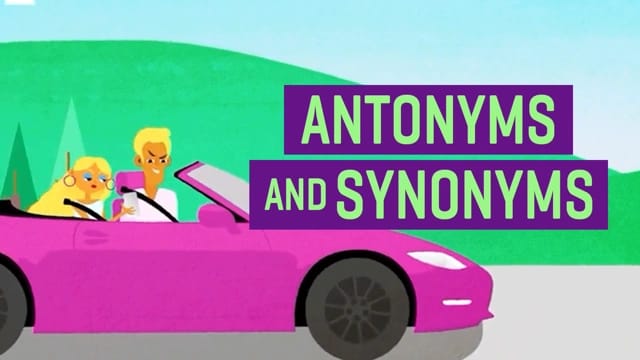
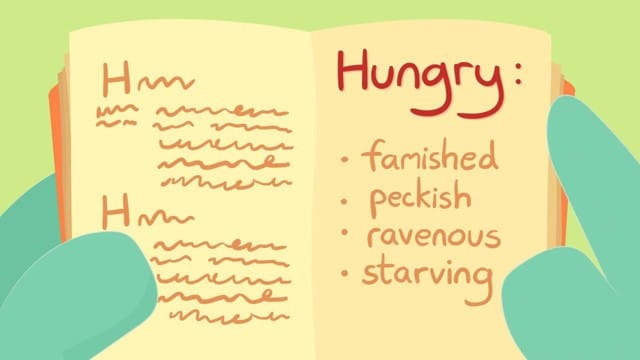
This activity can be done individually, in small groups, or as a whole class. It is also applicable in any subject area. The word association map can be displayed as a word wall. This is a great way to reinforce vocabulary learned within a unit.
Directions:
Using specific vocabulary words.
- Students are to create a word web or map to connect the word in the centre to other words. The other words can be synonyms, antonyms, definitions in their own words, or sample sentences.
Along the lines connecting the circles students should explain how the word(s) are connected to the central vocabulary word. For example, if the vocabulary word is food chain and the student’s associated word is consumer, the connecting line would be labelled accordingly.
2) Story cubes
Using vocabulary words in their correct context can assist students to retain the meaning and usage of words. Students can participate in this activity across subject matters, individually or in groups. It can be done orally for younger students or written for students with more established writing skills.
Directions:

- Use or create cubes with vocabulary words pertinent to the unit of study. If students are not able to read written words, you can use pictures instead of words. You can create these cubes or allow students to create them.
- Students roll the cube and write sentences with the vocabulary words. They can extend this activity by writing multiple sentences or writing a story. If the students are using vocabulary words from a subject like science, they could also write an explanation or description using the vocabulary word.
If students are not able to write sentences yet, they can use the word in an oral sentence. Oral sentences can also be used with EAL students to increase verbal processing skills.
3) Word art posters – word web
In this activity, students create images that define the vocabulary words. Allowing students to be creative can increase their engagement with an activity. This is a versatile activity and can be used with new vocabulary or words that need to be reinforced.

Directions:
- Give students a vocabulary word.
- Students write the word on their paper and include illustrations that define that word.
- Once each student’s poster is complete they can be displayed as part of a word wall in the classroom.
- To increase the connections made with these vocabulary words, have students make associations and connections between words. Posters can be grouped or categorised according to shared characteristics.
4) Lyric summaries

Summarising a text, notes, or oral information using learned vocabulary can help students internalise their learning. This activity uses familiar song lyrics to make summaries memorable and engaging.
Directions:
- Create a semantic/concept map with students that includes information from the subject matter and relevant vocabulary.
- Students use the information in their concept map to write sentences using the vocabulary and content.
- Those sentences are then transformed into song lyrics. Use well-known and easy songs that students are familiar with such as “Twinkle, Twinkle Little Star” or “Happy Birthday”. If students have a school-appropriate song they are excited to use, that is also a great way to encourage creativity.
- Students can share their songs with the class, small group, or in a video/audio submission to the teacher.

5) Vocabulary dialogues
Similar to the last activity in concept, this one uses dialogue to help students apply the vocabulary they are learning. Not only will students develop the vocabulary they need, but this activity also fosters an understanding of perspectives and point of view.
Directions:
Students can work individually or in partners.
- Create a dialogue between at least two characters explaining a process, telling a story, or describing an event. Within their writing, students should use the predetermined vocabulary given with the assignment.
- This could be adapted so that one student writes a line of dialogue and then passes the paper to the next student to continue the conversation.
- Unfurl and see what you have!
- Have students correct their own story to ensure it makes sense, flows and the spelling, tense and grammar are correct.
6) Name it in 3 clues
The objective in this activity is for students to identify a word based on clues about its meaning. Students must use critical thinking skills and cooperative discussion to identify words.
To prepare for this activity you will need a list of vocabulary words and clues. The idea is for the clues to get progressively more descriptive so students can figure out the word. If the word is mitosis, for example, you would need to have a series of clues for students to guess the word.
Directions:
- Place students in small groups (3-4 students).
- Give students clues one at a time for each word. Give students time to discuss as a group.
- If students cannot identify the word with the first clue, give the next.
- When a group thinks they know the word, they raise their hands.
- Your points system should reflect the number of clues needed to reach the answer.
- Continue to the next word.
You could even make this a competition!
- Have groups run up and write their answer on the board or
- Have small white boards for groups to hold up.
This way they are practising writing their vocabulary as well.
7) Vocabulary relay
Vocabulary relay is an activity that is more appropriate for younger students. It is great for getting students up and moving and appeals to your kinesthetic learners. This would also be a good review activity.
Directions:
- Divide students into groups (5-6 students). This works best in an open space such as a playground or gym, but it can be done in the classroom as well.
- Put flashcards with vocabulary words on a table at one end of the room.
- One at a time, students run down and grab a flashcard. They must then give the definition, a related word or concept, or use the word in a sentence. They then place the card back down and run back.
- If a student picks up a card that another student has already done, they must give a different piece of information. For example, if student 1 gives the definition, then student 2 would use the word in a sentence.
- The next student goes and continues down the line.
- The first team to finish wins.
Integrating technology into vocabulary learning

Integrating technology into vocabulary learning can add a different element of fun and engagement for students.
- Padlet is a great resource that you can use to create a collaborative, digital word wall.
Add words and then students can add definitions, quotes, images, videos, or sentences to the wall under each word.
As a class you can also categorise and create word associations. - Students can use online templates to write and illustrate stories using vocabulary.
Resources like Book Creator are a fun and interactive way to make online stories.
There are also many templates that can be used in programs such as Canva, Google Slides, or PowerPoint. Students can write fiction or nonfiction stories. They can also create comic strips using templates. - Gamifying vocabulary learning is a fun and exciting way to engage students.
Students love playing games and applications such as Gimkit or Kahoot can be used to create competitions and allow students to review vocabulary.
My own students love to play Gimkit because they can play against each other. They have to answer questions to gain experience points and then they can continue playing.
I have used it for not only vocabulary, but also to review for tests and to practise skills. - Augmented reality apps like AR Flashcards can be used to create an immersive experience for your students.
These apps can be used by teachers to create flashcards and then students can scan the cards and an image or 3D model appears to give them information about the vocabulary word. - Create “Word of the Day” posts in the style of Instagram or Twitter/X. Students can create these using vocabulary and images.
Sites like Canva have templates for all types of social media outlets.
SlidesGo is also an option for templates. On this site, students can download Google Slides or PowerPoint templates for them to create on their own.
Strategies for reinforcing vocabulary
There are other ways to reinforce vocabulary skills that are not necessarily “fun”, but are useful. These can be used throughout the lesson to encourage retention of new vocabulary.
1) Word walls
I like to create interactive word walls in my classroom. An interactive word wall allows the class to move words around, create categories, add pictures, and include new information. Words on a word wall should be displayed and large enough for all students in the classroom to see.
2) Anchor charts
They will typically include important concepts and vocabulary about a subject. Some teachers are really good at creating anchor charts that are beautiful and informative. The ones in my classroom tend to be more basic, but they still serve the same function.
These are examples of anchor charts found in my room:


3) Keeping a personal dictionary
Students can include words that they learn not only in my class but in other lessons, at home, from watching TV, etc.
At the beginning of the year, we set up their notebooks to include a section for their personal dictionary. Here, they record words, and definitions in their own words, and usually include pictures. As they learn more about the words, such as when a word means something different in another context, they can add this new learning to their dictionary.
These dictionaries are used throughout the year and help students to internalise vocabulary.
Vocabulary instruction is an important part of all subjects and year groups.
Making vocabulary instruction fun can increase student success and create a learning environment that encourages creativity and retention.
Sources
- Linan-Thompson, S. and Vaughn, S. (2007) Research-Based Methods of Reading Instruction for English Language Learners. Alexandria, Virginia: Association for Supervision and Curriculum Development.
- Mokhtar, N., Xuan, L.Z., Lokman, H.F., Mat, N.H.C. (2023). ‘Theory, Literature Review, and Fun Learning Method Effectiveness in Learning’, International Journal of Social Science and Education Research Studies, 3(8), pp. 1738-1744, doi: : https://doi.org/10.55677/ijssers/V03I8Y2023-30
- Rojabi, A.R, Setiawan, S., Munir, A., Purwati, O., Safriyani, R. (2022) ‘Kahoot, is it fun or unfun? Gamifying vocabulary to boost exam scores, engagement, and motivation’, Frontiers in Education, 7, doi: https://doi.org/10.3389/feduc.2022.939884
- Zwiers, J. (2008) Building Academic Vocabulary Essential Practices for Content Classrooms. San Francisco, California: Jossey-Bass.
Share to

Mattie Farrer
briefcase iconAVID Site Coordinator / Content Curator
Mattie Farrer has been an educator in various grade levels and capacities during her career. She has a passion for supporting English learners and their language development. She also loves helping teachers reach all students.
Other posts



Want more content like this?
Subscribe for blog updates, monthly video releases, trending topics, and exclusive content delivered straight to your inbox.