
Tips & education resources to help you talk about the Ukraine Crisis
Published on 5 min read

In this guide
Russia’s military operation in Ukraine, which began on 24 February 2022, is dominating the news and social media so it’s highly likely that your students are aware of this sombre situation. In fact, they may have asked questions already. While it may be tempting to avoid such an upsetting topic, teacher-led discussions provide an opportunity to combat misinformation, instil compassion for the world’s citizens, and allow students to safely raise and process difficult emotions about the conflict.
Furthermore, as both a current event and one that is likely to define history, the crisis in Ukraine is a highly relevant topic for exploration in secondary modern history, geography, media studies and civics lessons.
Having the right approach and educational resources to hand makes the task of talking to students about Ukraine and other military conflicts much easier. To help, we’ve listed several tips and resources that you can access right now.
1) Use your teaching community to find great resources
The education community has come together swiftly to create and share resources that help teachers talk about the Ukraine Crisis and teach students about related topics such as propaganda, international politics, refugees and humanitarian efforts.
Of particular note are the resources provided in this article by Education Week, the lesson plans on Share My Lesson which can be adapted to the Australian classroom, and ClickView’s own Ukraine Crisis playlist.
You’ll need to ensure you’re up to speed with events yourself using reputable news outlets so that you are prepared to answer questions truthfully and accurately.
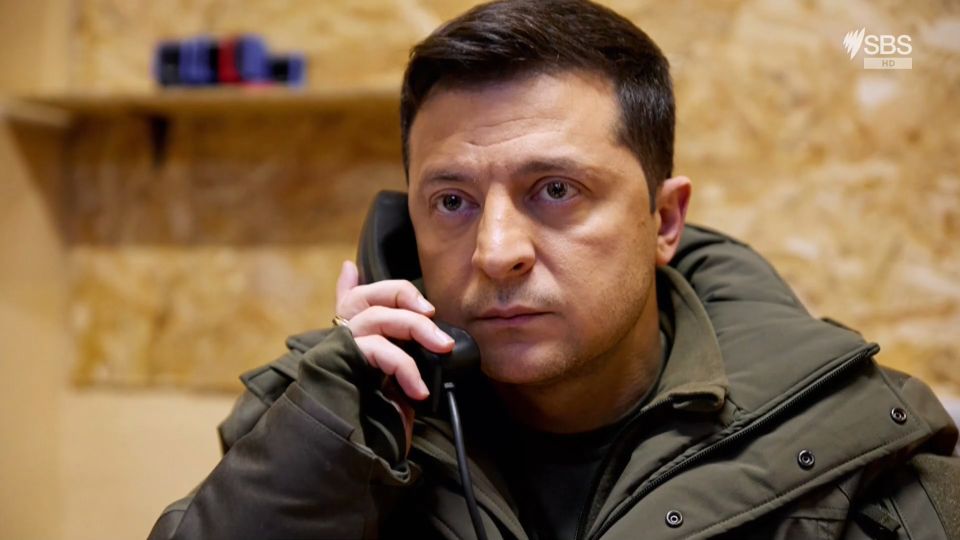
2) Discuss the Ukraine Crisis in an age-appropriate way
Before starting any discussion or planning a lesson, be mindful of your student’s intellectual and emotional capacity for understanding sensitive information. Most children under eight years old may not have any interest or concept of what is happening. In this case, experts believe that it’s best to take their lead and wait for them to ask questions before broaching the topic.
For upper primary school and high school students, it’s good to meet students where they are and ask them directly what they already know about Ukraine and Russia (including where it is), and what they know about the crisis. It’s a good idea to show your class where these countries are in relation to Australia, the UK and the US to give them geographical context, and for younger students, to ally their fears about invasions occurring here.
From this point, we recommend that you:
- Explain what is happening in a succinct, simple way with sensitivity and compassion
- Allow students time to discuss the Ukraine Crisis and voice their concerns and fears, whether they are about themselves and their family, or the Ukrainian people
- Reassure them that it’s normal to feel scared, worried, anxious, or numb
- Practice “Share don’t scare”. Only offer just enough information for them to understand what is happening without being scared
- Frame the discussion in historical and political context for older students e.g., discuss the ongoing issues between Russia and Ukraine, Russia’s aim to reclaim the Soviet Union and the Cold War
- Be honest if you don’t know the answer to a question
- Explain that it’s important to know what is going on in the world to be an informed, compassionate citizen
- Limit the amount of time you spend on the subject to avoid overwhelming children and follow the session with something completely different to reset their energy
3) Limit the amount of time
Limit the amount of time you spend on the subject to avoid overwhelming children and follow the session with something completely different to reset their energy.
Children live in the most connected, information saturated time in history. Unfortunately, not all the information that they are consuming – whether via television, internet news sites or social media, or even friends and family – is correct. Teachers have a responsibility to combat misinformation, opinion and bias by:
- Beginning or revising media literacy
The Ukraine Crisis has brought the need to seek and distribute accurate information into sharp focus. This an ideal time to begin or re-visit lessons on media literacy including honing student’s research, critical thinking and analytics skills. - Correcting misinformation or incomplete information as it arises
Before presenting any information to your class, ensure you’ve used reputable news and information sites and have fact-checked anything that seems contradictory. By researching widely and informing yourself, you can sensitively correct any misinformation that your class may have heard - Explore the phenomenon of fake news and propaganda
Both concepts are as much a part of military conflict in today’s world as weapons. Therefore, exploring them will allow students to take a more critical view of the information they see and understand its presence in the context of the Ukraine Crisis. ClickView has a free lesson plan on fake news you can download now. - Being politically impartial
Present only the facts and avoid offering solutions, partisan political views and personal opinions. - Talking about the harm of stereotypes and generalisation
There are always two sides to a story, and the dangers of stereotypes and generalisations about groups of people are well documented. Ensure students talk about the conflict in terms of key players, rather than entire populations.
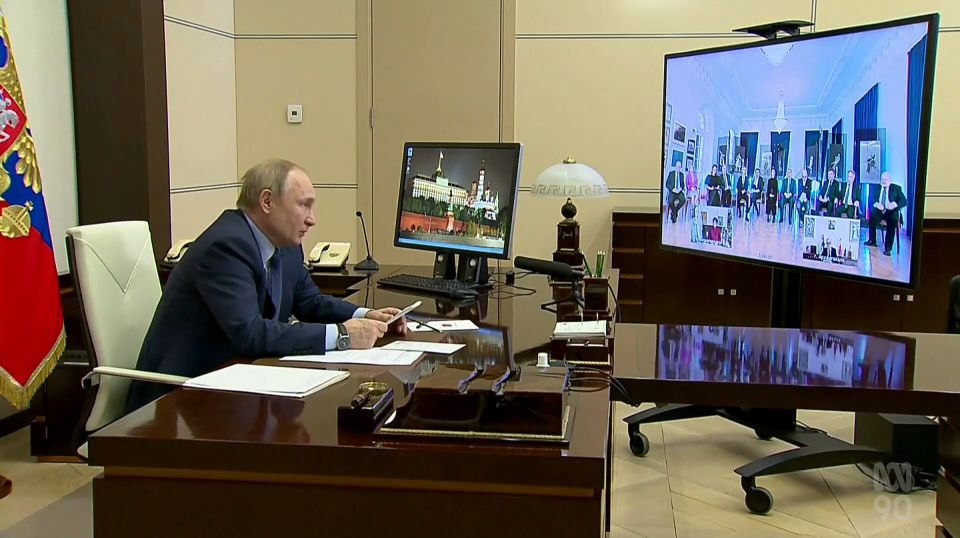
4) Find stories of hope and offer opportunities for action
With such grim news being broadcast each day, it’s understandable that both children, and even many adults, could be feeling helpless. Taking the time to learn how people are helping the refugees and supporting the Ukrainian people allows students to see a different perspective of the conflict and give them a sense of hope.
When watching videos and reading articles about the positive actions of people during this crisis students may be inspired to find a way to help. If possible, allow them to brainstorm fundraising ideas for reputable aid agencies that are small enough to be carried out at school.
How ClickView can help your class understand the Ukraine Crisis
ClickView has created a comprehensive playlist of videos about the Ukraine Crisis and related topics to help you discuss the situation with upper primary and secondary school students.
The playlist includes clips from the world’s leading news outlets so you can stay up-to-date plus documentaries about the Cold War, Soviet Union, propaganda, and dictators in modern history so your students can understand the bigger picture at play.
The videos are designed to help your students:
- Explore what is happening on a day-by-day basis
- Explore why it is happening and the historical context behind it
- Examine the consequences of the invasion from a human, economic and social perspective
View the Ukraine Crisis playlist now
Not a subscriber? Take a free trial today to explore this playlist and much more on ClickView.
Share to

Tara Walsh
briefcase iconHead of Education
A qualified teacher and human resources professional, Tara has had an extensive career as a teacher and leader in K-12, and in learning and development.
Other posts



Want more content like this?
Subscribe for blog updates, monthly video releases, trending topics, and exclusive content delivered straight to your inbox.