
4 Activities & crafts for the Chinese (Lunar) New Year
Published on 7 min read


In this guide
Chinese New Year, or Lunar New Year, is celebrated by millions around the world every year. It celebrates the arrival of spring and the new lunar year. The holiday is estimated to be around 3,500 years old, and it’s steeped in millennia of legend and mythology.
The most common legend is that of the Nian, a beast that ate crops, animals, and even people on the evening of the new year. People put food as an offering at their doors to appease him. One day, a wise old man discovered Nian’s weakness: he was afraid of loud noises and the colour red. Armed with this information, people put out red lanterns and scrolls, and created loud noises with crackling bamboo and later, firecrackers.


It’s a major holiday for many students around the world. While the celebration varies across cultures, one aspect is always present: it’s a time for family to come together. Many students will join family reunions and look forward to red envelopes of cash (which their parents may or may not save for the future).
Over 2 billion people celebrate the Chinese New Year. In China, the holiday is a fifteen-day celebration steeped in traditions, time with family, festivals, and food.
Your class might have many students already familiar with holidays, or maybe your students are unfamiliar with it. Either way, here are a few ideas for celebrating with your class.
1) The Lunar New Year around the world
The Lunar New Year is often called the Chinese New Year, but it’s celebrated differently around the world. The Asian continent is full of cultural diversity, and New Year celebrations are a great way to explore that.
This activity pairs well with the next lunar calendar activity, but whether you want to do both or one depends on your class. I’ve included a short list of different New Year traditions and some unique traditions students can explore:
- Seollal in Korea
- Try games like GoStop, Yut Nori, and Hwatu playing cards. Many families play these popular games during the holiday.
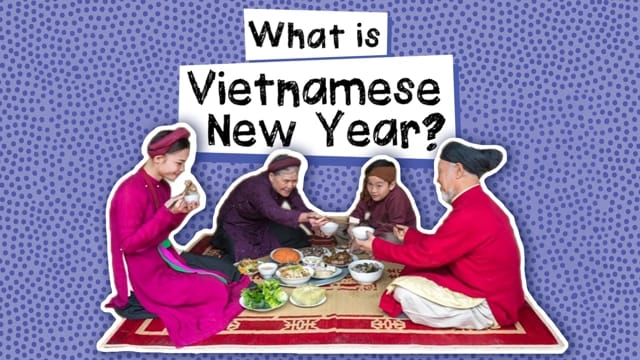
- Tết in Vietnam
- Vietnam’s Zodiac is a bit different from the Chinese Zodiac. The fourth Zodiac sign is the Cat, and Vietnam celebrated the Year of the Cat in 2023. The Cat’s origins are murky, and linguistic differences and the importance of feline companions in Vietnamese culture are just the beginning.
- Tsagaan Sar in Mongolia
- Preparations for the holiday begin weeks beforehand. Families make hundreds of Buuz, a steamed meat dumpling, pick out special clothing, and nomadic communities choose their best horses for holiday rides. The day before the new year is called “Bituun” or New Moon.
- Chunjie, the Chinese New Year
- Many people deep-clean their homes before the New Year to get rid of bad luck from the prior year. This is even more important because cleaning, and even washing or cutting your hair, on New Year’s Day could wash away the new year’s prosperity and fortune.
- Losar in Tibet
- Losar celebrations vary across the three historic regions of Tibet: Amdo, Central, and Kham.
- An Amdo legend warns that Yama, the king of the Underworld, will weigh each child to make sure they eat enough food. So, it’s important to eat as much as you can during the New Year’s feast!
2) Exploring the lunar calendar

The Chinese New Year is determined by the Chinese lunar calendar, so it doesn’t occur on the same day each year like solar holidays. Some students may be more familiar with lunar calendars than others, but this activity is a great way to compare and contrast how different cultures use lunar calendars.
I’ve utilised compare-and-contrast lesson activities like these quite often in history and social studies. It helps students understand and relate to the context of new ideas or practices, and it’s a great way for students to share their own cultural and religious traditions in an empathic and curious environment.

- If you have the time, have students assess what they already know about lunar calendars or any traditions associated with them. I love this class opener for gauging prior knowledge.
- Most students are familiar with the Gregorian Calendar, which is Solar. Introduce students to how a lunar calendar works with a short video like this.
- There are a few ways students can explore other lunar calendars.
- Students can look up lunar calendar traditions or be given a series of them to research.
- You can introduce students to other lunar holidays by giving them a list to research.
- As a class, briefly explore a few different lunar holidays and discuss them.
- Here’s some ideas of what students can look for:
- Other Lunar New Years, such as New Fire. This Purepachan celebration follows an ancient, 18-month lunar calendar.
- Other lunar calendars such as the Islamic, Hebrew, Buddhist, Solar Hiji/Persian, Zoroastrian, Coptic, and Hindu or Panchanga.
- Ask students to examine any similarities or differences in the calendars, and consider why lunar calendars are still used in different religions and cultures.
3) Exploring the Chinese Zodiac, Sheng Xiao (生肖)

The Chinese Zodiac dates back to at least the Qin dynasty, which makes it over 2,000 years old. The Zodiac cycle repeats every twelve years, and each year is represented by one of twelve animals. Those born in each animal’s given year could have the animal’s attributes.
For younger students:
- Have students write down the year they were born. Alternatively, students born in the same year can form pairs or groups.
- Have students look up their Zodiac sign. Try the National Geographic Kids collection on Chinese Zodiacs. Students should record what the animal is and some basic attributes of it.
- Have students share their animals in a short presentation or in small groups.
- Do they feel that these attributes are accurate to you? Why or why not?
- (optional) How is it similar or different from the Zodiac you’re familiar with {such as Western or Vedic}?
For older students: examine the elements, colours, and flowers associated with their Zodiac.
This pairs really well with the next crafting idea, too!
4) Making customised red envelopes (紅包, hóngbāo)

Red envelopes are one of the most well-known traditions of the Chinese New Year. Children look forward to these envelopes every year, as do employees and friends in some regions of the world.
The practice is as old as the holiday itself and is often credited to a legend in which the demon Sui (“year”) terrorized sleeping children on New Year’s Eve. One family gave their child an envelope of coins to play with so he’d stay awake, but he still fell asleep. Yet when Sui arrived, he couldn’t touch the child–the coins reflected a painful light on him. The envelope is sometimes called yasui qian, or “suppressing Sui money.”
This crafting activity is a great way for students to explore this custom by creating and sharing these New Year gifts with their class.
Supplies needed:
For the envelope: Paper (construction paper, wrapping paper, washi, cardstock etc), scissors, glue.
For decorations: Crayons, markers, glitter, and gold foil.
To put in the envelope: Chocolate or candy coins, ideally the ones in gold foil.
- For older students: You can make your own envelope using a template such as this one (which is a bit simpler) or this one (which is more complicated).
- For younger students or a less hands-on activity, you can preassemble or purchase red envelopes and distribute them.
- Decorate the envelope. Gold and red is a traditional color combination. Older students may enjoy trying gold foil, but gold or yellow markers, crayons, etc will also work. Some ideas for designs can be:
- Drawing the animal of the current year.
- Chinese calligraphy for the current year
- Names for each recipient, or the classroom number or name.
- Stencils and stamps are a great option too, especially for younger students.
- Fill the envelopes with chocolate coins and let students distribute them amongst each other.
For more inspiration and resources, check out ClickView’s topic on the Lunar New Year.
Sources
- orsl.usc.edu. (n.d.). Holy Days Calendar – Office of Religious and Spiritual Life. [online] Available at: https://orsl.usc.edu/life/calendar/ [Accessed 5 Jul. 2024].
- Shinn-Morris, L. (n.d.). 8 Things You Should Know About The Lucky Red Envelope. [online] Google Arts & Culture. Available at: https://artsandculture.google.com/story/8-things-you-should-know-about-the-lucky-red-envelope/PwKiICEFJXMOJg.
- De Guzman, C. (2023). Lunar New Year: 5 Things to Know About the Holiday. [online] Time. Available at: https://time.com/6248736/lunar-new-year-celebrations/.
- Lin • •, N. (2024). What is Lunar New Year and how is it celebrated? [online] NBC Bay Area. Available at: https://www.nbcbayarea.com/news/national-international/lunar-new-year-2024-how-to-celebrated/3447961/.
Share to

Amanda Joachim
briefcase iconEducation & Research Consultant
Amanda Joachim is an educational media consultant, researcher, and writer. Her interdisciplinary and creative approach is inspired by her own experiences learning and working in the Philadelphia school district.
Other posts


Want more content like this?
Subscribe for blog updates, monthly video releases, trending topics, and exclusive content delivered straight to your inbox.