How to set up ADFS SSO for your school

Summary
- Publish your organisation info in Federation Metadata
- Install Windows ADFS Federation Service
- Add ClickView as a Relying Party Trust
- Enter claim rules for required attributes
- Configure SAML endpoints for your region
- Submit onboarding form to complete integration
SAML integration steps with Microsoft ADFS
SAML-based Single Sign-On (SSO) enables secure authentication for ClickView users by integrating with identity providers such as Microsoft Active Directory Federation Services (ADFS). Follow these steps to configure ADFS integration.
Publish organisation information
First, ensure that your ADFS organisation information is published in your Federation Metadata:
- Right-click the “ADFS” folder and choose Edit Federation Service Properties.

- Go to the Organisation tab.
- Check Publish Organisation information in federation metadata.
- Complete all Support contact information fields with valid data.

Install and configure ADFS
- Open Start.
- Go to Administrative Tools.
- Select AD FS 2.0 Management or AD FS 3.0 Management.

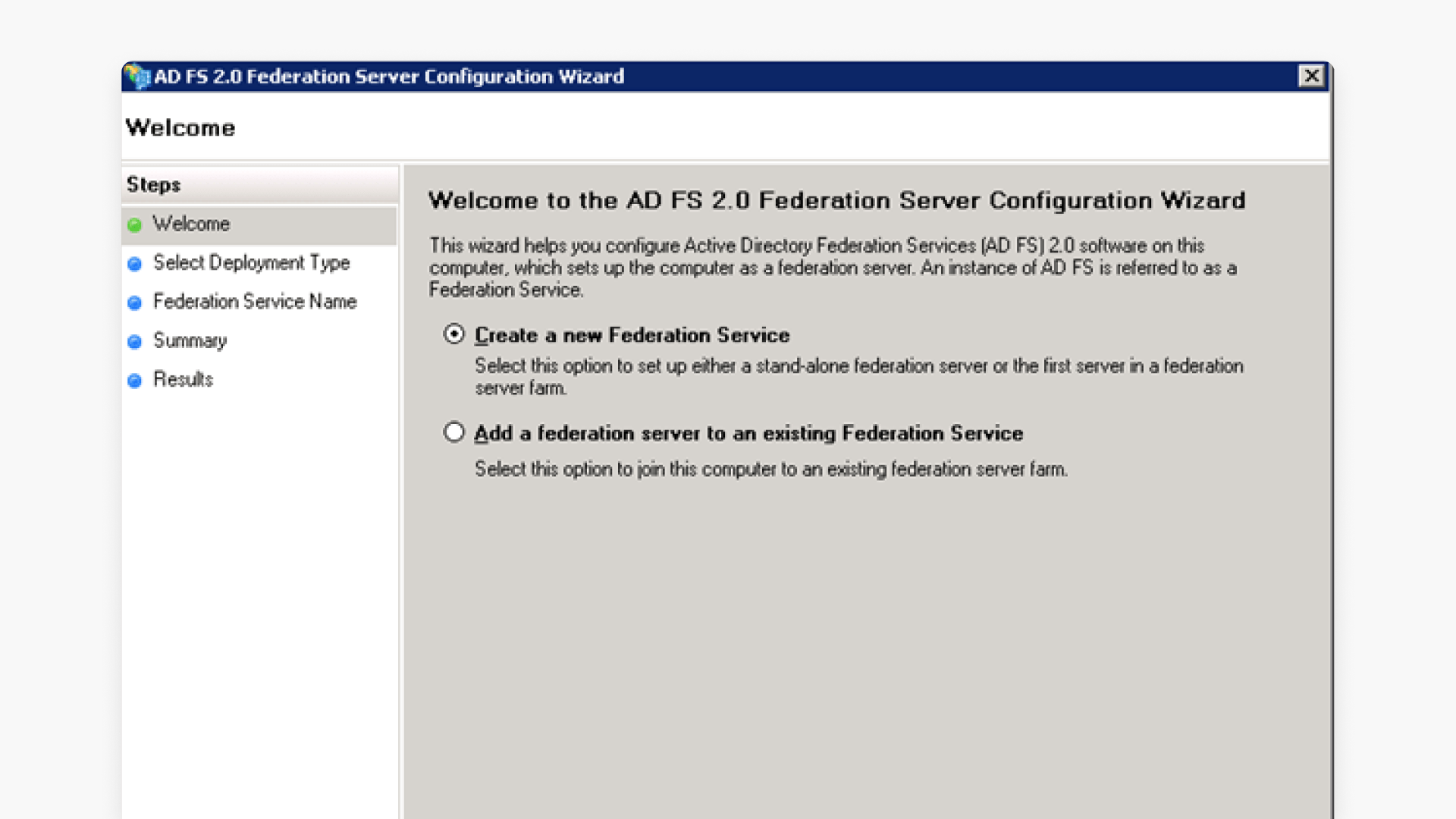
- Run AD FS Federation Server Configuration Wizard.

- Create a new Federation Service.
- Choose New Federation Server Farm, then select Next.
- If the SSL Certificate is not pre-populated, assign the appropriate SSL certificate to your Default Website in IIS. The Federation Service Name should match the SSL certificate.
- Enter the AD FS service account name and password, then select Next.
- If you receive an SPN error, use setspn.exe to resolve the issue.
Configure Federation Trust with ClickView
- Select Relying Party Trusts.
- Choose Add Relying Party Trust.
- Click Start and select Enter data about the relying party manually.
- Enter Display name: as ClickView. Select AD FS profile and proceed through the wizard by selecting Next where prompted. No checkboxes are required.
- In the Relying party trust identifier field, enter the ClickView entityID URL for your region as shown:
- United Kingdom & International: https://saml-in3.clickview.co.uk/shibboleth
- Select Next, then set up Multi-Factor Authentication (MFA) as needed and continue.
- Select Permit all users to access this relying party and proceed with Next.

- No additional fields are required; finish with Next until Close.
Create claim rules for ClickView attributes
Add claim rules to expose the required attributes for ClickView SSO:
- Choose Add Rule.

- Select Send Claims Using a Custom Rule and proceed.

- For each field below, enter the Claim Rule Name and use the corresponding Custom Rule:
| Claim Rule Name | Custom Rule |
|---|---|
| Email Address | c:[Type == “http://schemas.microsoft.com/ws/2008/06/identity/claims/windowsaccountname”] => issue(store = “Active Directory”, types = (“urn:oid:0.9.2342.19200300.100.1.3”), query = “;mail;{0}”, param = c.Value); |
| Given Name | c:[Type == “http://schemas.microsoft.com/ws/2008/06/identity/claims/windowsaccountname”] => issue(store = “Active Directory”, types = (“urn:oid:2.5.4.42”), query = “;givenName;{0}”, param = c.Value); |
| Display Name | c:[Type == “http://schemas.microsoft.com/ws/2008/06/identity/claims/windowsaccountname”] => issue(store = “Active Directory”, types = (“urn:oid:2.16.840.1.113730.3.1.241”), query = “;displayName;{0}”, param = c.Value); |
| Member Of | c:[Type == “http://schemas.microsoft.com/ws/2008/06/identity/claims/windowsaccountname”] => issue(store = “Active Directory”, types = (“urn:oid:1.2.840.113556.1.2.102”), query = “;memberOf;{0}”, param = c.Value); |
| Surname | c:[Type == “http://schemas.microsoft.com/ws/2008/06/identity/claims/windowsaccountname”] => issue(store = “Active Directory”, types = (“urn:oid:2.5.4.4”), query = “;SN;{0}”, param = c.Value); |
Add SAML endpoints
- Go to Properties for the ClickView relying party trust and select Endpoints.
- Add a SAML endpoint with Binding=POST and Index=1. Use your region’s POST URL:
- United Kingdom & International: https://saml-in3.clickview.co.uk/Shibboleth.sso/SAML2/POST
- Add another SAML endpoint with Binding=Artifact and Index=3. Use your region’s Artifact URL:
- United Kingdom & International: https://saml-in3.clickview.co.uk/Shibboleth.sso/SAML2/Artifact


Submit onboarding information
To begin the onboarding process, complete the SSO Onboarding form. If you have already started the form, continue completing it as needed.
Frequently asked questions
Get in touch
If you’re having trouble finding the right topics or videos, just reach out! Our team - 

 Akhil, Daniel, Jalaj, or any of us at ClickView - will be happy to help you get sorted.
Give feedback
Was this guide helpful?
Up Next
How to set up Google Workspace SSO for your School using the new SAML process
Summary How do I set up Google Workspace SAML SSO for ClickView at my school? To set up SAML SSO for ClickView, create a custom SAML app in your Google Workspace Admin console and send your SSO URL, Entity ID, and certificate to ClickView Support, who will reply with your school-specific ACS URL and Entity […]